
Simplifier now keeps every version of a package that your dependencies bring in and resolves your references predictably across them. This release also redesigns the guides overview and starts retiring DSTU2.
Every version your dependencies need, in scope
US Core 9.0.0 declares seven dependencies and resolves seventeen: the extensions package at four versions, and R5 core in an R4 guide.
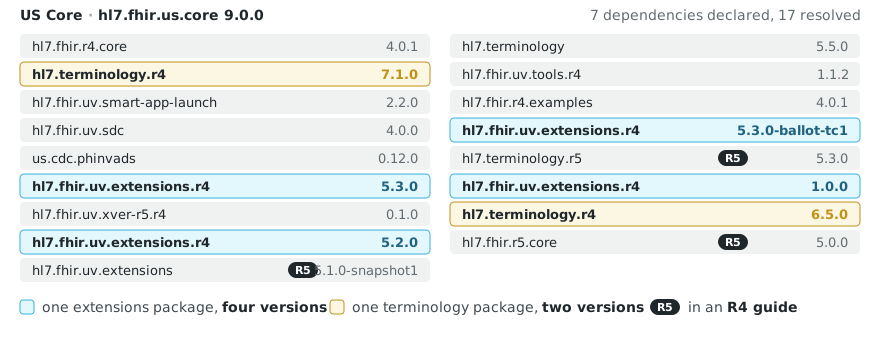
▲ US Core's dependencies, as its packages declare them: the same packages over and over, at different versions.
Until now Simplifier kept one version of each package and silently dropped the rest. Now dependency restore keeps every version the dependency tree brings in, and the reference decides which one you get:
- A pinned reference resolves to exactly the version it names, which is what canonical pinning is for.
- An unpinned reference resolves to the latest version of that resource in scope: by SemVer when all candidates are SemVer, by date when they are all dates, and alphabetically otherwise. Resources in your own project always win.
- Core profiles, data types and other core conformance resources come from your project's own FHIR version, even when a dependency brings in another. Terminology and search parameters follow the latest-version rule.
The Dependencies tab shows your direct dependencies, everything they resolved to, and the FHIR version of each. Simplifier now detects when dependencies are missing or your last restore is out of date, for example after an import or a sync from GitHub, and warns you that a restore is due. The tab also flags packages of another FHIR version. Read how references are resolved.
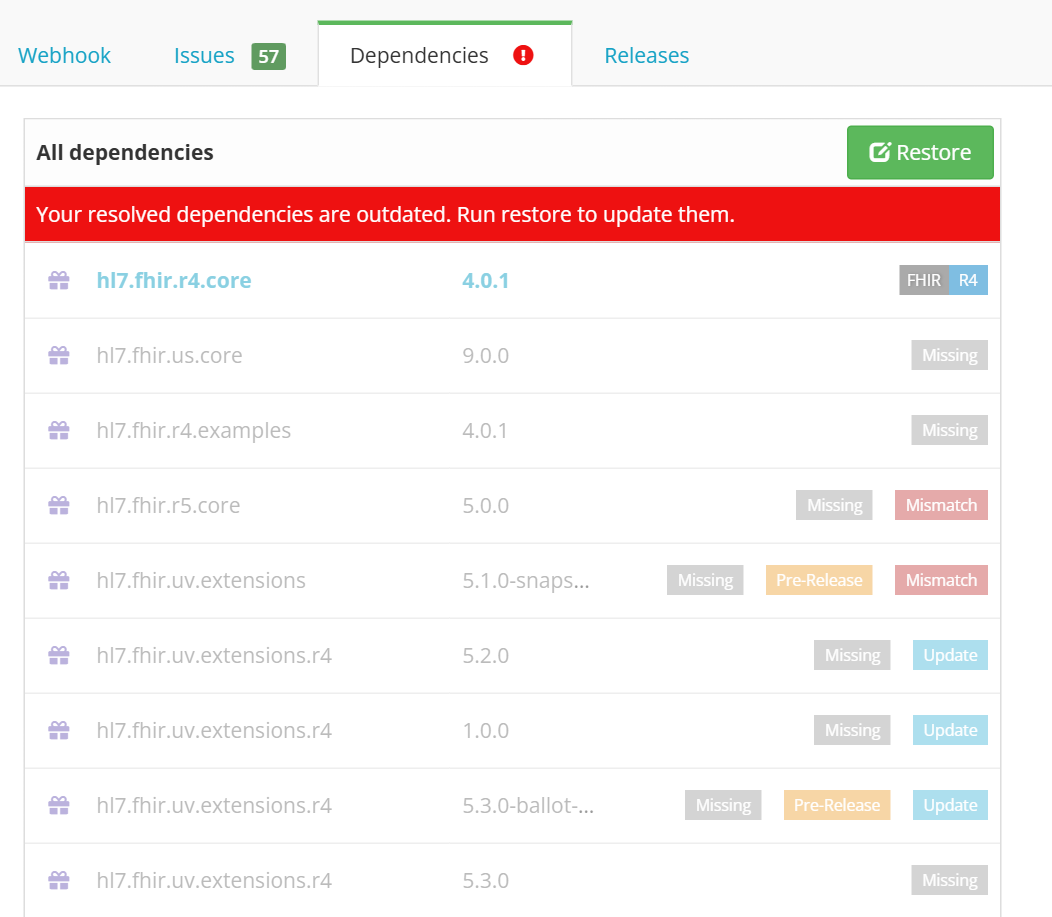
▲ A restore is due: the tab says so, and the Restore button turns green.
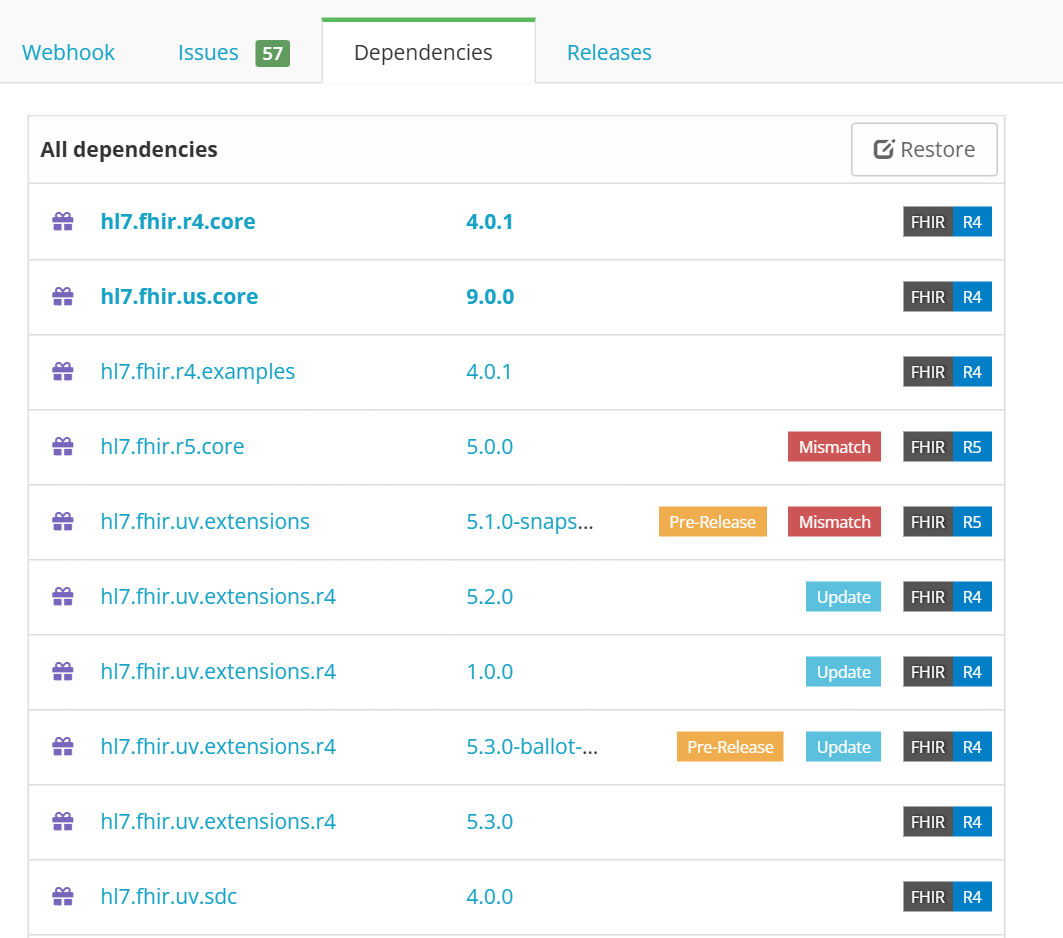
▲ After the restore: every version in scope, and the R5 packages flagged as a mismatch.
⚠️ Your validation results can change. The new rules apply to every project as soon as this release is live. If your project depends on the HL7 extensions package, unpinned references to the standard extensions now resolve to that package instead of the older copies in the core package. Restore your dependencies to bring in every version they ask for. Then run Quality Control and review the results.
A new guides overview
The Guides tab has a new design, the same on project, organization, team and portal pages. Each guide shows its versions inline.

▲ Each guide lists its versions inline, with a link to the rest.
Browse a package like a project
A package page now works like a project page. The Files tab has the same search and filters as the Resources tab of a project. The Introduction tab counts the resources and examples in the package per category, and each count opens those files.
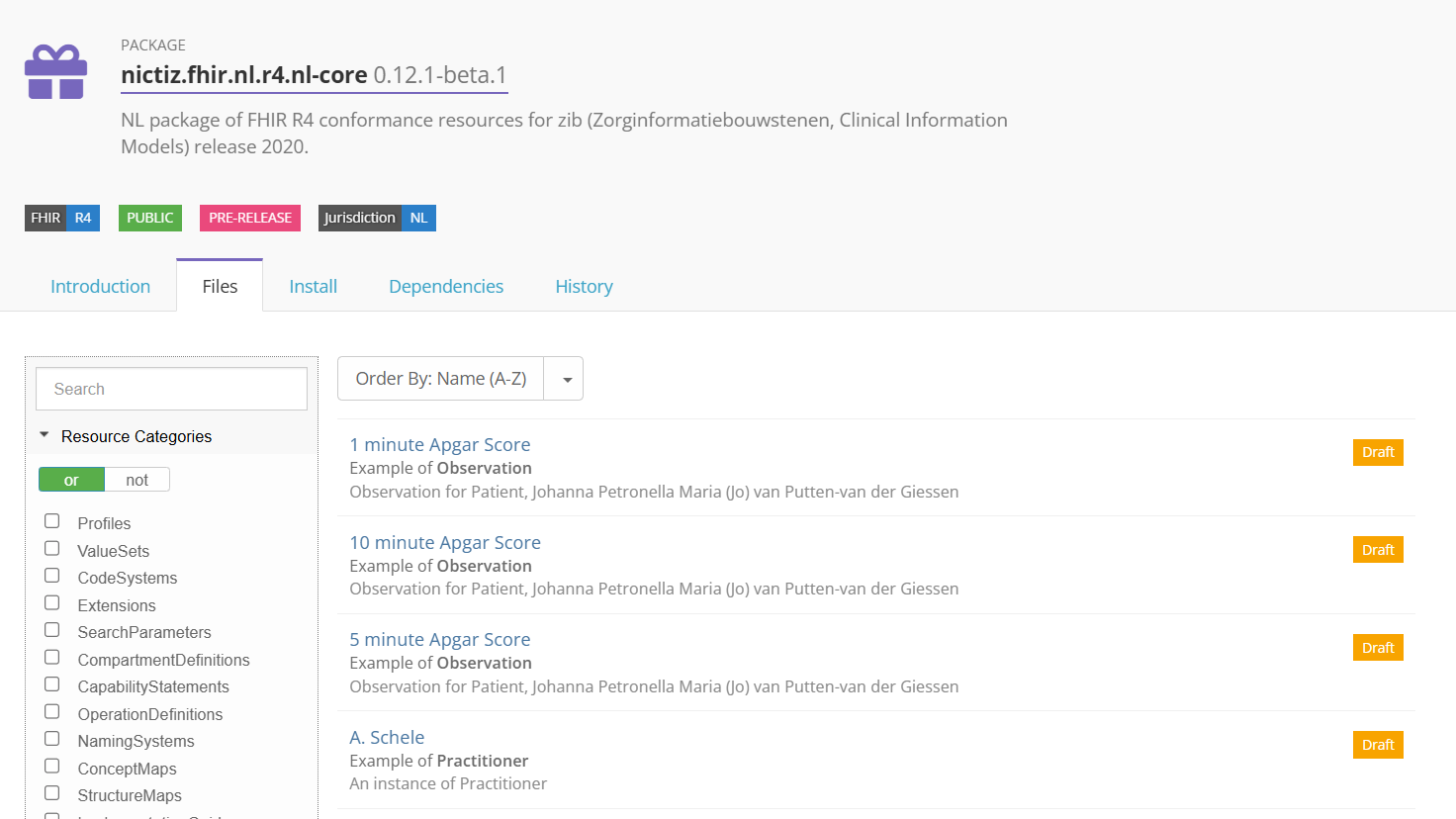
▲ Search and filter a package the way you filter a project.
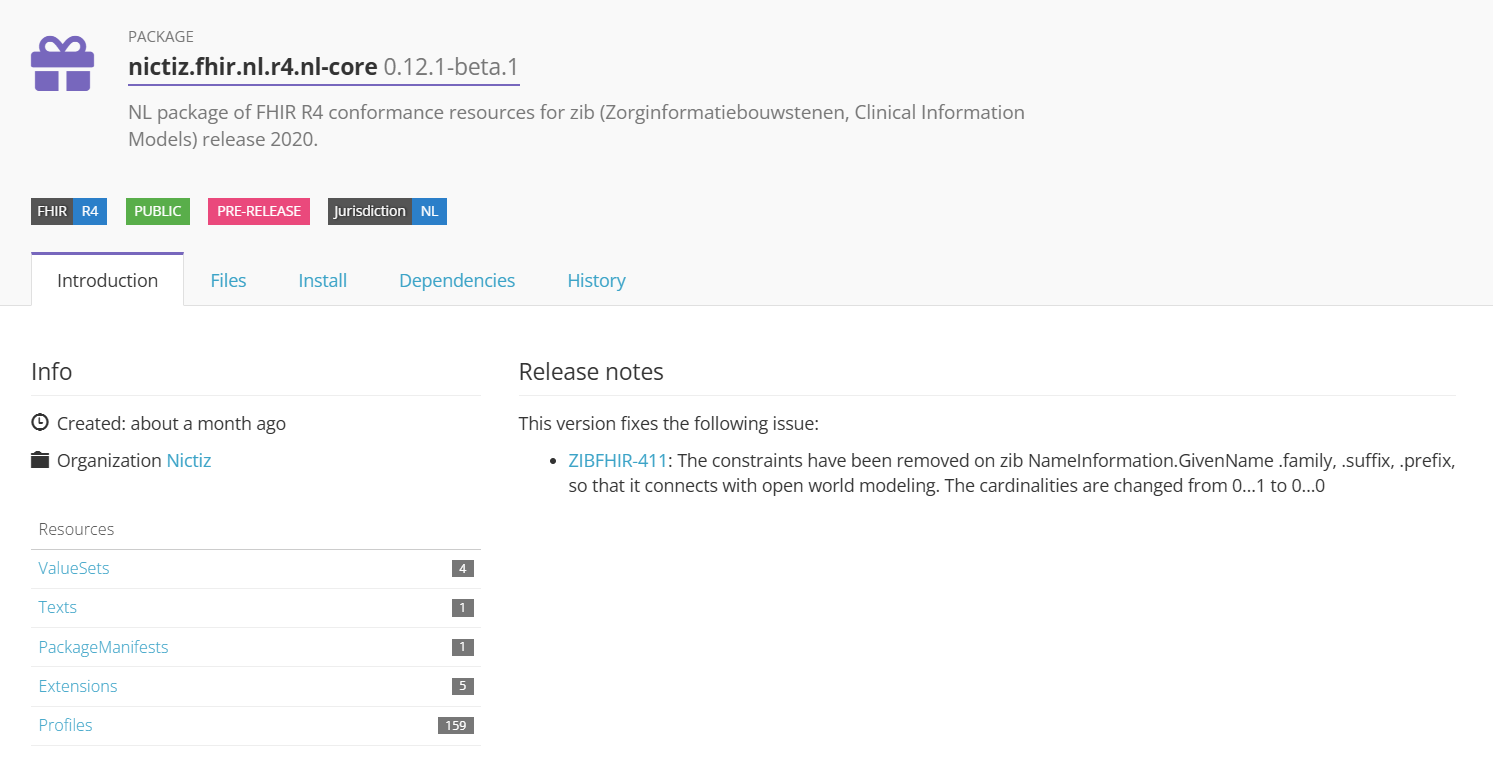
▲ What is in the package, at a glance.
Sunsetting DSTU2
New projects can no longer be created as DSTU2. Existing DSTU2 projects still render and download, but can no longer be edited, imported or packaged.
Other improvements
- Version ranges in package links: a link to
1.3.xopens the highest package in the 1.3 series, on the package page and in the resolver. - Download with snapshots: now generated on a console that lists the resources it could not snapshot.
- Faster, clearer FQL: guide pages with many queries render faster, and an oversized query fails with a clear message.
You can find the full release notes in the documentation.
If you have questions or ideas for future developments, do not hesitate to reach out to the Simplifier team. We would love to hear your feedback.