NHSDigital-Task
| Conformance url | FHIR Module | Maturity Level |
|---|---|---|
| https://fhir.nhs.uk/StructureDefinition/NHSDigital-Task | trial-use |
| NHSDigitalTask (Task) | C | Element idTaskShort description A task to be performed DefinitionFHIR Task usage and scope is defined as
A Task resource often exists in parallel with clinical resources. For example, a Task could request fulfillment of a ServiceRequest ordering a Procedure that would result in a Procedure, Observation, DiagnosticReport, ImagingStudy or similar resource. Another example would be a Task that requests fulfillment of a CommunicationRequest to be performed between various actors. Task has three main uses:
Order FulfilmentCentres on the fulfilment of the order. It does not contain the order details which are held in a referenced request resource.
In the diagram below the recipient or fulfiller of the order uses FHIR Task to accept or reject the order, it also uses Task to send <img src="https://raw.githubusercontent.com/NHSDigital/NHSDigital-FHIR-ImplementationGuide/master/Diagams/Task-Deliver.PNG" width="60%"/> Examples:
See the section on <br/> Minor Workflow RequestsThis is used to implement additional around an order or to record specific workflow requests. These may not have a focused resource reference. It is anticipated they are coded using SNOMED CT. <img src="https://raw.githubusercontent.com/NHSDigital/NHSDigital-FHIR-ImplementationGuide/master/Diagams/Task-Action.PNG" width="60%"/> Examples:
The Task.status can be used to indicate fulfilment/delivery status. <br/> Workflow SupportMore advanced workflow is supported, this adds in the use of Task.input and Task.output. This allows the passage of inputs and outputs which may be found in automated workflow activities. The diagram below is from an acute trusts handling of a received eRS referral request. Each process communicates via the FHIR Task, the first process takes the eRS referral and gets the referral letter from eRS, these are then passed to the clinician for triage. Once triaged, the clinician creates a book appointment Task which the admin's action. <img src="https://raw.githubusercontent.com/NHSDigital/NHSDigital-FHIR-ImplementationGuide/master/Diagams/Task-automated.PNG" width="60%"/>
| |||||||||||||||||||||||||||||||||||||||||||||||||||||||||
| id | Σ | 0..1 | id | There are no (further) constraints on this element Element idTask.idShort description Logical id of this artifact DefinitionThe logical id of the resource, as used in the URL for the resource. Once assigned, this value never changes. The only time that a resource does not have an id is when it is being submitted to the server using a create operation. The cardinality or value of this element may be affected by these constraints: ele-1 Constraints
| |||||||||||||||||||||||||||||||||||||||||||||||||||||||
| meta | Σ | 0..1 | Meta | There are no (further) constraints on this element Element idTask.metaShort description Metadata about the resource DefinitionThe metadata about the resource. This is content that is maintained by the infrastructure. Changes to the content might not always be associated with version changes to the resource. The cardinality or value of this element may be affected by these constraints: ele-1 Constraints
| |||||||||||||||||||||||||||||||||||||||||||||||||||||||
| implicitRules | Σ ?! | 0..1 | uri | There are no (further) constraints on this element Element idTask.implicitRulesShort description A set of rules under which this content was created DefinitionA reference to a set of rules that were followed when the resource was constructed, and which must be understood when processing the content. Often, this is a reference to an implementation guide that defines the special rules along with other profiles etc. Asserting this rule set restricts the content to be only understood by a limited set of trading partners. This inherently limits the usefulness of the data in the long term. However, the existing health eco-system is highly fractured, and not yet ready to define, collect, and exchange data in a generally computable sense. Wherever possible, implementers and/or specification writers should avoid using this element. Often, when used, the URL is a reference to an implementation guide that defines these special rules as part of it's narrative along with other profiles, value sets, etc. The cardinality or value of this element may be affected by these constraints: ele-1 Constraints
| |||||||||||||||||||||||||||||||||||||||||||||||||||||||
| language | 0..1 | codeBinding | There are no (further) constraints on this element Element idTask.languageShort description Language of the resource content DefinitionThe base language in which the resource is written. Language is provided to support indexing and accessibility (typically, services such as text to speech use the language tag). The html language tag in the narrative applies to the narrative. The language tag on the resource may be used to specify the language of other presentations generated from the data in the resource. Not all the content has to be in the base language. The Resource.language should not be assumed to apply to the narrative automatically. If a language is specified, it should it also be specified on the div element in the html (see rules in HTML5 for information about the relationship between xml:lang and the html lang attribute). A human language. Binding extensions
The cardinality or value of this element may be affected by these constraints: ele-1 Constraints
| ||||||||||||||||||||||||||||||||||||||||||||||||||||||||
| text | 0..1 | Narrative | There are no (further) constraints on this element Element idTask.textShort description Text summary of the resource, for human interpretation Alternate namesnarrative, html, xhtml, display DefinitionA human-readable narrative that contains a summary of the resource and can be used to represent the content of the resource to a human. The narrative need not encode all the structured data, but is required to contain sufficient detail to make it "clinically safe" for a human to just read the narrative. Resource definitions may define what content should be represented in the narrative to ensure clinical safety. Contained resources do not have narrative. Resources that are not contained SHOULD have a narrative. In some cases, a resource may only have text with little or no additional discrete data (as long as all minOccurs=1 elements are satisfied). This may be necessary for data from legacy systems where information is captured as a "text blob" or where text is additionally entered raw or narrated and encoded information is added later. The cardinality or value of this element may be affected by these constraints: ele-1 Constraints
| ||||||||||||||||||||||||||||||||||||||||||||||||||||||||
| contained | 0..* | Resource | There are no (further) constraints on this element Element idTask.containedShort description Contained, inline Resources Alternate namesinline resources, anonymous resources, contained resources DefinitionThese resources do not have an independent existence apart from the resource that contains them - they cannot be identified independently, and nor can they have their own independent transaction scope. This should never be done when the content can be identified properly, as once identification is lost, it is extremely difficult (and context dependent) to restore it again. Contained resources may have profiles and tags In their meta elements, but SHALL NOT have security labels.
| ||||||||||||||||||||||||||||||||||||||||||||||||||||||||
| extension | C | 0..* | Extension | There are no (further) constraints on this element Element idTask.extensionShort description Additional content defined by implementations Alternate namesextensions, user content DefinitionMay be used to represent additional information that is not part of the basic definition of the resource. To make the use of extensions safe and manageable, there is a strict set of governance applied to the definition and use of extensions. Though any implementer can define an extension, there is a set of requirements that SHALL be met as part of the definition of the extension. There can be no stigma associated with the use of extensions by any application, project, or standard - regardless of the institution or jurisdiction that uses or defines the extensions. The use of extensions is what allows the FHIR specification to retain a core level of simplicity for everyone. Unordered, Open, by url(Value) Extensions are always sliced by (at least) url ConditionsThe cardinality or value of this element may be affected by these constraints: ele-1 Constraints
| |||||||||||||||||||||||||||||||||||||||||||||||||||||||
| prescription | S C | 0..1 | Extension(Complex) | Element idTask.extension:prescriptionShort description EPS Patient Tracker extension Alternate namesextensions, user content DefinitionThere can be no stigma associated with the use of extensions by any application, project, or standard - regardless of the institution or jurisdiction that uses or defines the extensions. The use of extensions is what allows the FHIR specification to retain a core level of simplicity for everyone. Extension(Complex) Extension URLConditionsThe cardinality or value of this element may be affected by these constraints: ele-1 Constraints
| |||||||||||||||||||||||||||||||||||||||||||||||||||||||
| repeatInformation | S C | 0..1 | Extension(Complex) | Element idTask.extension:repeatInformationShort description Used in the EPS Prescription Tracker Alternate namesextensions, user content DefinitionThere can be no stigma associated with the use of extensions by any application, project, or standard - regardless of the institution or jurisdiction that uses or defines the extensions. The use of extensions is what allows the FHIR specification to retain a core level of simplicity for everyone. Extension(Complex) Extension URLConditionsThe cardinality or value of this element may be affected by these constraints: ele-1 Constraints
| |||||||||||||||||||||||||||||||||||||||||||||||||||||||
| modifierExtension | ?! C | 0..* | Extension | There are no (further) constraints on this element Element idTask.modifierExtensionShort description Extensions that cannot be ignored Alternate namesextensions, user content DefinitionMay be used to represent additional information that is not part of the basic definition of the resource and that modifies the understanding of the element that contains it and/or the understanding of the containing element's descendants. Usually modifier elements provide negation or qualification. To make the use of extensions safe and manageable, there is a strict set of governance applied to the definition and use of extensions. Though any implementer is allowed to define an extension, there is a set of requirements that SHALL be met as part of the definition of the extension. Applications processing a resource are required to check for modifier extensions. Modifier extensions SHALL NOT change the meaning of any elements on Resource or DomainResource (including cannot change the meaning of modifierExtension itself). Modifier extensions allow for extensions that cannot be safely ignored to be clearly distinguished from the vast majority of extensions which can be safely ignored. This promotes interoperability by eliminating the need for implementers to prohibit the presence of extensions. For further information, see the definition of modifier extensions. There can be no stigma associated with the use of extensions by any application, project, or standard - regardless of the institution or jurisdiction that uses or defines the extensions. The use of extensions is what allows the FHIR specification to retain a core level of simplicity for everyone. Unordered, Open, by url(Value) Extensions are always sliced by (at least) url ConditionsThe cardinality or value of this element may be affected by these constraints: ele-1 Constraints
| |||||||||||||||||||||||||||||||||||||||||||||||||||||||
| identifier | S | 0..* | Identifier | Element idTask.identifierShort description Task Instance Identifier DefinitionFor EPS A single identifier MUST be present and the value must be a UUID. The cardinality or value of this element may be affected by these constraints: ele-1 Constraints
| |||||||||||||||||||||||||||||||||||||||||||||||||||||||
| id | 0..1 | string | There are no (further) constraints on this element Element idTask.identifier.idShort description Unique id for inter-element referencing DefinitionUnique id for the element within a resource (for internal references). This may be any string value that does not contain spaces.
| ||||||||||||||||||||||||||||||||||||||||||||||||||||||||
| extension | C | 0..* | Extension | There are no (further) constraints on this element Element idTask.identifier.extensionShort description Additional content defined by implementations Alternate namesextensions, user content DefinitionMay be used to represent additional information that is not part of the basic definition of the element. To make the use of extensions safe and manageable, there is a strict set of governance applied to the definition and use of extensions. Though any implementer can define an extension, there is a set of requirements that SHALL be met as part of the definition of the extension. There can be no stigma associated with the use of extensions by any application, project, or standard - regardless of the institution or jurisdiction that uses or defines the extensions. The use of extensions is what allows the FHIR specification to retain a core level of simplicity for everyone. Unordered, Open, by url(Value) Extensions are always sliced by (at least) url ConditionsThe cardinality or value of this element may be affected by these constraints: ele-1 Constraints
| |||||||||||||||||||||||||||||||||||||||||||||||||||||||
| use | Σ ?! | 0..1 | codeBinding | There are no (further) constraints on this element Element idTask.identifier.useShort description usual | official | temp | secondary | old (If known) DefinitionThe purpose of this identifier. Allows the appropriate identifier for a particular context of use to be selected from among a set of identifiers. Applications can assume that an identifier is permanent unless it explicitly says that it is temporary. Identifies the purpose for this identifier, if known . ConditionsThe cardinality or value of this element may be affected by these constraints: ele-1 Constraints
| |||||||||||||||||||||||||||||||||||||||||||||||||||||||
| type | Σ | 0..1 | CodeableConceptBinding | There are no (further) constraints on this element Element idTask.identifier.typeShort description Description of identifier DefinitionA coded type for the identifier that can be used to determine which identifier to use for a specific purpose. Allows users to make use of identifiers when the identifier system is not known. This element deals only with general categories of identifiers. It SHOULD not be used for codes that correspond 1..1 with the Identifier.system. Some identifiers may fall into multiple categories due to common usage. Where the system is known, a type is unnecessary because the type is always part of the system definition. However systems often need to handle identifiers where the system is not known. There is not a 1:1 relationship between type and system, since many different systems have the same type. A coded type for an identifier that can be used to determine which identifier to use for a specific purpose. Identifier Type Codes (extensible) ConditionsThe cardinality or value of this element may be affected by these constraints: ele-1 Constraints
| |||||||||||||||||||||||||||||||||||||||||||||||||||||||
| system | Σ | 0..1 | uri | There are no (further) constraints on this element Element idTask.identifier.systemShort description The namespace for the identifier value DefinitionEstablishes the namespace for the value - that is, a URL that describes a set values that are unique. There are many sets of identifiers. To perform matching of two identifiers, we need to know what set we're dealing with. The system identifies a particular set of unique identifiers. Identifier.system is always case sensitive. The cardinality or value of this element may be affected by these constraints: ele-1 Constraints
General http://www.acme.com/identifiers/patientMappings
| |||||||||||||||||||||||||||||||||||||||||||||||||||||||
| value | Σ | 0..1 | string | There are no (further) constraints on this element Element idTask.identifier.valueShort description The value that is unique DefinitionThe portion of the identifier typically relevant to the user and which is unique within the context of the system. If the value is a full URI, then the system SHALL be urn:ietf:rfc:3986. The value's primary purpose is computational mapping. As a result, it may be normalized for comparison purposes (e.g. removing non-significant whitespace, dashes, etc.) A value formatted for human display can be conveyed using the Rendered Value extension. Identifier.value is to be treated as case sensitive unless knowledge of the Identifier.system allows the processer to be confident that non-case-sensitive processing is safe. The cardinality or value of this element may be affected by these constraints: ele-1 Constraints
General 123456Mappings
| |||||||||||||||||||||||||||||||||||||||||||||||||||||||
| period | Σ C | 0..1 | Period | There are no (further) constraints on this element Element idTask.identifier.periodShort description Time period when id is/was valid for use DefinitionTime period during which identifier is/was valid for use. A Period specifies a range of time; the context of use will specify whether the entire range applies (e.g. "the patient was an inpatient of the hospital for this time range") or one value from the range applies (e.g. "give to the patient between these two times"). Period is not used for a duration (a measure of elapsed time). See Duration. The cardinality or value of this element may be affected by these constraints: ele-1 Constraints
| |||||||||||||||||||||||||||||||||||||||||||||||||||||||
| assigner | Σ C | 0..1 | Reference() | There are no (further) constraints on this element Element idTask.identifier.assignerShort description Organization that issued id (may be just text) DefinitionOrganization that issued/manages the identifier. The Identifier.assigner may omit the .reference element and only contain a .display element reflecting the name or other textual information about the assigning organization. The cardinality or value of this element may be affected by these constraints: ele-1 Constraints
| |||||||||||||||||||||||||||||||||||||||||||||||||||||||
| instantiatesCanonical | Σ | 0..1 | canonical(ActivityDefinition) | There are no (further) constraints on this element Element idTask.instantiatesCanonicalShort description Formal definition of task DefinitionThe URL pointing to a FHIR-defined protocol, guideline, orderset or other definition that is adhered to in whole or in part by this Task. Enables a formal definition of how he task is to be performed, enabling automation. The cardinality or value of this element may be affected by these constraints: ele-1 Constraints
| |||||||||||||||||||||||||||||||||||||||||||||||||||||||
| instantiatesUri | Σ | 0..1 | uri | There are no (further) constraints on this element Element idTask.instantiatesUriShort description Formal definition of task DefinitionThe URL pointing to an externally maintained protocol, guideline, orderset or other definition that is adhered to in whole or in part by this Task. Enables a formal definition of how he task is to be performed (e.g. using BPMN, BPEL, XPDL or other formal notation to be associated with a task), enabling automation. see http://en.wikipedia.org/wiki/Uniform_resource_identifier The cardinality or value of this element may be affected by these constraints: ele-1 Constraints
| |||||||||||||||||||||||||||||||||||||||||||||||||||||||
| basedOn | Σ C | 0..* | Reference(Resource) | There are no (further) constraints on this element Element idTask.basedOnShort description Request fulfilled by this task DefinitionBasedOn refers to a higher-level authorization that triggered the creation of the task. It references a "request" resource such as a ServiceRequest, MedicationRequest, ServiceRequest, CarePlan, etc. which is distinct from the "request" resource the task is seeking to fulfill. This latter resource is referenced by FocusOn. For example, based on a ServiceRequest (= BasedOn), a task is created to fulfill a procedureRequest ( = FocusOn ) to collect a specimen from a patient. References SHALL be a reference to an actual FHIR resource, and SHALL be resolveable (allowing for access control, temporary unavailability, etc.). Resolution can be either by retrieval from the URL, or, where applicable by resource type, by treating an absolute reference as a canonical URL and looking it up in a local registry/repository. The cardinality or value of this element may be affected by these constraints: ele-1 Constraints
| |||||||||||||||||||||||||||||||||||||||||||||||||||||||
| id | 0..1 | string | There are no (further) constraints on this element Element idTask.basedOn.idShort description Unique id for inter-element referencing DefinitionUnique id for the element within a resource (for internal references). This may be any string value that does not contain spaces.
| ||||||||||||||||||||||||||||||||||||||||||||||||||||||||
| extension | C | 0..* | Extension | There are no (further) constraints on this element Element idTask.basedOn.extensionShort description Additional content defined by implementations Alternate namesextensions, user content DefinitionMay be used to represent additional information that is not part of the basic definition of the element. To make the use of extensions safe and manageable, there is a strict set of governance applied to the definition and use of extensions. Though any implementer can define an extension, there is a set of requirements that SHALL be met as part of the definition of the extension. There can be no stigma associated with the use of extensions by any application, project, or standard - regardless of the institution or jurisdiction that uses or defines the extensions. The use of extensions is what allows the FHIR specification to retain a core level of simplicity for everyone. Unordered, Open, by url(Value) Extensions are always sliced by (at least) url ConditionsThe cardinality or value of this element may be affected by these constraints: ele-1 Constraints
| |||||||||||||||||||||||||||||||||||||||||||||||||||||||
| reference | Σ C | 0..1 | string | There are no (further) constraints on this element Element idTask.basedOn.referenceShort description Literal reference, Relative, internal or absolute URL DefinitionA reference to a location at which the other resource is found. The reference may be a relative reference, in which case it is relative to the service base URL, or an absolute URL that resolves to the location where the resource is found. The reference may be version specific or not. If the reference is not to a FHIR RESTful server, then it should be assumed to be version specific. Internal fragment references (start with '#') refer to contained resources. Using absolute URLs provides a stable scalable approach suitable for a cloud/web context, while using relative/logical references provides a flexible approach suitable for use when trading across closed eco-system boundaries. Absolute URLs do not need to point to a FHIR RESTful server, though this is the preferred approach. If the URL conforms to the structure "/[type]/[id]" then it should be assumed that the reference is to a FHIR RESTful server. The cardinality or value of this element may be affected by these constraints: ele-1, ref-1 Constraints
| |||||||||||||||||||||||||||||||||||||||||||||||||||||||
| type | Σ | 0..1 | uriBinding | There are no (further) constraints on this element Element idTask.basedOn.typeShort description Type the reference refers to (e.g. "Patient") DefinitionThe expected type of the target of the reference. If both Reference.type and Reference.reference are populated and Reference.reference is a FHIR URL, both SHALL be consistent. The type is the Canonical URL of Resource Definition that is the type this reference refers to. References are URLs that are relative to http://hl7.org/fhir/StructureDefinition/ e.g. "Patient" is a reference to http://hl7.org/fhir/StructureDefinition/Patient. Absolute URLs are only allowed for logical models (and can only be used in references in logical models, not resources). This element is used to indicate the type of the target of the reference. This may be used which ever of the other elements are populated (or not). In some cases, the type of the target may be determined by inspection of the reference (e.g. a RESTful URL) or by resolving the target of the reference; if both the type and a reference is provided, the reference SHALL resolve to a resource of the same type as that specified. Aa resource (or, for logical models, the URI of the logical model). ConditionsThe cardinality or value of this element may be affected by these constraints: ele-1 Constraints
| |||||||||||||||||||||||||||||||||||||||||||||||||||||||
| identifier | Σ | 0..1 | Identifier | There are no (further) constraints on this element Element idTask.basedOn.identifierShort description Logical reference, when literal reference is not known DefinitionAn identifier for the target resource. This is used when there is no way to reference the other resource directly, either because the entity it represents is not available through a FHIR server, or because there is no way for the author of the resource to convert a known identifier to an actual location. There is no requirement that a Reference.identifier point to something that is actually exposed as a FHIR instance, but it SHALL point to a business concept that would be expected to be exposed as a FHIR instance, and that instance would need to be of a FHIR resource type allowed by the reference. When an identifier is provided in place of a reference, any system processing the reference will only be able to resolve the identifier to a reference if it understands the business context in which the identifier is used. Sometimes this is global (e.g. a national identifier) but often it is not. For this reason, none of the useful mechanisms described for working with references (e.g. chaining, includes) are possible, nor should servers be expected to be able resolve the reference. Servers may accept an identifier based reference untouched, resolve it, and/or reject it - see CapabilityStatement.rest.resource.referencePolicy. When both an identifier and a literal reference are provided, the literal reference is preferred. Applications processing the resource are allowed - but not required - to check that the identifier matches the literal reference Applications converting a logical reference to a literal reference may choose to leave the logical reference present, or remove it. Reference is intended to point to a structure that can potentially be expressed as a FHIR resource, though there is no need for it to exist as an actual FHIR resource instance - except in as much as an application wishes to actual find the target of the reference. The content referred to be the identifier must meet the logical constraints implied by any limitations on what resource types are permitted for the reference. For example, it would not be legitimate to send the identifier for a drug prescription if the type were Reference(Observation|DiagnosticReport). One of the use-cases for Reference.identifier is the situation where no FHIR representation exists (where the type is Reference (Any). The cardinality or value of this element may be affected by these constraints: ele-1 Constraints
| |||||||||||||||||||||||||||||||||||||||||||||||||||||||
| id | 0..1 | string | There are no (further) constraints on this element Element idTask.basedOn.identifier.idShort description Unique id for inter-element referencing DefinitionUnique id for the element within a resource (for internal references). This may be any string value that does not contain spaces.
| ||||||||||||||||||||||||||||||||||||||||||||||||||||||||
| extension | C | 0..* | Extension | There are no (further) constraints on this element Element idTask.basedOn.identifier.extensionShort description Additional content defined by implementations Alternate namesextensions, user content DefinitionMay be used to represent additional information that is not part of the basic definition of the element. To make the use of extensions safe and manageable, there is a strict set of governance applied to the definition and use of extensions. Though any implementer can define an extension, there is a set of requirements that SHALL be met as part of the definition of the extension. There can be no stigma associated with the use of extensions by any application, project, or standard - regardless of the institution or jurisdiction that uses or defines the extensions. The use of extensions is what allows the FHIR specification to retain a core level of simplicity for everyone. Unordered, Open, by url(Value) Extensions are always sliced by (at least) url ConditionsThe cardinality or value of this element may be affected by these constraints: ele-1 Constraints
| |||||||||||||||||||||||||||||||||||||||||||||||||||||||
| use | Σ ?! | 0..1 | codeBinding | There are no (further) constraints on this element Element idTask.basedOn.identifier.useShort description usual | official | temp | secondary | old (If known) DefinitionThe purpose of this identifier. Allows the appropriate identifier for a particular context of use to be selected from among a set of identifiers. Applications can assume that an identifier is permanent unless it explicitly says that it is temporary. Identifies the purpose for this identifier, if known . ConditionsThe cardinality or value of this element may be affected by these constraints: ele-1 Constraints
| |||||||||||||||||||||||||||||||||||||||||||||||||||||||
| type | Σ | 0..1 | CodeableConceptBinding | There are no (further) constraints on this element Element idTask.basedOn.identifier.typeShort description Description of identifier DefinitionA coded type for the identifier that can be used to determine which identifier to use for a specific purpose. Allows users to make use of identifiers when the identifier system is not known. This element deals only with general categories of identifiers. It SHOULD not be used for codes that correspond 1..1 with the Identifier.system. Some identifiers may fall into multiple categories due to common usage. Where the system is known, a type is unnecessary because the type is always part of the system definition. However systems often need to handle identifiers where the system is not known. There is not a 1:1 relationship between type and system, since many different systems have the same type. A coded type for an identifier that can be used to determine which identifier to use for a specific purpose. Identifier Type Codes (extensible) ConditionsThe cardinality or value of this element may be affected by these constraints: ele-1 Constraints
| |||||||||||||||||||||||||||||||||||||||||||||||||||||||
| system | Σ | 0..1 | uri | There are no (further) constraints on this element Element idTask.basedOn.identifier.systemShort description The namespace for the identifier value DefinitionEstablishes the namespace for the value - that is, a URL that describes a set values that are unique. There are many sets of identifiers. To perform matching of two identifiers, we need to know what set we're dealing with. The system identifies a particular set of unique identifiers. Identifier.system is always case sensitive. The cardinality or value of this element may be affected by these constraints: ele-1 Constraints
General http://www.acme.com/identifiers/patientMappings
| |||||||||||||||||||||||||||||||||||||||||||||||||||||||
| value | Σ | 0..1 | string | There are no (further) constraints on this element Element idTask.basedOn.identifier.valueShort description The value that is unique DefinitionThe portion of the identifier typically relevant to the user and which is unique within the context of the system. If the value is a full URI, then the system SHALL be urn:ietf:rfc:3986. The value's primary purpose is computational mapping. As a result, it may be normalized for comparison purposes (e.g. removing non-significant whitespace, dashes, etc.) A value formatted for human display can be conveyed using the Rendered Value extension. Identifier.value is to be treated as case sensitive unless knowledge of the Identifier.system allows the processer to be confident that non-case-sensitive processing is safe. The cardinality or value of this element may be affected by these constraints: ele-1 Constraints
General 123456Mappings
| |||||||||||||||||||||||||||||||||||||||||||||||||||||||
| period | Σ C | 0..1 | Period | There are no (further) constraints on this element Element idTask.basedOn.identifier.periodShort description Time period when id is/was valid for use DefinitionTime period during which identifier is/was valid for use. A Period specifies a range of time; the context of use will specify whether the entire range applies (e.g. "the patient was an inpatient of the hospital for this time range") or one value from the range applies (e.g. "give to the patient between these two times"). Period is not used for a duration (a measure of elapsed time). See Duration. The cardinality or value of this element may be affected by these constraints: ele-1 Constraints
| |||||||||||||||||||||||||||||||||||||||||||||||||||||||
| assigner | Σ C | 0..1 | Reference() | There are no (further) constraints on this element Element idTask.basedOn.identifier.assignerShort description Organization that issued id (may be just text) DefinitionOrganization that issued/manages the identifier. The Identifier.assigner may omit the .reference element and only contain a .display element reflecting the name or other textual information about the assigning organization. The cardinality or value of this element may be affected by these constraints: ele-1 Constraints
| |||||||||||||||||||||||||||||||||||||||||||||||||||||||
| display | Σ | 0..1 | string | There are no (further) constraints on this element Element idTask.basedOn.displayShort description Text alternative for the resource DefinitionPlain text narrative that identifies the resource in addition to the resource reference. This is generally not the same as the Resource.text of the referenced resource. The purpose is to identify what's being referenced, not to fully describe it. The cardinality or value of this element may be affected by these constraints: ele-1 Constraints
| |||||||||||||||||||||||||||||||||||||||||||||||||||||||
| groupIdentifier | S Σ | 0..1 | Identifier | Element idTask.groupIdentifierShort description Requisition or grouper id DefinitionEPS Only An identifier to the original Billing and/or reporting can be linked to whether multiple requests were created as a single unit. The cardinality or value of this element may be affected by these constraints: ele-1 Constraints
| |||||||||||||||||||||||||||||||||||||||||||||||||||||||
| partOf | Σ C | 0..* | Reference() | There are no (further) constraints on this element Element idTask.partOfShort description Composite task DefinitionTask that this particular task is part of. Allows tasks to be broken down into sub-steps (and this division can occur independent of the original task). This should usually be 0..1. The cardinality or value of this element may be affected by these constraints: ele-1 Constraints
| |||||||||||||||||||||||||||||||||||||||||||||||||||||||
| id | 0..1 | string | There are no (further) constraints on this element Element idTask.partOf.idShort description Unique id for inter-element referencing DefinitionUnique id for the element within a resource (for internal references). This may be any string value that does not contain spaces.
| ||||||||||||||||||||||||||||||||||||||||||||||||||||||||
| extension | C | 0..* | Extension | There are no (further) constraints on this element Element idTask.partOf.extensionShort description Additional content defined by implementations Alternate namesextensions, user content DefinitionMay be used to represent additional information that is not part of the basic definition of the element. To make the use of extensions safe and manageable, there is a strict set of governance applied to the definition and use of extensions. Though any implementer can define an extension, there is a set of requirements that SHALL be met as part of the definition of the extension. There can be no stigma associated with the use of extensions by any application, project, or standard - regardless of the institution or jurisdiction that uses or defines the extensions. The use of extensions is what allows the FHIR specification to retain a core level of simplicity for everyone. Unordered, Open, by url(Value) Extensions are always sliced by (at least) url ConditionsThe cardinality or value of this element may be affected by these constraints: ele-1 Constraints
| |||||||||||||||||||||||||||||||||||||||||||||||||||||||
| reference | Σ C | 0..1 | string | There are no (further) constraints on this element Element idTask.partOf.referenceShort description Literal reference, Relative, internal or absolute URL DefinitionA reference to a location at which the other resource is found. The reference may be a relative reference, in which case it is relative to the service base URL, or an absolute URL that resolves to the location where the resource is found. The reference may be version specific or not. If the reference is not to a FHIR RESTful server, then it should be assumed to be version specific. Internal fragment references (start with '#') refer to contained resources. Using absolute URLs provides a stable scalable approach suitable for a cloud/web context, while using relative/logical references provides a flexible approach suitable for use when trading across closed eco-system boundaries. Absolute URLs do not need to point to a FHIR RESTful server, though this is the preferred approach. If the URL conforms to the structure "/[type]/[id]" then it should be assumed that the reference is to a FHIR RESTful server. The cardinality or value of this element may be affected by these constraints: ele-1, ref-1 Constraints
| |||||||||||||||||||||||||||||||||||||||||||||||||||||||
| type | Σ | 0..1 | uriBinding | There are no (further) constraints on this element Element idTask.partOf.typeShort description Type the reference refers to (e.g. "Patient") DefinitionThe expected type of the target of the reference. If both Reference.type and Reference.reference are populated and Reference.reference is a FHIR URL, both SHALL be consistent. The type is the Canonical URL of Resource Definition that is the type this reference refers to. References are URLs that are relative to http://hl7.org/fhir/StructureDefinition/ e.g. "Patient" is a reference to http://hl7.org/fhir/StructureDefinition/Patient. Absolute URLs are only allowed for logical models (and can only be used in references in logical models, not resources). This element is used to indicate the type of the target of the reference. This may be used which ever of the other elements are populated (or not). In some cases, the type of the target may be determined by inspection of the reference (e.g. a RESTful URL) or by resolving the target of the reference; if both the type and a reference is provided, the reference SHALL resolve to a resource of the same type as that specified. Aa resource (or, for logical models, the URI of the logical model). ConditionsThe cardinality or value of this element may be affected by these constraints: ele-1 Constraints
| |||||||||||||||||||||||||||||||||||||||||||||||||||||||
| identifier | Σ | 0..1 | Identifier | There are no (further) constraints on this element Element idTask.partOf.identifierShort description Logical reference, when literal reference is not known DefinitionAn identifier for the target resource. This is used when there is no way to reference the other resource directly, either because the entity it represents is not available through a FHIR server, or because there is no way for the author of the resource to convert a known identifier to an actual location. There is no requirement that a Reference.identifier point to something that is actually exposed as a FHIR instance, but it SHALL point to a business concept that would be expected to be exposed as a FHIR instance, and that instance would need to be of a FHIR resource type allowed by the reference. When an identifier is provided in place of a reference, any system processing the reference will only be able to resolve the identifier to a reference if it understands the business context in which the identifier is used. Sometimes this is global (e.g. a national identifier) but often it is not. For this reason, none of the useful mechanisms described for working with references (e.g. chaining, includes) are possible, nor should servers be expected to be able resolve the reference. Servers may accept an identifier based reference untouched, resolve it, and/or reject it - see CapabilityStatement.rest.resource.referencePolicy. When both an identifier and a literal reference are provided, the literal reference is preferred. Applications processing the resource are allowed - but not required - to check that the identifier matches the literal reference Applications converting a logical reference to a literal reference may choose to leave the logical reference present, or remove it. Reference is intended to point to a structure that can potentially be expressed as a FHIR resource, though there is no need for it to exist as an actual FHIR resource instance - except in as much as an application wishes to actual find the target of the reference. The content referred to be the identifier must meet the logical constraints implied by any limitations on what resource types are permitted for the reference. For example, it would not be legitimate to send the identifier for a drug prescription if the type were Reference(Observation|DiagnosticReport). One of the use-cases for Reference.identifier is the situation where no FHIR representation exists (where the type is Reference (Any). The cardinality or value of this element may be affected by these constraints: ele-1 Constraints
| |||||||||||||||||||||||||||||||||||||||||||||||||||||||
| id | 0..1 | string | There are no (further) constraints on this element Element idTask.partOf.identifier.idShort description Unique id for inter-element referencing DefinitionUnique id for the element within a resource (for internal references). This may be any string value that does not contain spaces.
| ||||||||||||||||||||||||||||||||||||||||||||||||||||||||
| extension | C | 0..* | Extension | There are no (further) constraints on this element Element idTask.partOf.identifier.extensionShort description Additional content defined by implementations Alternate namesextensions, user content DefinitionMay be used to represent additional information that is not part of the basic definition of the element. To make the use of extensions safe and manageable, there is a strict set of governance applied to the definition and use of extensions. Though any implementer can define an extension, there is a set of requirements that SHALL be met as part of the definition of the extension. There can be no stigma associated with the use of extensions by any application, project, or standard - regardless of the institution or jurisdiction that uses or defines the extensions. The use of extensions is what allows the FHIR specification to retain a core level of simplicity for everyone. Unordered, Open, by url(Value) Extensions are always sliced by (at least) url ConditionsThe cardinality or value of this element may be affected by these constraints: ele-1 Constraints
| |||||||||||||||||||||||||||||||||||||||||||||||||||||||
| use | Σ ?! | 0..1 | codeBinding | There are no (further) constraints on this element Element idTask.partOf.identifier.useShort description usual | official | temp | secondary | old (If known) DefinitionThe purpose of this identifier. Allows the appropriate identifier for a particular context of use to be selected from among a set of identifiers. Applications can assume that an identifier is permanent unless it explicitly says that it is temporary. Identifies the purpose for this identifier, if known . ConditionsThe cardinality or value of this element may be affected by these constraints: ele-1 Constraints
| |||||||||||||||||||||||||||||||||||||||||||||||||||||||
| type | Σ | 0..1 | CodeableConceptBinding | There are no (further) constraints on this element Element idTask.partOf.identifier.typeShort description Description of identifier DefinitionA coded type for the identifier that can be used to determine which identifier to use for a specific purpose. Allows users to make use of identifiers when the identifier system is not known. This element deals only with general categories of identifiers. It SHOULD not be used for codes that correspond 1..1 with the Identifier.system. Some identifiers may fall into multiple categories due to common usage. Where the system is known, a type is unnecessary because the type is always part of the system definition. However systems often need to handle identifiers where the system is not known. There is not a 1:1 relationship between type and system, since many different systems have the same type. A coded type for an identifier that can be used to determine which identifier to use for a specific purpose. Identifier Type Codes (extensible) ConditionsThe cardinality or value of this element may be affected by these constraints: ele-1 Constraints
| |||||||||||||||||||||||||||||||||||||||||||||||||||||||
| system | Σ | 0..1 | uri | There are no (further) constraints on this element Element idTask.partOf.identifier.systemShort description The namespace for the identifier value DefinitionEstablishes the namespace for the value - that is, a URL that describes a set values that are unique. There are many sets of identifiers. To perform matching of two identifiers, we need to know what set we're dealing with. The system identifies a particular set of unique identifiers. Identifier.system is always case sensitive. The cardinality or value of this element may be affected by these constraints: ele-1 Constraints
General http://www.acme.com/identifiers/patientMappings
| |||||||||||||||||||||||||||||||||||||||||||||||||||||||
| value | Σ | 0..1 | string | There are no (further) constraints on this element Element idTask.partOf.identifier.valueShort description The value that is unique DefinitionThe portion of the identifier typically relevant to the user and which is unique within the context of the system. If the value is a full URI, then the system SHALL be urn:ietf:rfc:3986. The value's primary purpose is computational mapping. As a result, it may be normalized for comparison purposes (e.g. removing non-significant whitespace, dashes, etc.) A value formatted for human display can be conveyed using the Rendered Value extension. Identifier.value is to be treated as case sensitive unless knowledge of the Identifier.system allows the processer to be confident that non-case-sensitive processing is safe. The cardinality or value of this element may be affected by these constraints: ele-1 Constraints
General 123456Mappings
| |||||||||||||||||||||||||||||||||||||||||||||||||||||||
| period | Σ C | 0..1 | Period | There are no (further) constraints on this element Element idTask.partOf.identifier.periodShort description Time period when id is/was valid for use DefinitionTime period during which identifier is/was valid for use. A Period specifies a range of time; the context of use will specify whether the entire range applies (e.g. "the patient was an inpatient of the hospital for this time range") or one value from the range applies (e.g. "give to the patient between these two times"). Period is not used for a duration (a measure of elapsed time). See Duration. The cardinality or value of this element may be affected by these constraints: ele-1 Constraints
| |||||||||||||||||||||||||||||||||||||||||||||||||||||||
| assigner | Σ C | 0..1 | Reference() | There are no (further) constraints on this element Element idTask.partOf.identifier.assignerShort description Organization that issued id (may be just text) DefinitionOrganization that issued/manages the identifier. The Identifier.assigner may omit the .reference element and only contain a .display element reflecting the name or other textual information about the assigning organization. The cardinality or value of this element may be affected by these constraints: ele-1 Constraints
| |||||||||||||||||||||||||||||||||||||||||||||||||||||||
| display | Σ | 0..1 | string | There are no (further) constraints on this element Element idTask.partOf.displayShort description Text alternative for the resource DefinitionPlain text narrative that identifies the resource in addition to the resource reference. This is generally not the same as the Resource.text of the referenced resource. The purpose is to identify what's being referenced, not to fully describe it. The cardinality or value of this element may be affected by these constraints: ele-1 Constraints
| |||||||||||||||||||||||||||||||||||||||||||||||||||||||
| status | S Σ ?! | 1..1 | codeBinding | Element idTask.statusShort description draft | requested | received | accepted | + DefinitionThese workflow tasks have The following diagram reflects the "typical" state machine for Task. Note that not all states will be supported by all workflows and that some workflows may support additional transitions, including transitions from terminal states (e.g. back to "in-progress" from "failed" or "completed"). <img src="https://www.hl7.org/fhir/task-state-machine.svg"></img> For example: A patient requesting a repeat prescription would ask for task with code These states enable coordination of task status with off-the-shelf workflow solutions that support automation of tasks. For EPS Only
The current status of the task. ConditionsThe cardinality or value of this element may be affected by these constraints: ele-1 Constraints
| |||||||||||||||||||||||||||||||||||||||||||||||||||||||
| statusReason | Σ | 0..1 | CodeableConcept | Element idTask.statusReasonShort description Reason for current status DefinitionFor EPS only
This applies to the current status. Look at the history of the task to see reasons for past statuses. Codes to identify the reason for current status. These will typically be specific to a particular workflow. ConditionsThe cardinality or value of this element may be affected by these constraints: ele-1 Constraints
| |||||||||||||||||||||||||||||||||||||||||||||||||||||||
| businessStatus | Σ | 0..1 | CodeableConceptBinding | Element idTask.businessStatusShort description The new business status of the prescription, as a result of update activity. DefinitionContains business-specific nuances of the business state. There's often a need to track substates of a task - this is often variable by specific workflow implementation. Not all terminology uses fit this general pattern. In some cases, models should not use CodeableConcept and use Coding directly and provide their own structure for managing text, codings, translations and the relationship between elements and pre- and post-coordination. The domain-specific business-contextual sub-state of the task. For example: "Blood drawn", "IV inserted", "Awaiting physician signature", etc. DMPrescriptionTaskStatusReason (preferred) ConditionsThe cardinality or value of this element may be affected by these constraints: ele-1 Constraints
| |||||||||||||||||||||||||||||||||||||||||||||||||||||||
| intent | S Σ | 1..1 | codeBinding | Element idTask.intentShort description unknown | proposal | plan | order | original-order | reflex-order | filler-order | instance-order | option DefinitionIndicates the "level" of actionability associated with the Task, i.e. i+R[9]Cs this a proposed task, a planned task, an actionable task, etc. Is not processed by EPS and is included for FHIR compliance reasons. The value should always be Distinguishes whether the task is a proposal, plan or full order. ConditionsThe cardinality or value of this element may be affected by these constraints: ele-1 Constraints
| |||||||||||||||||||||||||||||||||||||||||||||||||||||||
| priority | 0..1 | codeBinding | There are no (further) constraints on this element Element idTask.priorityShort description routine | urgent | asap | stat DefinitionIndicates how quickly the Task should be addressed with respect to other requests. Used to identify the service level expected while performing a task. Note that FHIR strings SHALL NOT exceed 1MB in size If missing, this task should be performed with normal priority The task's priority. ConditionsThe cardinality or value of this element may be affected by these constraints: ele-1 Constraints
| ||||||||||||||||||||||||||||||||||||||||||||||||||||||||
| code | S Σ | 1..1 | CodeableConcept | Element idTask.codeShort description Task Type Definitione-RS A SNOMED CT procedure code to indicate the action EPS The SNOMED action codes are complemented with For example: The code The title (eg "My Tasks", "Outstanding Tasks for Patient X") should go into the code. Codes to identify what the task involves. These will typically be specific to a particular workflow. ConditionsThe cardinality or value of this element may be affected by these constraints: ele-1 Constraints
| |||||||||||||||||||||||||||||||||||||||||||||||||||||||
| id | 0..1 | string | There are no (further) constraints on this element Element idTask.code.idShort description Unique id for inter-element referencing DefinitionUnique id for the element within a resource (for internal references). This may be any string value that does not contain spaces.
| ||||||||||||||||||||||||||||||||||||||||||||||||||||||||
| extension | C | 0..* | Extension | There are no (further) constraints on this element Element idTask.code.extensionShort description Additional content defined by implementations Alternate namesextensions, user content DefinitionMay be used to represent additional information that is not part of the basic definition of the element. To make the use of extensions safe and manageable, there is a strict set of governance applied to the definition and use of extensions. Though any implementer can define an extension, there is a set of requirements that SHALL be met as part of the definition of the extension. There can be no stigma associated with the use of extensions by any application, project, or standard - regardless of the institution or jurisdiction that uses or defines the extensions. The use of extensions is what allows the FHIR specification to retain a core level of simplicity for everyone. Unordered, Open, by url(Value) Extensions are always sliced by (at least) url ConditionsThe cardinality or value of this element may be affected by these constraints: ele-1 Constraints
| |||||||||||||||||||||||||||||||||||||||||||||||||||||||
| coding | Σ | 0..* | Coding | Element idTask.code.codingShort description Code defined by a terminology system DefinitionA reference to a code defined by a terminology system. Allows for alternative encodings within a code system, and translations to other code systems. Codes may be defined very casually in enumerations, or code lists, up to very formal definitions such as SNOMED CT - see the HL7 v3 Core Principles for more information. Ordering of codings is undefined and SHALL NOT be used to infer meaning. Generally, at most only one of the coding values will be labeled as UserSelected = true. Unordered, Open, by system(Value) ConditionsThe cardinality or value of this element may be affected by these constraints: ele-1 Constraints
| |||||||||||||||||||||||||||||||||||||||||||||||||||||||
| (All Slices) | The requirements in this element apply to all slices | ||||||||||||||||||||||||||||||||||||||||||||||||||||||||||
| id | 0..1 | string | There are no (further) constraints on this element Element idTask.code.coding.idShort description Unique id for inter-element referencing DefinitionUnique id for the element within a resource (for internal references). This may be any string value that does not contain spaces.
| ||||||||||||||||||||||||||||||||||||||||||||||||||||||||
| extension | C | 0..* | Extension | There are no (further) constraints on this element Element idTask.code.coding.extensionShort description Additional content defined by implementations Alternate namesextensions, user content DefinitionMay be used to represent additional information that is not part of the basic definition of the element. To make the use of extensions safe and manageable, there is a strict set of governance applied to the definition and use of extensions. Though any implementer can define an extension, there is a set of requirements that SHALL be met as part of the definition of the extension. There can be no stigma associated with the use of extensions by any application, project, or standard - regardless of the institution or jurisdiction that uses or defines the extensions. The use of extensions is what allows the FHIR specification to retain a core level of simplicity for everyone. Unordered, Open, by url(Value) Extensions are always sliced by (at least) url ConditionsThe cardinality or value of this element may be affected by these constraints: ele-1 Constraints
| |||||||||||||||||||||||||||||||||||||||||||||||||||||||
| system | Σ | 1..1 | uri | There are no (further) constraints on this element Element idTask.code.coding.systemShort description Identity of the terminology system DefinitionThe identification of the code system that defines the meaning of the symbol in the code. Need to be unambiguous about the source of the definition of the symbol. The URI may be an OID (urn:oid:...) or a UUID (urn:uuid:...). OIDs and UUIDs SHALL be references to the HL7 OID registry. Otherwise, the URI should come from HL7's list of FHIR defined special URIs or it should reference to some definition that establishes the system clearly and unambiguously. The cardinality or value of this element may be affected by these constraints: ele-1 Constraints
| |||||||||||||||||||||||||||||||||||||||||||||||||||||||
| version | Σ | 0..1 | string | There are no (further) constraints on this element Element idTask.code.coding.versionShort description Version of the system - if relevant DefinitionThe version of the code system which was used when choosing this code. Note that a well-maintained code system does not need the version reported, because the meaning of codes is consistent across versions. However this cannot consistently be assured, and when the meaning is not guaranteed to be consistent, the version SHOULD be exchanged. Where the terminology does not clearly define what string should be used to identify code system versions, the recommendation is to use the date (expressed in FHIR date format) on which that version was officially published as the version date. The cardinality or value of this element may be affected by these constraints: ele-1 Constraints
| |||||||||||||||||||||||||||||||||||||||||||||||||||||||
| code | Σ | 1..1 | code | There are no (further) constraints on this element Element idTask.code.coding.codeShort description Symbol in syntax defined by the system DefinitionA symbol in syntax defined by the system. The symbol may be a predefined code or an expression in a syntax defined by the coding system (e.g. post-coordination). Need to refer to a particular code in the system. Note that FHIR strings SHALL NOT exceed 1MB in size The cardinality or value of this element may be affected by these constraints: ele-1 Constraints
| |||||||||||||||||||||||||||||||||||||||||||||||||||||||
| display | Σ | 0..1 | string | There are no (further) constraints on this element Element idTask.code.coding.displayShort description Representation defined by the system DefinitionA representation of the meaning of the code in the system, following the rules of the system. Need to be able to carry a human-readable meaning of the code for readers that do not know the system. Note that FHIR strings SHALL NOT exceed 1MB in size The cardinality or value of this element may be affected by these constraints: ele-1 Constraints
| |||||||||||||||||||||||||||||||||||||||||||||||||||||||
| userSelected | Σ | 0..1 | boolean | There are no (further) constraints on this element Element idTask.code.coding.userSelectedShort description If this coding was chosen directly by the user DefinitionIndicates that this coding was chosen by a user directly - e.g. off a pick list of available items (codes or displays). This has been identified as a clinical safety criterium - that this exact system/code pair was chosen explicitly, rather than inferred by the system based on some rules or language processing. Amongst a set of alternatives, a directly chosen code is the most appropriate starting point for new translations. There is some ambiguity about what exactly 'directly chosen' implies, and trading partner agreement may be needed to clarify the use of this element and its consequences more completely. The cardinality or value of this element may be affected by these constraints: ele-1 Constraints
| |||||||||||||||||||||||||||||||||||||||||||||||||||||||
| SNOMED | Σ | 0..* | CodingBinding | Element idTask.code.coding:SNOMEDShort description Code defined by a terminology system DefinitionA reference to a code defined by a terminology system. Allows for alternative encodings within a code system, and translations to other code systems. Codes may be defined very casually in enumerations, or code lists, up to very formal definitions such as SNOMED CT - see the HL7 v3 Core Principles for more information. Ordering of codings is undefined and SHALL NOT be used to infer meaning. Generally, at most only one of the coding values will be labeled as UserSelected = true. NHSDigital Action Code (extensible) ConditionsThe cardinality or value of this element may be affected by these constraints: ele-1 Constraints
| |||||||||||||||||||||||||||||||||||||||||||||||||||||||
| id | 0..1 | string | There are no (further) constraints on this element Element idTask.code.coding:SNOMED.idShort description Unique id for inter-element referencing DefinitionUnique id for the element within a resource (for internal references). This may be any string value that does not contain spaces.
| ||||||||||||||||||||||||||||||||||||||||||||||||||||||||
| extension | C | 0..* | Extension | There are no (further) constraints on this element Element idTask.code.coding:SNOMED.extensionShort description Additional content defined by implementations Alternate namesextensions, user content DefinitionMay be used to represent additional information that is not part of the basic definition of the element. To make the use of extensions safe and manageable, there is a strict set of governance applied to the definition and use of extensions. Though any implementer can define an extension, there is a set of requirements that SHALL be met as part of the definition of the extension. There can be no stigma associated with the use of extensions by any application, project, or standard - regardless of the institution or jurisdiction that uses or defines the extensions. The use of extensions is what allows the FHIR specification to retain a core level of simplicity for everyone. Unordered, Open, by url(Value) Extensions are always sliced by (at least) url ConditionsThe cardinality or value of this element may be affected by these constraints: ele-1 Constraints
| |||||||||||||||||||||||||||||||||||||||||||||||||||||||
| system | Σ | 1..1 | uriFixed Value | Element idTask.code.coding:SNOMED.systemShort description Identity of the terminology system DefinitionThe identification of the code system that defines the meaning of the symbol in the code. Need to be unambiguous about the source of the definition of the symbol. The URI may be an OID (urn:oid:...) or a UUID (urn:uuid:...). OIDs and UUIDs SHALL be references to the HL7 OID registry. Otherwise, the URI should come from HL7's list of FHIR defined special URIs or it should reference to some definition that establishes the system clearly and unambiguously. The cardinality or value of this element may be affected by these constraints: ele-1 Constraints
http://snomed.info/sctMappings
| |||||||||||||||||||||||||||||||||||||||||||||||||||||||
| version | Σ | 0..1 | string | There are no (further) constraints on this element Element idTask.code.coding:SNOMED.versionShort description Version of the system - if relevant DefinitionThe version of the code system which was used when choosing this code. Note that a well-maintained code system does not need the version reported, because the meaning of codes is consistent across versions. However this cannot consistently be assured, and when the meaning is not guaranteed to be consistent, the version SHOULD be exchanged. Where the terminology does not clearly define what string should be used to identify code system versions, the recommendation is to use the date (expressed in FHIR date format) on which that version was officially published as the version date. The cardinality or value of this element may be affected by these constraints: ele-1 Constraints
| |||||||||||||||||||||||||||||||||||||||||||||||||||||||
| code | Σ | 1..1 | code | There are no (further) constraints on this element Element idTask.code.coding:SNOMED.codeShort description Symbol in syntax defined by the system DefinitionA symbol in syntax defined by the system. The symbol may be a predefined code or an expression in a syntax defined by the coding system (e.g. post-coordination). Need to refer to a particular code in the system. Note that FHIR strings SHALL NOT exceed 1MB in size The cardinality or value of this element may be affected by these constraints: ele-1 Constraints
| |||||||||||||||||||||||||||||||||||||||||||||||||||||||
| display | Σ | 0..1 | string | There are no (further) constraints on this element Element idTask.code.coding:SNOMED.displayShort description Representation defined by the system DefinitionA representation of the meaning of the code in the system, following the rules of the system. Need to be able to carry a human-readable meaning of the code for readers that do not know the system. Note that FHIR strings SHALL NOT exceed 1MB in size The cardinality or value of this element may be affected by these constraints: ele-1 Constraints
| |||||||||||||||||||||||||||||||||||||||||||||||||||||||
| userSelected | Σ | 0..1 | boolean | There are no (further) constraints on this element Element idTask.code.coding:SNOMED.userSelectedShort description If this coding was chosen directly by the user DefinitionIndicates that this coding was chosen by a user directly - e.g. off a pick list of available items (codes or displays). This has been identified as a clinical safety criterium - that this exact system/code pair was chosen explicitly, rather than inferred by the system based on some rules or language processing. Amongst a set of alternatives, a directly chosen code is the most appropriate starting point for new translations. There is some ambiguity about what exactly 'directly chosen' implies, and trading partner agreement may be needed to clarify the use of this element and its consequences more completely. The cardinality or value of this element may be affected by these constraints: ele-1 Constraints
| |||||||||||||||||||||||||||||||||||||||||||||||||||||||
| Fulfilment | Σ | 0..* | CodingBinding | Element idTask.code.coding:FulfilmentShort description Code defined by a terminology system DefinitionA reference to a code defined by a terminology system. Allows for alternative encodings within a code system, and translations to other code systems. Codes may be defined very casually in enumerations, or code lists, up to very formal definitions such as SNOMED CT - see the HL7 v3 Core Principles for more information. Ordering of codings is undefined and SHALL NOT be used to infer meaning. Generally, at most only one of the coding values will be labeled as UserSelected = true. NHSDigital Task Code (extensible) ConditionsThe cardinality or value of this element may be affected by these constraints: ele-1 Constraints
| |||||||||||||||||||||||||||||||||||||||||||||||||||||||
| id | 0..1 | string | There are no (further) constraints on this element Element idTask.code.coding:Fulfilment.idShort description Unique id for inter-element referencing DefinitionUnique id for the element within a resource (for internal references). This may be any string value that does not contain spaces.
| ||||||||||||||||||||||||||||||||||||||||||||||||||||||||
| extension | C | 0..* | Extension | There are no (further) constraints on this element Element idTask.code.coding:Fulfilment.extensionShort description Additional content defined by implementations Alternate namesextensions, user content DefinitionMay be used to represent additional information that is not part of the basic definition of the element. To make the use of extensions safe and manageable, there is a strict set of governance applied to the definition and use of extensions. Though any implementer can define an extension, there is a set of requirements that SHALL be met as part of the definition of the extension. There can be no stigma associated with the use of extensions by any application, project, or standard - regardless of the institution or jurisdiction that uses or defines the extensions. The use of extensions is what allows the FHIR specification to retain a core level of simplicity for everyone. Unordered, Open, by url(Value) Extensions are always sliced by (at least) url ConditionsThe cardinality or value of this element may be affected by these constraints: ele-1 Constraints
| |||||||||||||||||||||||||||||||||||||||||||||||||||||||
| system | Σ | 1..1 | uriFixed Value | Element idTask.code.coding:Fulfilment.systemShort description Identity of the terminology system DefinitionThe identification of the code system that defines the meaning of the symbol in the code. Need to be unambiguous about the source of the definition of the symbol. The URI may be an OID (urn:oid:...) or a UUID (urn:uuid:...). OIDs and UUIDs SHALL be references to the HL7 OID registry. Otherwise, the URI should come from HL7's list of FHIR defined special URIs or it should reference to some definition that establishes the system clearly and unambiguously. The cardinality or value of this element may be affected by these constraints: ele-1 Constraints
http://hl7.org/fhir/CodeSystem/task-codeMappings
| |||||||||||||||||||||||||||||||||||||||||||||||||||||||
| version | Σ | 0..1 | string | There are no (further) constraints on this element Element idTask.code.coding:Fulfilment.versionShort description Version of the system - if relevant DefinitionThe version of the code system which was used when choosing this code. Note that a well-maintained code system does not need the version reported, because the meaning of codes is consistent across versions. However this cannot consistently be assured, and when the meaning is not guaranteed to be consistent, the version SHOULD be exchanged. Where the terminology does not clearly define what string should be used to identify code system versions, the recommendation is to use the date (expressed in FHIR date format) on which that version was officially published as the version date. The cardinality or value of this element may be affected by these constraints: ele-1 Constraints
| |||||||||||||||||||||||||||||||||||||||||||||||||||||||
| code | Σ | 1..1 | code | There are no (further) constraints on this element Element idTask.code.coding:Fulfilment.codeShort description Symbol in syntax defined by the system DefinitionA symbol in syntax defined by the system. The symbol may be a predefined code or an expression in a syntax defined by the coding system (e.g. post-coordination). Need to refer to a particular code in the system. Note that FHIR strings SHALL NOT exceed 1MB in size The cardinality or value of this element may be affected by these constraints: ele-1 Constraints
| |||||||||||||||||||||||||||||||||||||||||||||||||||||||
| display | Σ | 0..1 | string | There are no (further) constraints on this element Element idTask.code.coding:Fulfilment.displayShort description Representation defined by the system DefinitionA representation of the meaning of the code in the system, following the rules of the system. Need to be able to carry a human-readable meaning of the code for readers that do not know the system. Note that FHIR strings SHALL NOT exceed 1MB in size The cardinality or value of this element may be affected by these constraints: ele-1 Constraints
| |||||||||||||||||||||||||||||||||||||||||||||||||||||||
| userSelected | Σ | 0..1 | boolean | There are no (further) constraints on this element Element idTask.code.coding:Fulfilment.userSelectedShort description If this coding was chosen directly by the user DefinitionIndicates that this coding was chosen by a user directly - e.g. off a pick list of available items (codes or displays). This has been identified as a clinical safety criterium - that this exact system/code pair was chosen explicitly, rather than inferred by the system based on some rules or language processing. Amongst a set of alternatives, a directly chosen code is the most appropriate starting point for new translations. There is some ambiguity about what exactly 'directly chosen' implies, and trading partner agreement may be needed to clarify the use of this element and its consequences more completely. The cardinality or value of this element may be affected by these constraints: ele-1 Constraints
| |||||||||||||||||||||||||||||||||||||||||||||||||||||||
| Worflow | Σ | 0..* | CodingBinding | Element idTask.code.coding:WorflowShort description Code defined by a terminology system DefinitionA reference to a code defined by a terminology system. Allows for alternative encodings within a code system, and translations to other code systems. Codes may be defined very casually in enumerations, or code lists, up to very formal definitions such as SNOMED CT - see the HL7 v3 Core Principles for more information. Ordering of codings is undefined and SHALL NOT be used to infer meaning. Generally, at most only one of the coding values will be labeled as UserSelected = true. NHSDigital Workflow Code (extensible) ConditionsThe cardinality or value of this element may be affected by these constraints: ele-1 Constraints
| |||||||||||||||||||||||||||||||||||||||||||||||||||||||
| id | 0..1 | string | There are no (further) constraints on this element Element idTask.code.coding:Worflow.idShort description Unique id for inter-element referencing DefinitionUnique id for the element within a resource (for internal references). This may be any string value that does not contain spaces.
| ||||||||||||||||||||||||||||||||||||||||||||||||||||||||
| extension | C | 0..* | Extension | There are no (further) constraints on this element Element idTask.code.coding:Worflow.extensionShort description Additional content defined by implementations Alternate namesextensions, user content DefinitionMay be used to represent additional information that is not part of the basic definition of the element. To make the use of extensions safe and manageable, there is a strict set of governance applied to the definition and use of extensions. Though any implementer can define an extension, there is a set of requirements that SHALL be met as part of the definition of the extension. There can be no stigma associated with the use of extensions by any application, project, or standard - regardless of the institution or jurisdiction that uses or defines the extensions. The use of extensions is what allows the FHIR specification to retain a core level of simplicity for everyone. Unordered, Open, by url(Value) Extensions are always sliced by (at least) url ConditionsThe cardinality or value of this element may be affected by these constraints: ele-1 Constraints
| |||||||||||||||||||||||||||||||||||||||||||||||||||||||
| system | Σ | 1..1 | uriFixed Value | Element idTask.code.coding:Worflow.systemShort description Identity of the terminology system DefinitionThe identification of the code system that defines the meaning of the symbol in the code. Need to be unambiguous about the source of the definition of the symbol. The URI may be an OID (urn:oid:...) or a UUID (urn:uuid:...). OIDs and UUIDs SHALL be references to the HL7 OID registry. Otherwise, the URI should come from HL7's list of FHIR defined special URIs or it should reference to some definition that establishes the system clearly and unambiguously. The cardinality or value of this element may be affected by these constraints: ele-1 Constraints
https://fhir.nhs.uk/CodeSystem/Workflow-CodeMappings
| |||||||||||||||||||||||||||||||||||||||||||||||||||||||
| version | Σ | 0..1 | string | There are no (further) constraints on this element Element idTask.code.coding:Worflow.versionShort description Version of the system - if relevant DefinitionThe version of the code system which was used when choosing this code. Note that a well-maintained code system does not need the version reported, because the meaning of codes is consistent across versions. However this cannot consistently be assured, and when the meaning is not guaranteed to be consistent, the version SHOULD be exchanged. Where the terminology does not clearly define what string should be used to identify code system versions, the recommendation is to use the date (expressed in FHIR date format) on which that version was officially published as the version date. The cardinality or value of this element may be affected by these constraints: ele-1 Constraints
| |||||||||||||||||||||||||||||||||||||||||||||||||||||||
| code | Σ | 1..1 | code | There are no (further) constraints on this element Element idTask.code.coding:Worflow.codeShort description Symbol in syntax defined by the system DefinitionA symbol in syntax defined by the system. The symbol may be a predefined code or an expression in a syntax defined by the coding system (e.g. post-coordination). Need to refer to a particular code in the system. Note that FHIR strings SHALL NOT exceed 1MB in size The cardinality or value of this element may be affected by these constraints: ele-1 Constraints
| |||||||||||||||||||||||||||||||||||||||||||||||||||||||
| display | Σ | 0..1 | string | There are no (further) constraints on this element Element idTask.code.coding:Worflow.displayShort description Representation defined by the system DefinitionA representation of the meaning of the code in the system, following the rules of the system. Need to be able to carry a human-readable meaning of the code for readers that do not know the system. Note that FHIR strings SHALL NOT exceed 1MB in size The cardinality or value of this element may be affected by these constraints: ele-1 Constraints
| |||||||||||||||||||||||||||||||||||||||||||||||||||||||
| userSelected | Σ | 0..1 | boolean | There are no (further) constraints on this element Element idTask.code.coding:Worflow.userSelectedShort description If this coding was chosen directly by the user DefinitionIndicates that this coding was chosen by a user directly - e.g. off a pick list of available items (codes or displays). This has been identified as a clinical safety criterium - that this exact system/code pair was chosen explicitly, rather than inferred by the system based on some rules or language processing. Amongst a set of alternatives, a directly chosen code is the most appropriate starting point for new translations. There is some ambiguity about what exactly 'directly chosen' implies, and trading partner agreement may be needed to clarify the use of this element and its consequences more completely. The cardinality or value of this element may be affected by these constraints: ele-1 Constraints
| |||||||||||||||||||||||||||||||||||||||||||||||||||||||
| text | Σ | 0..1 | string | There are no (further) constraints on this element Element idTask.code.textShort description Plain text representation of the concept DefinitionA human language representation of the concept as seen/selected/uttered by the user who entered the data and/or which represents the intended meaning of the user. The codes from the terminologies do not always capture the correct meaning with all the nuances of the human using them, or sometimes there is no appropriate code at all. In these cases, the text is used to capture the full meaning of the source. Very often the text is the same as a displayName of one of the codings. The cardinality or value of this element may be affected by these constraints: ele-1 Constraints
| |||||||||||||||||||||||||||||||||||||||||||||||||||||||
| description | Σ | 0..1 | string | There are no (further) constraints on this element Element idTask.descriptionShort description Human-readable explanation of task DefinitionA free-text description of what is to be performed. Note that FHIR strings SHALL NOT exceed 1MB in size The cardinality or value of this element may be affected by these constraints: ele-1 Constraints
| |||||||||||||||||||||||||||||||||||||||||||||||||||||||
| focus | S Σ C | 0..1 | Reference( | NHSDigitalAppointment | NHSDigitalBundleFHIRMessage | NHSDigitalMedicationRequest | NHSDigitalQuestionnaire | NHSDigitalServiceRequest) | Element idTask.focusShort description What task is acting on Definitione-RS Reference to the resource which is the focus of the action ** EPS Only** This will be the Used to identify the thing to be done. Tasks are often generated as a consequence of other workflows or relate to FHIR Workflow resources. For example a repeat medication request will be related to a previous
Reference( | NHSDigitalAppointment | NHSDigitalBundleFHIRMessage | NHSDigitalMedicationRequest | NHSDigitalQuestionnaire | NHSDigitalServiceRequest) ConditionsThe cardinality or value of this element may be affected by these constraints: ele-1 Constraints
| |||||||||||||||||||||||||||||||||||||||||||||||||||||||
| id | 0..1 | string | There are no (further) constraints on this element Element idTask.focus.idShort description Unique id for inter-element referencing DefinitionUnique id for the element within a resource (for internal references). This may be any string value that does not contain spaces.
| ||||||||||||||||||||||||||||||||||||||||||||||||||||||||
| extension | C | 0..* | Extension | There are no (further) constraints on this element Element idTask.focus.extensionShort description Additional content defined by implementations Alternate namesextensions, user content DefinitionMay be used to represent additional information that is not part of the basic definition of the element. To make the use of extensions safe and manageable, there is a strict set of governance applied to the definition and use of extensions. Though any implementer can define an extension, there is a set of requirements that SHALL be met as part of the definition of the extension. There can be no stigma associated with the use of extensions by any application, project, or standard - regardless of the institution or jurisdiction that uses or defines the extensions. The use of extensions is what allows the FHIR specification to retain a core level of simplicity for everyone. Unordered, Open, by url(Value) Extensions are always sliced by (at least) url ConditionsThe cardinality or value of this element may be affected by these constraints: ele-1 Constraints
| |||||||||||||||||||||||||||||||||||||||||||||||||||||||
| reference | Σ C | 0..1 | string | There are no (further) constraints on this element Element idTask.focus.referenceShort description Literal reference, Relative, internal or absolute URL DefinitionA reference to a location at which the other resource is found. The reference may be a relative reference, in which case it is relative to the service base URL, or an absolute URL that resolves to the location where the resource is found. The reference may be version specific or not. If the reference is not to a FHIR RESTful server, then it should be assumed to be version specific. Internal fragment references (start with '#') refer to contained resources. Using absolute URLs provides a stable scalable approach suitable for a cloud/web context, while using relative/logical references provides a flexible approach suitable for use when trading across closed eco-system boundaries. Absolute URLs do not need to point to a FHIR RESTful server, though this is the preferred approach. If the URL conforms to the structure "/[type]/[id]" then it should be assumed that the reference is to a FHIR RESTful server. The cardinality or value of this element may be affected by these constraints: ele-1, ref-1 Constraints
| |||||||||||||||||||||||||||||||||||||||||||||||||||||||
| type | Σ | 0..1 | uriBinding | There are no (further) constraints on this element Element idTask.focus.typeShort description Type the reference refers to (e.g. "Patient") DefinitionThe expected type of the target of the reference. If both Reference.type and Reference.reference are populated and Reference.reference is a FHIR URL, both SHALL be consistent. The type is the Canonical URL of Resource Definition that is the type this reference refers to. References are URLs that are relative to http://hl7.org/fhir/StructureDefinition/ e.g. "Patient" is a reference to http://hl7.org/fhir/StructureDefinition/Patient. Absolute URLs are only allowed for logical models (and can only be used in references in logical models, not resources). This element is used to indicate the type of the target of the reference. This may be used which ever of the other elements are populated (or not). In some cases, the type of the target may be determined by inspection of the reference (e.g. a RESTful URL) or by resolving the target of the reference; if both the type and a reference is provided, the reference SHALL resolve to a resource of the same type as that specified. Aa resource (or, for logical models, the URI of the logical model). ConditionsThe cardinality or value of this element may be affected by these constraints: ele-1 Constraints
| |||||||||||||||||||||||||||||||||||||||||||||||||||||||
| identifier | Σ | 0..1 | Identifier | There are no (further) constraints on this element Element idTask.focus.identifierShort description Logical reference, when literal reference is not known DefinitionAn identifier for the target resource. This is used when there is no way to reference the other resource directly, either because the entity it represents is not available through a FHIR server, or because there is no way for the author of the resource to convert a known identifier to an actual location. There is no requirement that a Reference.identifier point to something that is actually exposed as a FHIR instance, but it SHALL point to a business concept that would be expected to be exposed as a FHIR instance, and that instance would need to be of a FHIR resource type allowed by the reference. When an identifier is provided in place of a reference, any system processing the reference will only be able to resolve the identifier to a reference if it understands the business context in which the identifier is used. Sometimes this is global (e.g. a national identifier) but often it is not. For this reason, none of the useful mechanisms described for working with references (e.g. chaining, includes) are possible, nor should servers be expected to be able resolve the reference. Servers may accept an identifier based reference untouched, resolve it, and/or reject it - see CapabilityStatement.rest.resource.referencePolicy. When both an identifier and a literal reference are provided, the literal reference is preferred. Applications processing the resource are allowed - but not required - to check that the identifier matches the literal reference Applications converting a logical reference to a literal reference may choose to leave the logical reference present, or remove it. Reference is intended to point to a structure that can potentially be expressed as a FHIR resource, though there is no need for it to exist as an actual FHIR resource instance - except in as much as an application wishes to actual find the target of the reference. The content referred to be the identifier must meet the logical constraints implied by any limitations on what resource types are permitted for the reference. For example, it would not be legitimate to send the identifier for a drug prescription if the type were Reference(Observation|DiagnosticReport). One of the use-cases for Reference.identifier is the situation where no FHIR representation exists (where the type is Reference (Any). The cardinality or value of this element may be affected by these constraints: ele-1 Constraints
| |||||||||||||||||||||||||||||||||||||||||||||||||||||||
| id | 0..1 | string | There are no (further) constraints on this element Element idTask.focus.identifier.idShort description Unique id for inter-element referencing DefinitionUnique id for the element within a resource (for internal references). This may be any string value that does not contain spaces.
| ||||||||||||||||||||||||||||||||||||||||||||||||||||||||
| extension | C | 0..* | Extension | There are no (further) constraints on this element Element idTask.focus.identifier.extensionShort description Additional content defined by implementations Alternate namesextensions, user content DefinitionMay be used to represent additional information that is not part of the basic definition of the element. To make the use of extensions safe and manageable, there is a strict set of governance applied to the definition and use of extensions. Though any implementer can define an extension, there is a set of requirements that SHALL be met as part of the definition of the extension. There can be no stigma associated with the use of extensions by any application, project, or standard - regardless of the institution or jurisdiction that uses or defines the extensions. The use of extensions is what allows the FHIR specification to retain a core level of simplicity for everyone. Unordered, Open, by url(Value) Extensions are always sliced by (at least) url ConditionsThe cardinality or value of this element may be affected by these constraints: ele-1 Constraints
| |||||||||||||||||||||||||||||||||||||||||||||||||||||||
| use | Σ ?! | 0..1 | codeBinding | There are no (further) constraints on this element Element idTask.focus.identifier.useShort description usual | official | temp | secondary | old (If known) DefinitionThe purpose of this identifier. Allows the appropriate identifier for a particular context of use to be selected from among a set of identifiers. Applications can assume that an identifier is permanent unless it explicitly says that it is temporary. Identifies the purpose for this identifier, if known . ConditionsThe cardinality or value of this element may be affected by these constraints: ele-1 Constraints
| |||||||||||||||||||||||||||||||||||||||||||||||||||||||
| type | Σ | 0..1 | CodeableConceptBinding | There are no (further) constraints on this element Element idTask.focus.identifier.typeShort description Description of identifier DefinitionA coded type for the identifier that can be used to determine which identifier to use for a specific purpose. Allows users to make use of identifiers when the identifier system is not known. This element deals only with general categories of identifiers. It SHOULD not be used for codes that correspond 1..1 with the Identifier.system. Some identifiers may fall into multiple categories due to common usage. Where the system is known, a type is unnecessary because the type is always part of the system definition. However systems often need to handle identifiers where the system is not known. There is not a 1:1 relationship between type and system, since many different systems have the same type. A coded type for an identifier that can be used to determine which identifier to use for a specific purpose. Identifier Type Codes (extensible) ConditionsThe cardinality or value of this element may be affected by these constraints: ele-1 Constraints
| |||||||||||||||||||||||||||||||||||||||||||||||||||||||
| system | Σ | 0..1 | uri | There are no (further) constraints on this element Element idTask.focus.identifier.systemShort description The namespace for the identifier value DefinitionEstablishes the namespace for the value - that is, a URL that describes a set values that are unique. There are many sets of identifiers. To perform matching of two identifiers, we need to know what set we're dealing with. The system identifies a particular set of unique identifiers. Identifier.system is always case sensitive. The cardinality or value of this element may be affected by these constraints: ele-1 Constraints
General http://www.acme.com/identifiers/patientMappings
| |||||||||||||||||||||||||||||||||||||||||||||||||||||||
| value | Σ | 0..1 | string | There are no (further) constraints on this element Element idTask.focus.identifier.valueShort description The value that is unique DefinitionThe portion of the identifier typically relevant to the user and which is unique within the context of the system. If the value is a full URI, then the system SHALL be urn:ietf:rfc:3986. The value's primary purpose is computational mapping. As a result, it may be normalized for comparison purposes (e.g. removing non-significant whitespace, dashes, etc.) A value formatted for human display can be conveyed using the Rendered Value extension. Identifier.value is to be treated as case sensitive unless knowledge of the Identifier.system allows the processer to be confident that non-case-sensitive processing is safe. The cardinality or value of this element may be affected by these constraints: ele-1 Constraints
General 123456Mappings
| |||||||||||||||||||||||||||||||||||||||||||||||||||||||
| period | Σ C | 0..1 | Period | There are no (further) constraints on this element Element idTask.focus.identifier.periodShort description Time period when id is/was valid for use DefinitionTime period during which identifier is/was valid for use. A Period specifies a range of time; the context of use will specify whether the entire range applies (e.g. "the patient was an inpatient of the hospital for this time range") or one value from the range applies (e.g. "give to the patient between these two times"). Period is not used for a duration (a measure of elapsed time). See Duration. The cardinality or value of this element may be affected by these constraints: ele-1 Constraints
| |||||||||||||||||||||||||||||||||||||||||||||||||||||||
| assigner | Σ C | 0..1 | Reference() | There are no (further) constraints on this element Element idTask.focus.identifier.assignerShort description Organization that issued id (may be just text) DefinitionOrganization that issued/manages the identifier. The Identifier.assigner may omit the .reference element and only contain a .display element reflecting the name or other textual information about the assigning organization. The cardinality or value of this element may be affected by these constraints: ele-1 Constraints
| |||||||||||||||||||||||||||||||||||||||||||||||||||||||
| display | Σ | 0..1 | string | There are no (further) constraints on this element Element idTask.focus.displayShort description Text alternative for the resource DefinitionPlain text narrative that identifies the resource in addition to the resource reference. This is generally not the same as the Resource.text of the referenced resource. The purpose is to identify what's being referenced, not to fully describe it. The cardinality or value of this element may be affected by these constraints: ele-1 Constraints
| |||||||||||||||||||||||||||||||||||||||||||||||||||||||
| for | S Σ C | 1..1 | Reference(Resource) | Element idTask.forShort description Beneficiary of the Task Alternate namesPatient DefinitionA reference to the patient the Task is for. This will always be an identifier reference using the Patients NHSNumber. Used to track tasks outstanding for a beneficiary. Do not use to track the task owner or creator (see owner and creator respectively). This can also affect access control. References SHALL be a reference to an actual FHIR resource, and SHALL be resolveable (allowing for access control, temporary unavailability, etc.). Resolution can be either by retrieval from the URL, or, where applicable by resource type, by treating an absolute reference as a canonical URL and looking it up in a local registry/repository. The cardinality or value of this element may be affected by these constraints: ele-1 Constraints
| |||||||||||||||||||||||||||||||||||||||||||||||||||||||
| id | 0..1 | string | There are no (further) constraints on this element Element idTask.for.idShort description Unique id for inter-element referencing DefinitionUnique id for the element within a resource (for internal references). This may be any string value that does not contain spaces.
| ||||||||||||||||||||||||||||||||||||||||||||||||||||||||
| extension | C | 0..* | Extension | There are no (further) constraints on this element Element idTask.for.extensionShort description Additional content defined by implementations Alternate namesextensions, user content DefinitionMay be used to represent additional information that is not part of the basic definition of the element. To make the use of extensions safe and manageable, there is a strict set of governance applied to the definition and use of extensions. Though any implementer can define an extension, there is a set of requirements that SHALL be met as part of the definition of the extension. There can be no stigma associated with the use of extensions by any application, project, or standard - regardless of the institution or jurisdiction that uses or defines the extensions. The use of extensions is what allows the FHIR specification to retain a core level of simplicity for everyone. Unordered, Open, by url(Value) Extensions are always sliced by (at least) url ConditionsThe cardinality or value of this element may be affected by these constraints: ele-1 Constraints
| |||||||||||||||||||||||||||||||||||||||||||||||||||||||
| reference | Σ C | 0..1 | string | There are no (further) constraints on this element Element idTask.for.referenceShort description Literal reference, Relative, internal or absolute URL DefinitionA reference to a location at which the other resource is found. The reference may be a relative reference, in which case it is relative to the service base URL, or an absolute URL that resolves to the location where the resource is found. The reference may be version specific or not. If the reference is not to a FHIR RESTful server, then it should be assumed to be version specific. Internal fragment references (start with '#') refer to contained resources. Using absolute URLs provides a stable scalable approach suitable for a cloud/web context, while using relative/logical references provides a flexible approach suitable for use when trading across closed eco-system boundaries. Absolute URLs do not need to point to a FHIR RESTful server, though this is the preferred approach. If the URL conforms to the structure "/[type]/[id]" then it should be assumed that the reference is to a FHIR RESTful server. The cardinality or value of this element may be affected by these constraints: ele-1, ref-1 Constraints
| |||||||||||||||||||||||||||||||||||||||||||||||||||||||
| type | Σ | 0..1 | uriBinding | There are no (further) constraints on this element Element idTask.for.typeShort description Type the reference refers to (e.g. "Patient") DefinitionThe expected type of the target of the reference. If both Reference.type and Reference.reference are populated and Reference.reference is a FHIR URL, both SHALL be consistent. The type is the Canonical URL of Resource Definition that is the type this reference refers to. References are URLs that are relative to http://hl7.org/fhir/StructureDefinition/ e.g. "Patient" is a reference to http://hl7.org/fhir/StructureDefinition/Patient. Absolute URLs are only allowed for logical models (and can only be used in references in logical models, not resources). This element is used to indicate the type of the target of the reference. This may be used which ever of the other elements are populated (or not). In some cases, the type of the target may be determined by inspection of the reference (e.g. a RESTful URL) or by resolving the target of the reference; if both the type and a reference is provided, the reference SHALL resolve to a resource of the same type as that specified. Aa resource (or, for logical models, the URI of the logical model). ConditionsThe cardinality or value of this element may be affected by these constraints: ele-1 Constraints
| |||||||||||||||||||||||||||||||||||||||||||||||||||||||
| identifier | Σ | 1..1 | Identifier | There are no (further) constraints on this element Element idTask.for.identifierShort description Logical reference, when literal reference is not known DefinitionAn identifier for the target resource. This is used when there is no way to reference the other resource directly, either because the entity it represents is not available through a FHIR server, or because there is no way for the author of the resource to convert a known identifier to an actual location. There is no requirement that a Reference.identifier point to something that is actually exposed as a FHIR instance, but it SHALL point to a business concept that would be expected to be exposed as a FHIR instance, and that instance would need to be of a FHIR resource type allowed by the reference. When an identifier is provided in place of a reference, any system processing the reference will only be able to resolve the identifier to a reference if it understands the business context in which the identifier is used. Sometimes this is global (e.g. a national identifier) but often it is not. For this reason, none of the useful mechanisms described for working with references (e.g. chaining, includes) are possible, nor should servers be expected to be able resolve the reference. Servers may accept an identifier based reference untouched, resolve it, and/or reject it - see CapabilityStatement.rest.resource.referencePolicy. When both an identifier and a literal reference are provided, the literal reference is preferred. Applications processing the resource are allowed - but not required - to check that the identifier matches the literal reference Applications converting a logical reference to a literal reference may choose to leave the logical reference present, or remove it. Reference is intended to point to a structure that can potentially be expressed as a FHIR resource, though there is no need for it to exist as an actual FHIR resource instance - except in as much as an application wishes to actual find the target of the reference. The content referred to be the identifier must meet the logical constraints implied by any limitations on what resource types are permitted for the reference. For example, it would not be legitimate to send the identifier for a drug prescription if the type were Reference(Observation|DiagnosticReport). One of the use-cases for Reference.identifier is the situation where no FHIR representation exists (where the type is Reference (Any). The cardinality or value of this element may be affected by these constraints: ele-1 Constraints
| |||||||||||||||||||||||||||||||||||||||||||||||||||||||
| id | 0..1 | string | There are no (further) constraints on this element Element idTask.for.identifier.idShort description Unique id for inter-element referencing DefinitionUnique id for the element within a resource (for internal references). This may be any string value that does not contain spaces.
| ||||||||||||||||||||||||||||||||||||||||||||||||||||||||
| extension | C | 0..* | Extension | There are no (further) constraints on this element Element idTask.for.identifier.extensionShort description Additional content defined by implementations Alternate namesextensions, user content DefinitionMay be used to represent additional information that is not part of the basic definition of the element. To make the use of extensions safe and manageable, there is a strict set of governance applied to the definition and use of extensions. Though any implementer can define an extension, there is a set of requirements that SHALL be met as part of the definition of the extension. There can be no stigma associated with the use of extensions by any application, project, or standard - regardless of the institution or jurisdiction that uses or defines the extensions. The use of extensions is what allows the FHIR specification to retain a core level of simplicity for everyone. Unordered, Open, by url(Value) Extensions are always sliced by (at least) url ConditionsThe cardinality or value of this element may be affected by these constraints: ele-1 Constraints
| |||||||||||||||||||||||||||||||||||||||||||||||||||||||
| use | Σ ?! | 0..1 | codeBinding | There are no (further) constraints on this element Element idTask.for.identifier.useShort description usual | official | temp | secondary | old (If known) DefinitionThe purpose of this identifier. Allows the appropriate identifier for a particular context of use to be selected from among a set of identifiers. Applications can assume that an identifier is permanent unless it explicitly says that it is temporary. Identifies the purpose for this identifier, if known . ConditionsThe cardinality or value of this element may be affected by these constraints: ele-1 Constraints
| |||||||||||||||||||||||||||||||||||||||||||||||||||||||
| type | Σ | 0..1 | CodeableConceptBinding | There are no (further) constraints on this element Element idTask.for.identifier.typeShort description Description of identifier DefinitionA coded type for the identifier that can be used to determine which identifier to use for a specific purpose. Allows users to make use of identifiers when the identifier system is not known. This element deals only with general categories of identifiers. It SHOULD not be used for codes that correspond 1..1 with the Identifier.system. Some identifiers may fall into multiple categories due to common usage. Where the system is known, a type is unnecessary because the type is always part of the system definition. However systems often need to handle identifiers where the system is not known. There is not a 1:1 relationship between type and system, since many different systems have the same type. A coded type for an identifier that can be used to determine which identifier to use for a specific purpose. Identifier Type Codes (extensible) ConditionsThe cardinality or value of this element may be affected by these constraints: ele-1 Constraints
| |||||||||||||||||||||||||||||||||||||||||||||||||||||||
| system | Σ | 1..1 | uriFixed Value | Element idTask.for.identifier.systemShort description The namespace for the identifier value DefinitionEstablishes the namespace for the value - that is, a URL that describes a set values that are unique. There are many sets of identifiers. To perform matching of two identifiers, we need to know what set we're dealing with. The system identifies a particular set of unique identifiers. Identifier.system is always case sensitive. The cardinality or value of this element may be affected by these constraints: ele-1 Constraints
https://fhir.nhs.uk/Id/nhs-numberExamples General http://www.acme.com/identifiers/patientMappings
| |||||||||||||||||||||||||||||||||||||||||||||||||||||||
| value | Σ | 1..1 | string | There are no (further) constraints on this element Element idTask.for.identifier.valueShort description The value that is unique DefinitionThe portion of the identifier typically relevant to the user and which is unique within the context of the system. If the value is a full URI, then the system SHALL be urn:ietf:rfc:3986. The value's primary purpose is computational mapping. As a result, it may be normalized for comparison purposes (e.g. removing non-significant whitespace, dashes, etc.) A value formatted for human display can be conveyed using the Rendered Value extension. Identifier.value is to be treated as case sensitive unless knowledge of the Identifier.system allows the processer to be confident that non-case-sensitive processing is safe. The cardinality or value of this element may be affected by these constraints: ele-1 Constraints
General 123456Mappings
| |||||||||||||||||||||||||||||||||||||||||||||||||||||||
| period | Σ C | 0..1 | Period | There are no (further) constraints on this element Element idTask.for.identifier.periodShort description Time period when id is/was valid for use DefinitionTime period during which identifier is/was valid for use. A Period specifies a range of time; the context of use will specify whether the entire range applies (e.g. "the patient was an inpatient of the hospital for this time range") or one value from the range applies (e.g. "give to the patient between these two times"). Period is not used for a duration (a measure of elapsed time). See Duration. The cardinality or value of this element may be affected by these constraints: ele-1 Constraints
| |||||||||||||||||||||||||||||||||||||||||||||||||||||||
| assigner | Σ C | 0..1 | Reference() | There are no (further) constraints on this element Element idTask.for.identifier.assignerShort description Organization that issued id (may be just text) DefinitionOrganization that issued/manages the identifier. The Identifier.assigner may omit the .reference element and only contain a .display element reflecting the name or other textual information about the assigning organization. The cardinality or value of this element may be affected by these constraints: ele-1 Constraints
| |||||||||||||||||||||||||||||||||||||||||||||||||||||||
| display | Σ | 0..1 | string | There are no (further) constraints on this element Element idTask.for.displayShort description Text alternative for the resource DefinitionPlain text narrative that identifies the resource in addition to the resource reference. This is generally not the same as the Resource.text of the referenced resource. The purpose is to identify what's being referenced, not to fully describe it. The cardinality or value of this element may be affected by these constraints: ele-1 Constraints
| |||||||||||||||||||||||||||||||||||||||||||||||||||||||
| encounter | Σ C | 0..1 | Reference() | There are no (further) constraints on this element Element idTask.encounterShort description Healthcare event during which this task originated DefinitionThe healthcare event (e.g. a patient and healthcare provider interaction) during which this task was created. For some tasks it may be important to know the link between the encounter the task originated within. References SHALL be a reference to an actual FHIR resource, and SHALL be resolveable (allowing for access control, temporary unavailability, etc.). Resolution can be either by retrieval from the URL, or, where applicable by resource type, by treating an absolute reference as a canonical URL and looking it up in a local registry/repository. The cardinality or value of this element may be affected by these constraints: ele-1 Constraints
| |||||||||||||||||||||||||||||||||||||||||||||||||||||||
| id | 0..1 | string | There are no (further) constraints on this element Element idTask.encounter.idShort description Unique id for inter-element referencing DefinitionUnique id for the element within a resource (for internal references). This may be any string value that does not contain spaces.
| ||||||||||||||||||||||||||||||||||||||||||||||||||||||||
| extension | C | 0..* | Extension | There are no (further) constraints on this element Element idTask.encounter.extensionShort description Additional content defined by implementations Alternate namesextensions, user content DefinitionMay be used to represent additional information that is not part of the basic definition of the element. To make the use of extensions safe and manageable, there is a strict set of governance applied to the definition and use of extensions. Though any implementer can define an extension, there is a set of requirements that SHALL be met as part of the definition of the extension. There can be no stigma associated with the use of extensions by any application, project, or standard - regardless of the institution or jurisdiction that uses or defines the extensions. The use of extensions is what allows the FHIR specification to retain a core level of simplicity for everyone. Unordered, Open, by url(Value) Extensions are always sliced by (at least) url ConditionsThe cardinality or value of this element may be affected by these constraints: ele-1 Constraints
| |||||||||||||||||||||||||||||||||||||||||||||||||||||||
| reference | Σ C | 0..1 | string | There are no (further) constraints on this element Element idTask.encounter.referenceShort description Literal reference, Relative, internal or absolute URL DefinitionA reference to a location at which the other resource is found. The reference may be a relative reference, in which case it is relative to the service base URL, or an absolute URL that resolves to the location where the resource is found. The reference may be version specific or not. If the reference is not to a FHIR RESTful server, then it should be assumed to be version specific. Internal fragment references (start with '#') refer to contained resources. Using absolute URLs provides a stable scalable approach suitable for a cloud/web context, while using relative/logical references provides a flexible approach suitable for use when trading across closed eco-system boundaries. Absolute URLs do not need to point to a FHIR RESTful server, though this is the preferred approach. If the URL conforms to the structure "/[type]/[id]" then it should be assumed that the reference is to a FHIR RESTful server. The cardinality or value of this element may be affected by these constraints: ele-1, ref-1 Constraints
| |||||||||||||||||||||||||||||||||||||||||||||||||||||||
| type | Σ | 0..1 | uriBinding | There are no (further) constraints on this element Element idTask.encounter.typeShort description Type the reference refers to (e.g. "Patient") DefinitionThe expected type of the target of the reference. If both Reference.type and Reference.reference are populated and Reference.reference is a FHIR URL, both SHALL be consistent. The type is the Canonical URL of Resource Definition that is the type this reference refers to. References are URLs that are relative to http://hl7.org/fhir/StructureDefinition/ e.g. "Patient" is a reference to http://hl7.org/fhir/StructureDefinition/Patient. Absolute URLs are only allowed for logical models (and can only be used in references in logical models, not resources). This element is used to indicate the type of the target of the reference. This may be used which ever of the other elements are populated (or not). In some cases, the type of the target may be determined by inspection of the reference (e.g. a RESTful URL) or by resolving the target of the reference; if both the type and a reference is provided, the reference SHALL resolve to a resource of the same type as that specified. Aa resource (or, for logical models, the URI of the logical model). ConditionsThe cardinality or value of this element may be affected by these constraints: ele-1 Constraints
| |||||||||||||||||||||||||||||||||||||||||||||||||||||||
| identifier | Σ | 0..1 | Identifier | There are no (further) constraints on this element Element idTask.encounter.identifierShort description Logical reference, when literal reference is not known DefinitionAn identifier for the target resource. This is used when there is no way to reference the other resource directly, either because the entity it represents is not available through a FHIR server, or because there is no way for the author of the resource to convert a known identifier to an actual location. There is no requirement that a Reference.identifier point to something that is actually exposed as a FHIR instance, but it SHALL point to a business concept that would be expected to be exposed as a FHIR instance, and that instance would need to be of a FHIR resource type allowed by the reference. When an identifier is provided in place of a reference, any system processing the reference will only be able to resolve the identifier to a reference if it understands the business context in which the identifier is used. Sometimes this is global (e.g. a national identifier) but often it is not. For this reason, none of the useful mechanisms described for working with references (e.g. chaining, includes) are possible, nor should servers be expected to be able resolve the reference. Servers may accept an identifier based reference untouched, resolve it, and/or reject it - see CapabilityStatement.rest.resource.referencePolicy. When both an identifier and a literal reference are provided, the literal reference is preferred. Applications processing the resource are allowed - but not required - to check that the identifier matches the literal reference Applications converting a logical reference to a literal reference may choose to leave the logical reference present, or remove it. Reference is intended to point to a structure that can potentially be expressed as a FHIR resource, though there is no need for it to exist as an actual FHIR resource instance - except in as much as an application wishes to actual find the target of the reference. The content referred to be the identifier must meet the logical constraints implied by any limitations on what resource types are permitted for the reference. For example, it would not be legitimate to send the identifier for a drug prescription if the type were Reference(Observation|DiagnosticReport). One of the use-cases for Reference.identifier is the situation where no FHIR representation exists (where the type is Reference (Any). The cardinality or value of this element may be affected by these constraints: ele-1 Constraints
| |||||||||||||||||||||||||||||||||||||||||||||||||||||||
| id | 0..1 | string | There are no (further) constraints on this element Element idTask.encounter.identifier.idShort description Unique id for inter-element referencing DefinitionUnique id for the element within a resource (for internal references). This may be any string value that does not contain spaces.
| ||||||||||||||||||||||||||||||||||||||||||||||||||||||||
| extension | C | 0..* | Extension | There are no (further) constraints on this element Element idTask.encounter.identifier.extensionShort description Additional content defined by implementations Alternate namesextensions, user content DefinitionMay be used to represent additional information that is not part of the basic definition of the element. To make the use of extensions safe and manageable, there is a strict set of governance applied to the definition and use of extensions. Though any implementer can define an extension, there is a set of requirements that SHALL be met as part of the definition of the extension. There can be no stigma associated with the use of extensions by any application, project, or standard - regardless of the institution or jurisdiction that uses or defines the extensions. The use of extensions is what allows the FHIR specification to retain a core level of simplicity for everyone. Unordered, Open, by url(Value) Extensions are always sliced by (at least) url ConditionsThe cardinality or value of this element may be affected by these constraints: ele-1 Constraints
| |||||||||||||||||||||||||||||||||||||||||||||||||||||||
| use | Σ ?! | 0..1 | codeBinding | There are no (further) constraints on this element Element idTask.encounter.identifier.useShort description usual | official | temp | secondary | old (If known) DefinitionThe purpose of this identifier. Allows the appropriate identifier for a particular context of use to be selected from among a set of identifiers. Applications can assume that an identifier is permanent unless it explicitly says that it is temporary. Identifies the purpose for this identifier, if known . ConditionsThe cardinality or value of this element may be affected by these constraints: ele-1 Constraints
| |||||||||||||||||||||||||||||||||||||||||||||||||||||||
| type | Σ | 0..1 | CodeableConceptBinding | There are no (further) constraints on this element Element idTask.encounter.identifier.typeShort description Description of identifier DefinitionA coded type for the identifier that can be used to determine which identifier to use for a specific purpose. Allows users to make use of identifiers when the identifier system is not known. This element deals only with general categories of identifiers. It SHOULD not be used for codes that correspond 1..1 with the Identifier.system. Some identifiers may fall into multiple categories due to common usage. Where the system is known, a type is unnecessary because the type is always part of the system definition. However systems often need to handle identifiers where the system is not known. There is not a 1:1 relationship between type and system, since many different systems have the same type. A coded type for an identifier that can be used to determine which identifier to use for a specific purpose. Identifier Type Codes (extensible) ConditionsThe cardinality or value of this element may be affected by these constraints: ele-1 Constraints
| |||||||||||||||||||||||||||||||||||||||||||||||||||||||
| system | Σ | 0..1 | uri | There are no (further) constraints on this element Element idTask.encounter.identifier.systemShort description The namespace for the identifier value DefinitionEstablishes the namespace for the value - that is, a URL that describes a set values that are unique. There are many sets of identifiers. To perform matching of two identifiers, we need to know what set we're dealing with. The system identifies a particular set of unique identifiers. Identifier.system is always case sensitive. The cardinality or value of this element may be affected by these constraints: ele-1 Constraints
General http://www.acme.com/identifiers/patientMappings
| |||||||||||||||||||||||||||||||||||||||||||||||||||||||
| value | Σ | 0..1 | string | There are no (further) constraints on this element Element idTask.encounter.identifier.valueShort description The value that is unique DefinitionThe portion of the identifier typically relevant to the user and which is unique within the context of the system. If the value is a full URI, then the system SHALL be urn:ietf:rfc:3986. The value's primary purpose is computational mapping. As a result, it may be normalized for comparison purposes (e.g. removing non-significant whitespace, dashes, etc.) A value formatted for human display can be conveyed using the Rendered Value extension. Identifier.value is to be treated as case sensitive unless knowledge of the Identifier.system allows the processer to be confident that non-case-sensitive processing is safe. The cardinality or value of this element may be affected by these constraints: ele-1 Constraints
General 123456Mappings
| |||||||||||||||||||||||||||||||||||||||||||||||||||||||
| period | Σ C | 0..1 | Period | There are no (further) constraints on this element Element idTask.encounter.identifier.periodShort description Time period when id is/was valid for use DefinitionTime period during which identifier is/was valid for use. A Period specifies a range of time; the context of use will specify whether the entire range applies (e.g. "the patient was an inpatient of the hospital for this time range") or one value from the range applies (e.g. "give to the patient between these two times"). Period is not used for a duration (a measure of elapsed time). See Duration. The cardinality or value of this element may be affected by these constraints: ele-1 Constraints
| |||||||||||||||||||||||||||||||||||||||||||||||||||||||
| assigner | Σ C | 0..1 | Reference() | There are no (further) constraints on this element Element idTask.encounter.identifier.assignerShort description Organization that issued id (may be just text) DefinitionOrganization that issued/manages the identifier. The Identifier.assigner may omit the .reference element and only contain a .display element reflecting the name or other textual information about the assigning organization. The cardinality or value of this element may be affected by these constraints: ele-1 Constraints
| |||||||||||||||||||||||||||||||||||||||||||||||||||||||
| display | Σ | 0..1 | string | There are no (further) constraints on this element Element idTask.encounter.displayShort description Text alternative for the resource DefinitionPlain text narrative that identifies the resource in addition to the resource reference. This is generally not the same as the Resource.text of the referenced resource. The purpose is to identify what's being referenced, not to fully describe it. The cardinality or value of this element may be affected by these constraints: ele-1 Constraints
| |||||||||||||||||||||||||||||||||||||||||||||||||||||||
| executionPeriod | Σ C | 0..1 | Period | There are no (further) constraints on this element Element idTask.executionPeriodShort description Start and end time of execution DefinitionIdentifies the time action was first taken against the task (start) and/or the time final action was taken against the task prior to marking it as completed (end). A Period specifies a range of time; the context of use will specify whether the entire range applies (e.g. "the patient was an inpatient of the hospital for this time range") or one value from the range applies (e.g. "give to the patient between these two times"). Period is not used for a duration (a measure of elapsed time). See Duration. The cardinality or value of this element may be affected by these constraints: ele-1 Constraints
| |||||||||||||||||||||||||||||||||||||||||||||||||||||||
| authoredOn | S C | 0..1 | dateTime | Element idTask.authoredOnShort description Task Creation Date Alternate namesCreated Date DefinitionDate and time the task was created. Most often used along with lastUpdated to track duration of task to supporting monitoring and management. The cardinality or value of this element may be affected by these constraints: ele-1, inv-1 Constraints
| |||||||||||||||||||||||||||||||||||||||||||||||||||||||
| lastModified | Σ C | 0..1 | dateTime | There are no (further) constraints on this element Element idTask.lastModifiedShort description Task Last Modified Date Alternate namesUpdate Date DefinitionThe date and time of last modification to this task. Used along with history to track task activity and time in a particular task state. This enables monitoring and management. The cardinality or value of this element may be affected by these constraints: ele-1, inv-1 Constraints
| |||||||||||||||||||||||||||||||||||||||||||||||||||||||
| requester | S Σ C | 0..1 | Reference(NHSDigitalPractitionerRole) | Element idTask.requesterShort description Who is asking for task to be done DefinitionWho is created the Request or the Event. In NHSDigital API's this SHOULD always be a PractitionerRole role reference. This will reference a Identifies who created this task. May be used by access control mechanisms (e.g., to ensure that only the creator can cancel a task). References SHALL be a reference to an actual FHIR resource, and SHALL be resolveable (allowing for access control, temporary unavailability, etc.). Resolution can be either by retrieval from the URL, or, where applicable by resource type, by treating an absolute reference as a canonical URL and looking it up in a local registry/repository. Reference(NHSDigitalPractitionerRole) Allowed aggregation:contained ConditionsThe cardinality or value of this element may be affected by these constraints: ele-1 Constraints
| |||||||||||||||||||||||||||||||||||||||||||||||||||||||
| id | 0..1 | string | There are no (further) constraints on this element Element idTask.requester.idShort description Unique id for inter-element referencing DefinitionUnique id for the element within a resource (for internal references). This may be any string value that does not contain spaces.
| ||||||||||||||||||||||||||||||||||||||||||||||||||||||||
| extension | C | 0..* | Extension | There are no (further) constraints on this element Element idTask.requester.extensionShort description Additional content defined by implementations Alternate namesextensions, user content DefinitionMay be used to represent additional information that is not part of the basic definition of the element. To make the use of extensions safe and manageable, there is a strict set of governance applied to the definition and use of extensions. Though any implementer can define an extension, there is a set of requirements that SHALL be met as part of the definition of the extension. There can be no stigma associated with the use of extensions by any application, project, or standard - regardless of the institution or jurisdiction that uses or defines the extensions. The use of extensions is what allows the FHIR specification to retain a core level of simplicity for everyone. Unordered, Open, by url(Value) Extensions are always sliced by (at least) url ConditionsThe cardinality or value of this element may be affected by these constraints: ele-1 Constraints
| |||||||||||||||||||||||||||||||||||||||||||||||||||||||
| reference | Σ C | 0..1 | string | There are no (further) constraints on this element Element idTask.requester.referenceShort description Literal reference, Relative, internal or absolute URL DefinitionA reference to a location at which the other resource is found. The reference may be a relative reference, in which case it is relative to the service base URL, or an absolute URL that resolves to the location where the resource is found. The reference may be version specific or not. If the reference is not to a FHIR RESTful server, then it should be assumed to be version specific. Internal fragment references (start with '#') refer to contained resources. Using absolute URLs provides a stable scalable approach suitable for a cloud/web context, while using relative/logical references provides a flexible approach suitable for use when trading across closed eco-system boundaries. Absolute URLs do not need to point to a FHIR RESTful server, though this is the preferred approach. If the URL conforms to the structure "/[type]/[id]" then it should be assumed that the reference is to a FHIR RESTful server. The cardinality or value of this element may be affected by these constraints: ele-1, ref-1 Constraints
| |||||||||||||||||||||||||||||||||||||||||||||||||||||||
| type | Σ | 0..1 | uriBinding | There are no (further) constraints on this element Element idTask.requester.typeShort description Type the reference refers to (e.g. "Patient") DefinitionThe expected type of the target of the reference. If both Reference.type and Reference.reference are populated and Reference.reference is a FHIR URL, both SHALL be consistent. The type is the Canonical URL of Resource Definition that is the type this reference refers to. References are URLs that are relative to http://hl7.org/fhir/StructureDefinition/ e.g. "Patient" is a reference to http://hl7.org/fhir/StructureDefinition/Patient. Absolute URLs are only allowed for logical models (and can only be used in references in logical models, not resources). This element is used to indicate the type of the target of the reference. This may be used which ever of the other elements are populated (or not). In some cases, the type of the target may be determined by inspection of the reference (e.g. a RESTful URL) or by resolving the target of the reference; if both the type and a reference is provided, the reference SHALL resolve to a resource of the same type as that specified. Aa resource (or, for logical models, the URI of the logical model). ConditionsThe cardinality or value of this element may be affected by these constraints: ele-1 Constraints
| |||||||||||||||||||||||||||||||||||||||||||||||||||||||
| identifier | Σ | 0..1 | Identifier | There are no (further) constraints on this element Element idTask.requester.identifierShort description Logical reference, when literal reference is not known DefinitionAn identifier for the target resource. This is used when there is no way to reference the other resource directly, either because the entity it represents is not available through a FHIR server, or because there is no way for the author of the resource to convert a known identifier to an actual location. There is no requirement that a Reference.identifier point to something that is actually exposed as a FHIR instance, but it SHALL point to a business concept that would be expected to be exposed as a FHIR instance, and that instance would need to be of a FHIR resource type allowed by the reference. When an identifier is provided in place of a reference, any system processing the reference will only be able to resolve the identifier to a reference if it understands the business context in which the identifier is used. Sometimes this is global (e.g. a national identifier) but often it is not. For this reason, none of the useful mechanisms described for working with references (e.g. chaining, includes) are possible, nor should servers be expected to be able resolve the reference. Servers may accept an identifier based reference untouched, resolve it, and/or reject it - see CapabilityStatement.rest.resource.referencePolicy. When both an identifier and a literal reference are provided, the literal reference is preferred. Applications processing the resource are allowed - but not required - to check that the identifier matches the literal reference Applications converting a logical reference to a literal reference may choose to leave the logical reference present, or remove it. Reference is intended to point to a structure that can potentially be expressed as a FHIR resource, though there is no need for it to exist as an actual FHIR resource instance - except in as much as an application wishes to actual find the target of the reference. The content referred to be the identifier must meet the logical constraints implied by any limitations on what resource types are permitted for the reference. For example, it would not be legitimate to send the identifier for a drug prescription if the type were Reference(Observation|DiagnosticReport). One of the use-cases for Reference.identifier is the situation where no FHIR representation exists (where the type is Reference (Any). The cardinality or value of this element may be affected by these constraints: ele-1 Constraints
| |||||||||||||||||||||||||||||||||||||||||||||||||||||||
| id | 0..1 | string | There are no (further) constraints on this element Element idTask.requester.identifier.idShort description Unique id for inter-element referencing DefinitionUnique id for the element within a resource (for internal references). This may be any string value that does not contain spaces.
| ||||||||||||||||||||||||||||||||||||||||||||||||||||||||
| extension | C | 0..* | Extension | There are no (further) constraints on this element Element idTask.requester.identifier.extensionShort description Additional content defined by implementations Alternate namesextensions, user content DefinitionMay be used to represent additional information that is not part of the basic definition of the element. To make the use of extensions safe and manageable, there is a strict set of governance applied to the definition and use of extensions. Though any implementer can define an extension, there is a set of requirements that SHALL be met as part of the definition of the extension. There can be no stigma associated with the use of extensions by any application, project, or standard - regardless of the institution or jurisdiction that uses or defines the extensions. The use of extensions is what allows the FHIR specification to retain a core level of simplicity for everyone. Unordered, Open, by url(Value) Extensions are always sliced by (at least) url ConditionsThe cardinality or value of this element may be affected by these constraints: ele-1 Constraints
| |||||||||||||||||||||||||||||||||||||||||||||||||||||||
| use | Σ ?! | 0..1 | codeBinding | There are no (further) constraints on this element Element idTask.requester.identifier.useShort description usual | official | temp | secondary | old (If known) DefinitionThe purpose of this identifier. Allows the appropriate identifier for a particular context of use to be selected from among a set of identifiers. Applications can assume that an identifier is permanent unless it explicitly says that it is temporary. Identifies the purpose for this identifier, if known . ConditionsThe cardinality or value of this element may be affected by these constraints: ele-1 Constraints
| |||||||||||||||||||||||||||||||||||||||||||||||||||||||
| type | Σ | 0..1 | CodeableConceptBinding | There are no (further) constraints on this element Element idTask.requester.identifier.typeShort description Description of identifier DefinitionA coded type for the identifier that can be used to determine which identifier to use for a specific purpose. Allows users to make use of identifiers when the identifier system is not known. This element deals only with general categories of identifiers. It SHOULD not be used for codes that correspond 1..1 with the Identifier.system. Some identifiers may fall into multiple categories due to common usage. Where the system is known, a type is unnecessary because the type is always part of the system definition. However systems often need to handle identifiers where the system is not known. There is not a 1:1 relationship between type and system, since many different systems have the same type. A coded type for an identifier that can be used to determine which identifier to use for a specific purpose. Identifier Type Codes (extensible) ConditionsThe cardinality or value of this element may be affected by these constraints: ele-1 Constraints
| |||||||||||||||||||||||||||||||||||||||||||||||||||||||
| system | Σ | 1..1 | uri | There are no (further) constraints on this element Element idTask.requester.identifier.systemShort description The namespace for the identifier value DefinitionEstablishes the namespace for the value - that is, a URL that describes a set values that are unique. There are many sets of identifiers. To perform matching of two identifiers, we need to know what set we're dealing with. The system identifies a particular set of unique identifiers. Identifier.system is always case sensitive. The cardinality or value of this element may be affected by these constraints: ele-1 Constraints
General http://www.acme.com/identifiers/patientMappings
| |||||||||||||||||||||||||||||||||||||||||||||||||||||||
| value | Σ | 1..1 | string | There are no (further) constraints on this element Element idTask.requester.identifier.valueShort description The value that is unique DefinitionThe portion of the identifier typically relevant to the user and which is unique within the context of the system. If the value is a full URI, then the system SHALL be urn:ietf:rfc:3986. The value's primary purpose is computational mapping. As a result, it may be normalized for comparison purposes (e.g. removing non-significant whitespace, dashes, etc.) A value formatted for human display can be conveyed using the Rendered Value extension. Identifier.value is to be treated as case sensitive unless knowledge of the Identifier.system allows the processer to be confident that non-case-sensitive processing is safe. The cardinality or value of this element may be affected by these constraints: ele-1 Constraints
General 123456Mappings
| |||||||||||||||||||||||||||||||||||||||||||||||||||||||
| period | Σ C | 0..1 | Period | There are no (further) constraints on this element Element idTask.requester.identifier.periodShort description Time period when id is/was valid for use DefinitionTime period during which identifier is/was valid for use. A Period specifies a range of time; the context of use will specify whether the entire range applies (e.g. "the patient was an inpatient of the hospital for this time range") or one value from the range applies (e.g. "give to the patient between these two times"). Period is not used for a duration (a measure of elapsed time). See Duration. The cardinality or value of this element may be affected by these constraints: ele-1 Constraints
| |||||||||||||||||||||||||||||||||||||||||||||||||||||||
| assigner | Σ C | 0..1 | Reference() | There are no (further) constraints on this element Element idTask.requester.identifier.assignerShort description Organization that issued id (may be just text) DefinitionOrganization that issued/manages the identifier. The Identifier.assigner may omit the .reference element and only contain a .display element reflecting the name or other textual information about the assigning organization. The cardinality or value of this element may be affected by these constraints: ele-1 Constraints
| |||||||||||||||||||||||||||||||||||||||||||||||||||||||
| display | Σ | 0..1 | string | There are no (further) constraints on this element Element idTask.requester.displayShort description Text alternative for the resource DefinitionPlain text narrative that identifies the resource in addition to the resource reference. This is generally not the same as the Resource.text of the referenced resource. The purpose is to identify what's being referenced, not to fully describe it. The cardinality or value of this element may be affected by these constraints: ele-1 Constraints
| |||||||||||||||||||||||||||||||||||||||||||||||||||||||
| performerType | 0..* | CodeableConceptBinding | There are no (further) constraints on this element Element idTask.performerTypeShort description Requested performer DefinitionThe kind of participant that should perform the task. Use to distinguish tasks on different activity queues. Not all terminology uses fit this general pattern. In some cases, models should not use CodeableConcept and use Coding directly and provide their own structure for managing text, codings, translations and the relationship between elements and pre- and post-coordination. The type(s) of task performers allowed. ProcedurePerformerRoleCodes (preferred) ConditionsThe cardinality or value of this element may be affected by these constraints: ele-1 Constraints
| ||||||||||||||||||||||||||||||||||||||||||||||||||||||||
| owner | S Σ C | 0..1 | Reference(NHSDigitalOrganization | NHSDigitalPractitionerRole) | Element idTask.ownerShort description Responsible organisation Alternate namesPerformer, Executer DefinitionEPS Who is responsible for actioning the request Task (e.g. for a prescription-order this will be the pharmacy). e-RS Identifies who is expected to perform this task. Tasks may be created with an owner not yet identified. Reference(NHSDigitalOrganization | NHSDigitalPractitionerRole) ConditionsThe cardinality or value of this element may be affected by these constraints: ele-1 Constraints
| |||||||||||||||||||||||||||||||||||||||||||||||||||||||
| id | 0..1 | string | There are no (further) constraints on this element Element idTask.owner.idShort description Unique id for inter-element referencing DefinitionUnique id for the element within a resource (for internal references). This may be any string value that does not contain spaces.
| ||||||||||||||||||||||||||||||||||||||||||||||||||||||||
| extension | C | 0..* | Extension | There are no (further) constraints on this element Element idTask.owner.extensionShort description Additional content defined by implementations Alternate namesextensions, user content DefinitionMay be used to represent additional information that is not part of the basic definition of the element. To make the use of extensions safe and manageable, there is a strict set of governance applied to the definition and use of extensions. Though any implementer can define an extension, there is a set of requirements that SHALL be met as part of the definition of the extension. There can be no stigma associated with the use of extensions by any application, project, or standard - regardless of the institution or jurisdiction that uses or defines the extensions. The use of extensions is what allows the FHIR specification to retain a core level of simplicity for everyone. Unordered, Open, by url(Value) Extensions are always sliced by (at least) url ConditionsThe cardinality or value of this element may be affected by these constraints: ele-1 Constraints
| |||||||||||||||||||||||||||||||||||||||||||||||||||||||
| reference | Σ C | 0..1 | string | There are no (further) constraints on this element Element idTask.owner.referenceShort description Literal reference, Relative, internal or absolute URL DefinitionA reference to a location at which the other resource is found. The reference may be a relative reference, in which case it is relative to the service base URL, or an absolute URL that resolves to the location where the resource is found. The reference may be version specific or not. If the reference is not to a FHIR RESTful server, then it should be assumed to be version specific. Internal fragment references (start with '#') refer to contained resources. Using absolute URLs provides a stable scalable approach suitable for a cloud/web context, while using relative/logical references provides a flexible approach suitable for use when trading across closed eco-system boundaries. Absolute URLs do not need to point to a FHIR RESTful server, though this is the preferred approach. If the URL conforms to the structure "/[type]/[id]" then it should be assumed that the reference is to a FHIR RESTful server. The cardinality or value of this element may be affected by these constraints: ele-1, ref-1 Constraints
| |||||||||||||||||||||||||||||||||||||||||||||||||||||||
| type | Σ | 0..1 | uriBinding | There are no (further) constraints on this element Element idTask.owner.typeShort description Type the reference refers to (e.g. "Patient") DefinitionThe expected type of the target of the reference. If both Reference.type and Reference.reference are populated and Reference.reference is a FHIR URL, both SHALL be consistent. The type is the Canonical URL of Resource Definition that is the type this reference refers to. References are URLs that are relative to http://hl7.org/fhir/StructureDefinition/ e.g. "Patient" is a reference to http://hl7.org/fhir/StructureDefinition/Patient. Absolute URLs are only allowed for logical models (and can only be used in references in logical models, not resources). This element is used to indicate the type of the target of the reference. This may be used which ever of the other elements are populated (or not). In some cases, the type of the target may be determined by inspection of the reference (e.g. a RESTful URL) or by resolving the target of the reference; if both the type and a reference is provided, the reference SHALL resolve to a resource of the same type as that specified. Aa resource (or, for logical models, the URI of the logical model). ConditionsThe cardinality or value of this element may be affected by these constraints: ele-1 Constraints
| |||||||||||||||||||||||||||||||||||||||||||||||||||||||
| identifier | Σ | 0..1 | Identifier | There are no (further) constraints on this element Element idTask.owner.identifierShort description Logical reference, when literal reference is not known DefinitionAn identifier for the target resource. This is used when there is no way to reference the other resource directly, either because the entity it represents is not available through a FHIR server, or because there is no way for the author of the resource to convert a known identifier to an actual location. There is no requirement that a Reference.identifier point to something that is actually exposed as a FHIR instance, but it SHALL point to a business concept that would be expected to be exposed as a FHIR instance, and that instance would need to be of a FHIR resource type allowed by the reference. When an identifier is provided in place of a reference, any system processing the reference will only be able to resolve the identifier to a reference if it understands the business context in which the identifier is used. Sometimes this is global (e.g. a national identifier) but often it is not. For this reason, none of the useful mechanisms described for working with references (e.g. chaining, includes) are possible, nor should servers be expected to be able resolve the reference. Servers may accept an identifier based reference untouched, resolve it, and/or reject it - see CapabilityStatement.rest.resource.referencePolicy. When both an identifier and a literal reference are provided, the literal reference is preferred. Applications processing the resource are allowed - but not required - to check that the identifier matches the literal reference Applications converting a logical reference to a literal reference may choose to leave the logical reference present, or remove it. Reference is intended to point to a structure that can potentially be expressed as a FHIR resource, though there is no need for it to exist as an actual FHIR resource instance - except in as much as an application wishes to actual find the target of the reference. The content referred to be the identifier must meet the logical constraints implied by any limitations on what resource types are permitted for the reference. For example, it would not be legitimate to send the identifier for a drug prescription if the type were Reference(Observation|DiagnosticReport). One of the use-cases for Reference.identifier is the situation where no FHIR representation exists (where the type is Reference (Any). The cardinality or value of this element may be affected by these constraints: ele-1 Constraints
| |||||||||||||||||||||||||||||||||||||||||||||||||||||||
| id | 0..1 | string | There are no (further) constraints on this element Element idTask.owner.identifier.idShort description Unique id for inter-element referencing DefinitionUnique id for the element within a resource (for internal references). This may be any string value that does not contain spaces.
| ||||||||||||||||||||||||||||||||||||||||||||||||||||||||
| extension | C | 0..* | Extension | There are no (further) constraints on this element Element idTask.owner.identifier.extensionShort description Additional content defined by implementations Alternate namesextensions, user content DefinitionMay be used to represent additional information that is not part of the basic definition of the element. To make the use of extensions safe and manageable, there is a strict set of governance applied to the definition and use of extensions. Though any implementer can define an extension, there is a set of requirements that SHALL be met as part of the definition of the extension. There can be no stigma associated with the use of extensions by any application, project, or standard - regardless of the institution or jurisdiction that uses or defines the extensions. The use of extensions is what allows the FHIR specification to retain a core level of simplicity for everyone. Unordered, Open, by url(Value) Extensions are always sliced by (at least) url ConditionsThe cardinality or value of this element may be affected by these constraints: ele-1 Constraints
| |||||||||||||||||||||||||||||||||||||||||||||||||||||||
| use | Σ ?! | 0..1 | codeBinding | There are no (further) constraints on this element Element idTask.owner.identifier.useShort description usual | official | temp | secondary | old (If known) DefinitionThe purpose of this identifier. Allows the appropriate identifier for a particular context of use to be selected from among a set of identifiers. Applications can assume that an identifier is permanent unless it explicitly says that it is temporary. Identifies the purpose for this identifier, if known . ConditionsThe cardinality or value of this element may be affected by these constraints: ele-1 Constraints
| |||||||||||||||||||||||||||||||||||||||||||||||||||||||
| type | Σ | 0..1 | CodeableConceptBinding | There are no (further) constraints on this element Element idTask.owner.identifier.typeShort description Description of identifier DefinitionA coded type for the identifier that can be used to determine which identifier to use for a specific purpose. Allows users to make use of identifiers when the identifier system is not known. This element deals only with general categories of identifiers. It SHOULD not be used for codes that correspond 1..1 with the Identifier.system. Some identifiers may fall into multiple categories due to common usage. Where the system is known, a type is unnecessary because the type is always part of the system definition. However systems often need to handle identifiers where the system is not known. There is not a 1:1 relationship between type and system, since many different systems have the same type. A coded type for an identifier that can be used to determine which identifier to use for a specific purpose. Identifier Type Codes (extensible) ConditionsThe cardinality or value of this element may be affected by these constraints: ele-1 Constraints
| |||||||||||||||||||||||||||||||||||||||||||||||||||||||
| system | Σ | 1..1 | uri | There are no (further) constraints on this element Element idTask.owner.identifier.systemShort description The namespace for the identifier value DefinitionEstablishes the namespace for the value - that is, a URL that describes a set values that are unique. There are many sets of identifiers. To perform matching of two identifiers, we need to know what set we're dealing with. The system identifies a particular set of unique identifiers. Identifier.system is always case sensitive. The cardinality or value of this element may be affected by these constraints: ele-1 Constraints
General http://www.acme.com/identifiers/patientMappings
| |||||||||||||||||||||||||||||||||||||||||||||||||||||||
| value | Σ | 1..1 | string | There are no (further) constraints on this element Element idTask.owner.identifier.valueShort description The value that is unique DefinitionThe portion of the identifier typically relevant to the user and which is unique within the context of the system. If the value is a full URI, then the system SHALL be urn:ietf:rfc:3986. The value's primary purpose is computational mapping. As a result, it may be normalized for comparison purposes (e.g. removing non-significant whitespace, dashes, etc.) A value formatted for human display can be conveyed using the Rendered Value extension. Identifier.value is to be treated as case sensitive unless knowledge of the Identifier.system allows the processer to be confident that non-case-sensitive processing is safe. The cardinality or value of this element may be affected by these constraints: ele-1 Constraints
General 123456Mappings
| |||||||||||||||||||||||||||||||||||||||||||||||||||||||
| period | Σ C | 0..1 | Period | There are no (further) constraints on this element Element idTask.owner.identifier.periodShort description Time period when id is/was valid for use DefinitionTime period during which identifier is/was valid for use. A Period specifies a range of time; the context of use will specify whether the entire range applies (e.g. "the patient was an inpatient of the hospital for this time range") or one value from the range applies (e.g. "give to the patient between these two times"). Period is not used for a duration (a measure of elapsed time). See Duration. The cardinality or value of this element may be affected by these constraints: ele-1 Constraints
| |||||||||||||||||||||||||||||||||||||||||||||||||||||||
| assigner | Σ C | 0..1 | Reference() | There are no (further) constraints on this element Element idTask.owner.identifier.assignerShort description Organization that issued id (may be just text) DefinitionOrganization that issued/manages the identifier. The Identifier.assigner may omit the .reference element and only contain a .display element reflecting the name or other textual information about the assigning organization. The cardinality or value of this element may be affected by these constraints: ele-1 Constraints
| |||||||||||||||||||||||||||||||||||||||||||||||||||||||
| display | Σ | 0..1 | string | There are no (further) constraints on this element Element idTask.owner.displayShort description Text alternative for the resource DefinitionPlain text narrative that identifies the resource in addition to the resource reference. This is generally not the same as the Resource.text of the referenced resource. The purpose is to identify what's being referenced, not to fully describe it. The cardinality or value of this element may be affected by these constraints: ele-1 Constraints
| |||||||||||||||||||||||||||||||||||||||||||||||||||||||
| location | Σ C | 0..1 | Reference() | There are no (further) constraints on this element Element idTask.locationShort description Where task occurs DefinitionPrincipal physical location where the this task is performed. Ties the event to where the records are likely kept and provides context around the event occurrence (e.g. if it occurred inside or outside a dedicated healthcare setting). References SHALL be a reference to an actual FHIR resource, and SHALL be resolveable (allowing for access control, temporary unavailability, etc.). Resolution can be either by retrieval from the URL, or, where applicable by resource type, by treating an absolute reference as a canonical URL and looking it up in a local registry/repository. The cardinality or value of this element may be affected by these constraints: ele-1 Constraints
| |||||||||||||||||||||||||||||||||||||||||||||||||||||||
| id | 0..1 | string | There are no (further) constraints on this element Element idTask.location.idShort description Unique id for inter-element referencing DefinitionUnique id for the element within a resource (for internal references). This may be any string value that does not contain spaces.
| ||||||||||||||||||||||||||||||||||||||||||||||||||||||||
| extension | C | 0..* | Extension | There are no (further) constraints on this element Element idTask.location.extensionShort description Additional content defined by implementations Alternate namesextensions, user content DefinitionMay be used to represent additional information that is not part of the basic definition of the element. To make the use of extensions safe and manageable, there is a strict set of governance applied to the definition and use of extensions. Though any implementer can define an extension, there is a set of requirements that SHALL be met as part of the definition of the extension. There can be no stigma associated with the use of extensions by any application, project, or standard - regardless of the institution or jurisdiction that uses or defines the extensions. The use of extensions is what allows the FHIR specification to retain a core level of simplicity for everyone. Unordered, Open, by url(Value) Extensions are always sliced by (at least) url ConditionsThe cardinality or value of this element may be affected by these constraints: ele-1 Constraints
| |||||||||||||||||||||||||||||||||||||||||||||||||||||||
| reference | Σ C | 0..1 | string | There are no (further) constraints on this element Element idTask.location.referenceShort description Literal reference, Relative, internal or absolute URL DefinitionA reference to a location at which the other resource is found. The reference may be a relative reference, in which case it is relative to the service base URL, or an absolute URL that resolves to the location where the resource is found. The reference may be version specific or not. If the reference is not to a FHIR RESTful server, then it should be assumed to be version specific. Internal fragment references (start with '#') refer to contained resources. Using absolute URLs provides a stable scalable approach suitable for a cloud/web context, while using relative/logical references provides a flexible approach suitable for use when trading across closed eco-system boundaries. Absolute URLs do not need to point to a FHIR RESTful server, though this is the preferred approach. If the URL conforms to the structure "/[type]/[id]" then it should be assumed that the reference is to a FHIR RESTful server. The cardinality or value of this element may be affected by these constraints: ele-1, ref-1 Constraints
| |||||||||||||||||||||||||||||||||||||||||||||||||||||||
| type | Σ | 0..1 | uriBinding | There are no (further) constraints on this element Element idTask.location.typeShort description Type the reference refers to (e.g. "Patient") DefinitionThe expected type of the target of the reference. If both Reference.type and Reference.reference are populated and Reference.reference is a FHIR URL, both SHALL be consistent. The type is the Canonical URL of Resource Definition that is the type this reference refers to. References are URLs that are relative to http://hl7.org/fhir/StructureDefinition/ e.g. "Patient" is a reference to http://hl7.org/fhir/StructureDefinition/Patient. Absolute URLs are only allowed for logical models (and can only be used in references in logical models, not resources). This element is used to indicate the type of the target of the reference. This may be used which ever of the other elements are populated (or not). In some cases, the type of the target may be determined by inspection of the reference (e.g. a RESTful URL) or by resolving the target of the reference; if both the type and a reference is provided, the reference SHALL resolve to a resource of the same type as that specified. Aa resource (or, for logical models, the URI of the logical model). ConditionsThe cardinality or value of this element may be affected by these constraints: ele-1 Constraints
| |||||||||||||||||||||||||||||||||||||||||||||||||||||||
| identifier | Σ | 0..1 | Identifier | There are no (further) constraints on this element Element idTask.location.identifierShort description Logical reference, when literal reference is not known DefinitionAn identifier for the target resource. This is used when there is no way to reference the other resource directly, either because the entity it represents is not available through a FHIR server, or because there is no way for the author of the resource to convert a known identifier to an actual location. There is no requirement that a Reference.identifier point to something that is actually exposed as a FHIR instance, but it SHALL point to a business concept that would be expected to be exposed as a FHIR instance, and that instance would need to be of a FHIR resource type allowed by the reference. When an identifier is provided in place of a reference, any system processing the reference will only be able to resolve the identifier to a reference if it understands the business context in which the identifier is used. Sometimes this is global (e.g. a national identifier) but often it is not. For this reason, none of the useful mechanisms described for working with references (e.g. chaining, includes) are possible, nor should servers be expected to be able resolve the reference. Servers may accept an identifier based reference untouched, resolve it, and/or reject it - see CapabilityStatement.rest.resource.referencePolicy. When both an identifier and a literal reference are provided, the literal reference is preferred. Applications processing the resource are allowed - but not required - to check that the identifier matches the literal reference Applications converting a logical reference to a literal reference may choose to leave the logical reference present, or remove it. Reference is intended to point to a structure that can potentially be expressed as a FHIR resource, though there is no need for it to exist as an actual FHIR resource instance - except in as much as an application wishes to actual find the target of the reference. The content referred to be the identifier must meet the logical constraints implied by any limitations on what resource types are permitted for the reference. For example, it would not be legitimate to send the identifier for a drug prescription if the type were Reference(Observation|DiagnosticReport). One of the use-cases for Reference.identifier is the situation where no FHIR representation exists (where the type is Reference (Any). The cardinality or value of this element may be affected by these constraints: ele-1 Constraints
| |||||||||||||||||||||||||||||||||||||||||||||||||||||||
| id | 0..1 | string | There are no (further) constraints on this element Element idTask.location.identifier.idShort description Unique id for inter-element referencing DefinitionUnique id for the element within a resource (for internal references). This may be any string value that does not contain spaces.
| ||||||||||||||||||||||||||||||||||||||||||||||||||||||||
| extension | C | 0..* | Extension | There are no (further) constraints on this element Element idTask.location.identifier.extensionShort description Additional content defined by implementations Alternate namesextensions, user content DefinitionMay be used to represent additional information that is not part of the basic definition of the element. To make the use of extensions safe and manageable, there is a strict set of governance applied to the definition and use of extensions. Though any implementer can define an extension, there is a set of requirements that SHALL be met as part of the definition of the extension. There can be no stigma associated with the use of extensions by any application, project, or standard - regardless of the institution or jurisdiction that uses or defines the extensions. The use of extensions is what allows the FHIR specification to retain a core level of simplicity for everyone. Unordered, Open, by url(Value) Extensions are always sliced by (at least) url ConditionsThe cardinality or value of this element may be affected by these constraints: ele-1 Constraints
| |||||||||||||||||||||||||||||||||||||||||||||||||||||||
| use | Σ ?! | 0..1 | codeBinding | There are no (further) constraints on this element Element idTask.location.identifier.useShort description usual | official | temp | secondary | old (If known) DefinitionThe purpose of this identifier. Allows the appropriate identifier for a particular context of use to be selected from among a set of identifiers. Applications can assume that an identifier is permanent unless it explicitly says that it is temporary. Identifies the purpose for this identifier, if known . ConditionsThe cardinality or value of this element may be affected by these constraints: ele-1 Constraints
| |||||||||||||||||||||||||||||||||||||||||||||||||||||||
| type | Σ | 0..1 | CodeableConceptBinding | There are no (further) constraints on this element Element idTask.location.identifier.typeShort description Description of identifier DefinitionA coded type for the identifier that can be used to determine which identifier to use for a specific purpose. Allows users to make use of identifiers when the identifier system is not known. This element deals only with general categories of identifiers. It SHOULD not be used for codes that correspond 1..1 with the Identifier.system. Some identifiers may fall into multiple categories due to common usage. Where the system is known, a type is unnecessary because the type is always part of the system definition. However systems often need to handle identifiers where the system is not known. There is not a 1:1 relationship between type and system, since many different systems have the same type. A coded type for an identifier that can be used to determine which identifier to use for a specific purpose. Identifier Type Codes (extensible) ConditionsThe cardinality or value of this element may be affected by these constraints: ele-1 Constraints
| |||||||||||||||||||||||||||||||||||||||||||||||||||||||
| system | Σ | 0..1 | uri | There are no (further) constraints on this element Element idTask.location.identifier.systemShort description The namespace for the identifier value DefinitionEstablishes the namespace for the value - that is, a URL that describes a set values that are unique. There are many sets of identifiers. To perform matching of two identifiers, we need to know what set we're dealing with. The system identifies a particular set of unique identifiers. Identifier.system is always case sensitive. The cardinality or value of this element may be affected by these constraints: ele-1 Constraints
General http://www.acme.com/identifiers/patientMappings
| |||||||||||||||||||||||||||||||||||||||||||||||||||||||
| value | Σ | 0..1 | string | There are no (further) constraints on this element Element idTask.location.identifier.valueShort description The value that is unique DefinitionThe portion of the identifier typically relevant to the user and which is unique within the context of the system. If the value is a full URI, then the system SHALL be urn:ietf:rfc:3986. The value's primary purpose is computational mapping. As a result, it may be normalized for comparison purposes (e.g. removing non-significant whitespace, dashes, etc.) A value formatted for human display can be conveyed using the Rendered Value extension. Identifier.value is to be treated as case sensitive unless knowledge of the Identifier.system allows the processer to be confident that non-case-sensitive processing is safe. The cardinality or value of this element may be affected by these constraints: ele-1 Constraints
General 123456Mappings
| |||||||||||||||||||||||||||||||||||||||||||||||||||||||
| period | Σ C | 0..1 | Period | There are no (further) constraints on this element Element idTask.location.identifier.periodShort description Time period when id is/was valid for use DefinitionTime period during which identifier is/was valid for use. A Period specifies a range of time; the context of use will specify whether the entire range applies (e.g. "the patient was an inpatient of the hospital for this time range") or one value from the range applies (e.g. "give to the patient between these two times"). Period is not used for a duration (a measure of elapsed time). See Duration. The cardinality or value of this element may be affected by these constraints: ele-1 Constraints
| |||||||||||||||||||||||||||||||||||||||||||||||||||||||
| assigner | Σ C | 0..1 | Reference() | There are no (further) constraints on this element Element idTask.location.identifier.assignerShort description Organization that issued id (may be just text) DefinitionOrganization that issued/manages the identifier. The Identifier.assigner may omit the .reference element and only contain a .display element reflecting the name or other textual information about the assigning organization. The cardinality or value of this element may be affected by these constraints: ele-1 Constraints
| |||||||||||||||||||||||||||||||||||||||||||||||||||||||
| display | Σ | 0..1 | string | There are no (further) constraints on this element Element idTask.location.displayShort description Text alternative for the resource DefinitionPlain text narrative that identifies the resource in addition to the resource reference. This is generally not the same as the Resource.text of the referenced resource. The purpose is to identify what's being referenced, not to fully describe it. The cardinality or value of this element may be affected by these constraints: ele-1 Constraints
| |||||||||||||||||||||||||||||||||||||||||||||||||||||||
| reasonCode | S | 0..1 | CodeableConcept | Element idTask.reasonCodeShort description Why task is needed DefinitionIn FHIR Task these types of workflow would be represented via reasonCode and/or reasonReference For medication this is probably SNOMED CT based using codes under the SNOMED CT 182832007 Medication management and includes codes such as:
<br/> For referral management
This should only be included if there is no focus or if it differs from the reason indicated on the focus. Indicates why the task is needed. E.g. Suspended because patient admitted to hospital. ConditionsThe cardinality or value of this element may be affected by these constraints: ele-1 Constraints
| |||||||||||||||||||||||||||||||||||||||||||||||||||||||
| id | 0..1 | string | There are no (further) constraints on this element Element idTask.reasonCode.idShort description Unique id for inter-element referencing DefinitionUnique id for the element within a resource (for internal references). This may be any string value that does not contain spaces.
| ||||||||||||||||||||||||||||||||||||||||||||||||||||||||
| extension | C | 0..* | Extension | There are no (further) constraints on this element Element idTask.reasonCode.extensionShort description Additional content defined by implementations Alternate namesextensions, user content DefinitionMay be used to represent additional information that is not part of the basic definition of the element. To make the use of extensions safe and manageable, there is a strict set of governance applied to the definition and use of extensions. Though any implementer can define an extension, there is a set of requirements that SHALL be met as part of the definition of the extension. There can be no stigma associated with the use of extensions by any application, project, or standard - regardless of the institution or jurisdiction that uses or defines the extensions. The use of extensions is what allows the FHIR specification to retain a core level of simplicity for everyone. Unordered, Open, by url(Value) Extensions are always sliced by (at least) url ConditionsThe cardinality or value of this element may be affected by these constraints: ele-1 Constraints
| |||||||||||||||||||||||||||||||||||||||||||||||||||||||
| coding | Σ | 0..* | Coding | Element idTask.reasonCode.codingShort description Code defined by a terminology system DefinitionA reference to a code defined by a terminology system. Allows for alternative encodings within a code system, and translations to other code systems. Codes may be defined very casually in enumerations, or code lists, up to very formal definitions such as SNOMED CT - see the HL7 v3 Core Principles for more information. Ordering of codings is undefined and SHALL NOT be used to infer meaning. Generally, at most only one of the coding values will be labeled as UserSelected = true. Unordered, Open, by system(Value) ConditionsThe cardinality or value of this element may be affected by these constraints: ele-1 Constraints
| |||||||||||||||||||||||||||||||||||||||||||||||||||||||
| (All Slices) | The requirements in this element apply to all slices | ||||||||||||||||||||||||||||||||||||||||||||||||||||||||||
| id | 0..1 | string | There are no (further) constraints on this element Element idTask.reasonCode.coding.idShort description Unique id for inter-element referencing DefinitionUnique id for the element within a resource (for internal references). This may be any string value that does not contain spaces.
| ||||||||||||||||||||||||||||||||||||||||||||||||||||||||
| extension | C | 0..* | Extension | There are no (further) constraints on this element Element idTask.reasonCode.coding.extensionShort description Additional content defined by implementations Alternate namesextensions, user content DefinitionMay be used to represent additional information that is not part of the basic definition of the element. To make the use of extensions safe and manageable, there is a strict set of governance applied to the definition and use of extensions. Though any implementer can define an extension, there is a set of requirements that SHALL be met as part of the definition of the extension. There can be no stigma associated with the use of extensions by any application, project, or standard - regardless of the institution or jurisdiction that uses or defines the extensions. The use of extensions is what allows the FHIR specification to retain a core level of simplicity for everyone. Unordered, Open, by url(Value) Extensions are always sliced by (at least) url ConditionsThe cardinality or value of this element may be affected by these constraints: ele-1 Constraints
| |||||||||||||||||||||||||||||||||||||||||||||||||||||||
| system | Σ | 1..1 | uri | There are no (further) constraints on this element Element idTask.reasonCode.coding.systemShort description Identity of the terminology system DefinitionThe identification of the code system that defines the meaning of the symbol in the code. Need to be unambiguous about the source of the definition of the symbol. The URI may be an OID (urn:oid:...) or a UUID (urn:uuid:...). OIDs and UUIDs SHALL be references to the HL7 OID registry. Otherwise, the URI should come from HL7's list of FHIR defined special URIs or it should reference to some definition that establishes the system clearly and unambiguously. The cardinality or value of this element may be affected by these constraints: ele-1 Constraints
| |||||||||||||||||||||||||||||||||||||||||||||||||||||||
| version | Σ | 0..1 | string | There are no (further) constraints on this element Element idTask.reasonCode.coding.versionShort description Version of the system - if relevant DefinitionThe version of the code system which was used when choosing this code. Note that a well-maintained code system does not need the version reported, because the meaning of codes is consistent across versions. However this cannot consistently be assured, and when the meaning is not guaranteed to be consistent, the version SHOULD be exchanged. Where the terminology does not clearly define what string should be used to identify code system versions, the recommendation is to use the date (expressed in FHIR date format) on which that version was officially published as the version date. The cardinality or value of this element may be affected by these constraints: ele-1 Constraints
| |||||||||||||||||||||||||||||||||||||||||||||||||||||||
| code | Σ | 1..1 | code | There are no (further) constraints on this element Element idTask.reasonCode.coding.codeShort description Symbol in syntax defined by the system DefinitionA symbol in syntax defined by the system. The symbol may be a predefined code or an expression in a syntax defined by the coding system (e.g. post-coordination). Need to refer to a particular code in the system. Note that FHIR strings SHALL NOT exceed 1MB in size The cardinality or value of this element may be affected by these constraints: ele-1 Constraints
| |||||||||||||||||||||||||||||||||||||||||||||||||||||||
| display | Σ | 1..1 | string | There are no (further) constraints on this element Element idTask.reasonCode.coding.displayShort description Representation defined by the system DefinitionA representation of the meaning of the code in the system, following the rules of the system. Need to be able to carry a human-readable meaning of the code for readers that do not know the system. Note that FHIR strings SHALL NOT exceed 1MB in size The cardinality or value of this element may be affected by these constraints: ele-1 Constraints
| |||||||||||||||||||||||||||||||||||||||||||||||||||||||
| userSelected | Σ | 0..1 | boolean | There are no (further) constraints on this element Element idTask.reasonCode.coding.userSelectedShort description If this coding was chosen directly by the user DefinitionIndicates that this coding was chosen by a user directly - e.g. off a pick list of available items (codes or displays). This has been identified as a clinical safety criterium - that this exact system/code pair was chosen explicitly, rather than inferred by the system based on some rules or language processing. Amongst a set of alternatives, a directly chosen code is the most appropriate starting point for new translations. There is some ambiguity about what exactly 'directly chosen' implies, and trading partner agreement may be needed to clarify the use of this element and its consequences more completely. The cardinality or value of this element may be affected by these constraints: ele-1 Constraints
| |||||||||||||||||||||||||||||||||||||||||||||||||||||||
| SNOMED | Σ | 0..* | Coding | There are no (further) constraints on this element Element idTask.reasonCode.coding:SNOMEDShort description Code defined by a terminology system DefinitionA reference to a code defined by a terminology system. Allows for alternative encodings within a code system, and translations to other code systems. Codes may be defined very casually in enumerations, or code lists, up to very formal definitions such as SNOMED CT - see the HL7 v3 Core Principles for more information. Ordering of codings is undefined and SHALL NOT be used to infer meaning. Generally, at most only one of the coding values will be labeled as UserSelected = true. The cardinality or value of this element may be affected by these constraints: ele-1 Constraints
| |||||||||||||||||||||||||||||||||||||||||||||||||||||||
| id | 0..1 | string | There are no (further) constraints on this element Element idTask.reasonCode.coding:SNOMED.idShort description Unique id for inter-element referencing DefinitionUnique id for the element within a resource (for internal references). This may be any string value that does not contain spaces.
| ||||||||||||||||||||||||||||||||||||||||||||||||||||||||
| extension | C | 0..* | Extension | There are no (further) constraints on this element Element idTask.reasonCode.coding:SNOMED.extensionShort description Additional content defined by implementations Alternate namesextensions, user content DefinitionMay be used to represent additional information that is not part of the basic definition of the element. To make the use of extensions safe and manageable, there is a strict set of governance applied to the definition and use of extensions. Though any implementer can define an extension, there is a set of requirements that SHALL be met as part of the definition of the extension. There can be no stigma associated with the use of extensions by any application, project, or standard - regardless of the institution or jurisdiction that uses or defines the extensions. The use of extensions is what allows the FHIR specification to retain a core level of simplicity for everyone. Unordered, Open, by url(Value) Extensions are always sliced by (at least) url ConditionsThe cardinality or value of this element may be affected by these constraints: ele-1 Constraints
| |||||||||||||||||||||||||||||||||||||||||||||||||||||||
| system | Σ | 1..1 | uriFixed Value | Element idTask.reasonCode.coding:SNOMED.systemShort description Identity of the terminology system DefinitionThe identification of the code system that defines the meaning of the symbol in the code. Need to be unambiguous about the source of the definition of the symbol. The URI may be an OID (urn:oid:...) or a UUID (urn:uuid:...). OIDs and UUIDs SHALL be references to the HL7 OID registry. Otherwise, the URI should come from HL7's list of FHIR defined special URIs or it should reference to some definition that establishes the system clearly and unambiguously. The cardinality or value of this element may be affected by these constraints: ele-1 Constraints
http://snomed.info/sctMappings
| |||||||||||||||||||||||||||||||||||||||||||||||||||||||
| version | Σ | 0..1 | string | There are no (further) constraints on this element Element idTask.reasonCode.coding:SNOMED.versionShort description Version of the system - if relevant DefinitionThe version of the code system which was used when choosing this code. Note that a well-maintained code system does not need the version reported, because the meaning of codes is consistent across versions. However this cannot consistently be assured, and when the meaning is not guaranteed to be consistent, the version SHOULD be exchanged. Where the terminology does not clearly define what string should be used to identify code system versions, the recommendation is to use the date (expressed in FHIR date format) on which that version was officially published as the version date. The cardinality or value of this element may be affected by these constraints: ele-1 Constraints
| |||||||||||||||||||||||||||||||||||||||||||||||||||||||
| code | Σ | 1..1 | code | There are no (further) constraints on this element Element idTask.reasonCode.coding:SNOMED.codeShort description Symbol in syntax defined by the system DefinitionA symbol in syntax defined by the system. The symbol may be a predefined code or an expression in a syntax defined by the coding system (e.g. post-coordination). Need to refer to a particular code in the system. Note that FHIR strings SHALL NOT exceed 1MB in size The cardinality or value of this element may be affected by these constraints: ele-1 Constraints
| |||||||||||||||||||||||||||||||||||||||||||||||||||||||
| display | Σ | 1..1 | string | There are no (further) constraints on this element Element idTask.reasonCode.coding:SNOMED.displayShort description Representation defined by the system DefinitionA representation of the meaning of the code in the system, following the rules of the system. Need to be able to carry a human-readable meaning of the code for readers that do not know the system. Note that FHIR strings SHALL NOT exceed 1MB in size The cardinality or value of this element may be affected by these constraints: ele-1 Constraints
| |||||||||||||||||||||||||||||||||||||||||||||||||||||||
| userSelected | Σ | 0..1 | boolean | There are no (further) constraints on this element Element idTask.reasonCode.coding:SNOMED.userSelectedShort description If this coding was chosen directly by the user DefinitionIndicates that this coding was chosen by a user directly - e.g. off a pick list of available items (codes or displays). This has been identified as a clinical safety criterium - that this exact system/code pair was chosen explicitly, rather than inferred by the system based on some rules or language processing. Amongst a set of alternatives, a directly chosen code is the most appropriate starting point for new translations. There is some ambiguity about what exactly 'directly chosen' implies, and trading partner agreement may be needed to clarify the use of this element and its consequences more completely. The cardinality or value of this element may be affected by these constraints: ele-1 Constraints
| |||||||||||||||||||||||||||||||||||||||||||||||||||||||
| text | Σ | 0..1 | string | There are no (further) constraints on this element Element idTask.reasonCode.textShort description Plain text representation of the concept DefinitionA human language representation of the concept as seen/selected/uttered by the user who entered the data and/or which represents the intended meaning of the user. The codes from the terminologies do not always capture the correct meaning with all the nuances of the human using them, or sometimes there is no appropriate code at all. In these cases, the text is used to capture the full meaning of the source. Very often the text is the same as a displayName of one of the codings. The cardinality or value of this element may be affected by these constraints: ele-1 Constraints
| |||||||||||||||||||||||||||||||||||||||||||||||||||||||
| reasonReference | C | 0..1 | Reference(Resource) | There are no (further) constraints on this element Element idTask.reasonReferenceShort description Why task is needed DefinitionA resource reference indicating why this task needs to be performed. Tasks might be justified based on an Observation, a Condition, a past or planned procedure, etc. This should only be included if there is no focus or if it differs from the reason indicated on the focus. Use the CodeableConcept text element in The cardinality or value of this element may be affected by these constraints: ele-1 Constraints
| |||||||||||||||||||||||||||||||||||||||||||||||||||||||
| id | 0..1 | string | There are no (further) constraints on this element Element idTask.reasonReference.idShort description Unique id for inter-element referencing DefinitionUnique id for the element within a resource (for internal references). This may be any string value that does not contain spaces.
| ||||||||||||||||||||||||||||||||||||||||||||||||||||||||
| extension | C | 0..* | Extension | There are no (further) constraints on this element Element idTask.reasonReference.extensionShort description Additional content defined by implementations Alternate namesextensions, user content DefinitionMay be used to represent additional information that is not part of the basic definition of the element. To make the use of extensions safe and manageable, there is a strict set of governance applied to the definition and use of extensions. Though any implementer can define an extension, there is a set of requirements that SHALL be met as part of the definition of the extension. There can be no stigma associated with the use of extensions by any application, project, or standard - regardless of the institution or jurisdiction that uses or defines the extensions. The use of extensions is what allows the FHIR specification to retain a core level of simplicity for everyone. Unordered, Open, by url(Value) Extensions are always sliced by (at least) url ConditionsThe cardinality or value of this element may be affected by these constraints: ele-1 Constraints
| |||||||||||||||||||||||||||||||||||||||||||||||||||||||
| reference | Σ C | 0..1 | string | There are no (further) constraints on this element Element idTask.reasonReference.referenceShort description Literal reference, Relative, internal or absolute URL DefinitionA reference to a location at which the other resource is found. The reference may be a relative reference, in which case it is relative to the service base URL, or an absolute URL that resolves to the location where the resource is found. The reference may be version specific or not. If the reference is not to a FHIR RESTful server, then it should be assumed to be version specific. Internal fragment references (start with '#') refer to contained resources. Using absolute URLs provides a stable scalable approach suitable for a cloud/web context, while using relative/logical references provides a flexible approach suitable for use when trading across closed eco-system boundaries. Absolute URLs do not need to point to a FHIR RESTful server, though this is the preferred approach. If the URL conforms to the structure "/[type]/[id]" then it should be assumed that the reference is to a FHIR RESTful server. The cardinality or value of this element may be affected by these constraints: ele-1, ref-1 Constraints
| |||||||||||||||||||||||||||||||||||||||||||||||||||||||
| type | Σ | 0..1 | uriBinding | There are no (further) constraints on this element Element idTask.reasonReference.typeShort description Type the reference refers to (e.g. "Patient") DefinitionThe expected type of the target of the reference. If both Reference.type and Reference.reference are populated and Reference.reference is a FHIR URL, both SHALL be consistent. The type is the Canonical URL of Resource Definition that is the type this reference refers to. References are URLs that are relative to http://hl7.org/fhir/StructureDefinition/ e.g. "Patient" is a reference to http://hl7.org/fhir/StructureDefinition/Patient. Absolute URLs are only allowed for logical models (and can only be used in references in logical models, not resources). This element is used to indicate the type of the target of the reference. This may be used which ever of the other elements are populated (or not). In some cases, the type of the target may be determined by inspection of the reference (e.g. a RESTful URL) or by resolving the target of the reference; if both the type and a reference is provided, the reference SHALL resolve to a resource of the same type as that specified. Aa resource (or, for logical models, the URI of the logical model). ConditionsThe cardinality or value of this element may be affected by these constraints: ele-1 Constraints
| |||||||||||||||||||||||||||||||||||||||||||||||||||||||
| identifier | Σ | 0..1 | Identifier | There are no (further) constraints on this element Element idTask.reasonReference.identifierShort description Logical reference, when literal reference is not known DefinitionAn identifier for the target resource. This is used when there is no way to reference the other resource directly, either because the entity it represents is not available through a FHIR server, or because there is no way for the author of the resource to convert a known identifier to an actual location. There is no requirement that a Reference.identifier point to something that is actually exposed as a FHIR instance, but it SHALL point to a business concept that would be expected to be exposed as a FHIR instance, and that instance would need to be of a FHIR resource type allowed by the reference. When an identifier is provided in place of a reference, any system processing the reference will only be able to resolve the identifier to a reference if it understands the business context in which the identifier is used. Sometimes this is global (e.g. a national identifier) but often it is not. For this reason, none of the useful mechanisms described for working with references (e.g. chaining, includes) are possible, nor should servers be expected to be able resolve the reference. Servers may accept an identifier based reference untouched, resolve it, and/or reject it - see CapabilityStatement.rest.resource.referencePolicy. When both an identifier and a literal reference are provided, the literal reference is preferred. Applications processing the resource are allowed - but not required - to check that the identifier matches the literal reference Applications converting a logical reference to a literal reference may choose to leave the logical reference present, or remove it. Reference is intended to point to a structure that can potentially be expressed as a FHIR resource, though there is no need for it to exist as an actual FHIR resource instance - except in as much as an application wishes to actual find the target of the reference. The content referred to be the identifier must meet the logical constraints implied by any limitations on what resource types are permitted for the reference. For example, it would not be legitimate to send the identifier for a drug prescription if the type were Reference(Observation|DiagnosticReport). One of the use-cases for Reference.identifier is the situation where no FHIR representation exists (where the type is Reference (Any). The cardinality or value of this element may be affected by these constraints: ele-1 Constraints
| |||||||||||||||||||||||||||||||||||||||||||||||||||||||
| id | 0..1 | string | There are no (further) constraints on this element Element idTask.reasonReference.identifier.idShort description Unique id for inter-element referencing DefinitionUnique id for the element within a resource (for internal references). This may be any string value that does not contain spaces.
| ||||||||||||||||||||||||||||||||||||||||||||||||||||||||
| extension | C | 0..* | Extension | There are no (further) constraints on this element Element idTask.reasonReference.identifier.extensionShort description Additional content defined by implementations Alternate namesextensions, user content DefinitionMay be used to represent additional information that is not part of the basic definition of the element. To make the use of extensions safe and manageable, there is a strict set of governance applied to the definition and use of extensions. Though any implementer can define an extension, there is a set of requirements that SHALL be met as part of the definition of the extension. There can be no stigma associated with the use of extensions by any application, project, or standard - regardless of the institution or jurisdiction that uses or defines the extensions. The use of extensions is what allows the FHIR specification to retain a core level of simplicity for everyone. Unordered, Open, by url(Value) Extensions are always sliced by (at least) url ConditionsThe cardinality or value of this element may be affected by these constraints: ele-1 Constraints
| |||||||||||||||||||||||||||||||||||||||||||||||||||||||
| use | Σ ?! | 0..1 | codeBinding | There are no (further) constraints on this element Element idTask.reasonReference.identifier.useShort description usual | official | temp | secondary | old (If known) DefinitionThe purpose of this identifier. Allows the appropriate identifier for a particular context of use to be selected from among a set of identifiers. Applications can assume that an identifier is permanent unless it explicitly says that it is temporary. Identifies the purpose for this identifier, if known . ConditionsThe cardinality or value of this element may be affected by these constraints: ele-1 Constraints
| |||||||||||||||||||||||||||||||||||||||||||||||||||||||
| type | Σ | 0..1 | CodeableConceptBinding | There are no (further) constraints on this element Element idTask.reasonReference.identifier.typeShort description Description of identifier DefinitionA coded type for the identifier that can be used to determine which identifier to use for a specific purpose. Allows users to make use of identifiers when the identifier system is not known. This element deals only with general categories of identifiers. It SHOULD not be used for codes that correspond 1..1 with the Identifier.system. Some identifiers may fall into multiple categories due to common usage. Where the system is known, a type is unnecessary because the type is always part of the system definition. However systems often need to handle identifiers where the system is not known. There is not a 1:1 relationship between type and system, since many different systems have the same type. A coded type for an identifier that can be used to determine which identifier to use for a specific purpose. Identifier Type Codes (extensible) ConditionsThe cardinality or value of this element may be affected by these constraints: ele-1 Constraints
| |||||||||||||||||||||||||||||||||||||||||||||||||||||||
| system | Σ | 0..1 | uri | There are no (further) constraints on this element Element idTask.reasonReference.identifier.systemShort description The namespace for the identifier value DefinitionEstablishes the namespace for the value - that is, a URL that describes a set values that are unique. There are many sets of identifiers. To perform matching of two identifiers, we need to know what set we're dealing with. The system identifies a particular set of unique identifiers. Identifier.system is always case sensitive. The cardinality or value of this element may be affected by these constraints: ele-1 Constraints
General http://www.acme.com/identifiers/patientMappings
| |||||||||||||||||||||||||||||||||||||||||||||||||||||||
| value | Σ | 0..1 | string | There are no (further) constraints on this element Element idTask.reasonReference.identifier.valueShort description The value that is unique DefinitionThe portion of the identifier typically relevant to the user and which is unique within the context of the system. If the value is a full URI, then the system SHALL be urn:ietf:rfc:3986. The value's primary purpose is computational mapping. As a result, it may be normalized for comparison purposes (e.g. removing non-significant whitespace, dashes, etc.) A value formatted for human display can be conveyed using the Rendered Value extension. Identifier.value is to be treated as case sensitive unless knowledge of the Identifier.system allows the processer to be confident that non-case-sensitive processing is safe. The cardinality or value of this element may be affected by these constraints: ele-1 Constraints
General 123456Mappings
| |||||||||||||||||||||||||||||||||||||||||||||||||||||||
| period | Σ C | 0..1 | Period | There are no (further) constraints on this element Element idTask.reasonReference.identifier.periodShort description Time period when id is/was valid for use DefinitionTime period during which identifier is/was valid for use. A Period specifies a range of time; the context of use will specify whether the entire range applies (e.g. "the patient was an inpatient of the hospital for this time range") or one value from the range applies (e.g. "give to the patient between these two times"). Period is not used for a duration (a measure of elapsed time). See Duration. The cardinality or value of this element may be affected by these constraints: ele-1 Constraints
| |||||||||||||||||||||||||||||||||||||||||||||||||||||||
| assigner | Σ C | 0..1 | Reference() | There are no (further) constraints on this element Element idTask.reasonReference.identifier.assignerShort description Organization that issued id (may be just text) DefinitionOrganization that issued/manages the identifier. The Identifier.assigner may omit the .reference element and only contain a .display element reflecting the name or other textual information about the assigning organization. The cardinality or value of this element may be affected by these constraints: ele-1 Constraints
| |||||||||||||||||||||||||||||||||||||||||||||||||||||||
| display | Σ | 0..1 | string | There are no (further) constraints on this element Element idTask.reasonReference.displayShort description Text alternative for the resource DefinitionPlain text narrative that identifies the resource in addition to the resource reference. This is generally not the same as the Resource.text of the referenced resource. The purpose is to identify what's being referenced, not to fully describe it. The cardinality or value of this element may be affected by these constraints: ele-1 Constraints
| |||||||||||||||||||||||||||||||||||||||||||||||||||||||
| insurance | C | 0..* | Reference(ClaimResponse | Coverage) | There are no (further) constraints on this element Element idTask.insuranceShort description Associated insurance coverage DefinitionInsurance plans, coverage extensions, pre-authorizations and/or pre-determinations that may be relevant to the Task. References SHALL be a reference to an actual FHIR resource, and SHALL be resolveable (allowing for access control, temporary unavailability, etc.). Resolution can be either by retrieval from the URL, or, where applicable by resource type, by treating an absolute reference as a canonical URL and looking it up in a local registry/repository. Reference(ClaimResponse | Coverage) ConditionsThe cardinality or value of this element may be affected by these constraints: ele-1 Constraints
| |||||||||||||||||||||||||||||||||||||||||||||||||||||||
| id | 0..1 | string | There are no (further) constraints on this element Element idTask.insurance.idShort description Unique id for inter-element referencing DefinitionUnique id for the element within a resource (for internal references). This may be any string value that does not contain spaces.
| ||||||||||||||||||||||||||||||||||||||||||||||||||||||||
| extension | C | 0..* | Extension | There are no (further) constraints on this element Element idTask.insurance.extensionShort description Additional content defined by implementations Alternate namesextensions, user content DefinitionMay be used to represent additional information that is not part of the basic definition of the element. To make the use of extensions safe and manageable, there is a strict set of governance applied to the definition and use of extensions. Though any implementer can define an extension, there is a set of requirements that SHALL be met as part of the definition of the extension. There can be no stigma associated with the use of extensions by any application, project, or standard - regardless of the institution or jurisdiction that uses or defines the extensions. The use of extensions is what allows the FHIR specification to retain a core level of simplicity for everyone. Unordered, Open, by url(Value) Extensions are always sliced by (at least) url ConditionsThe cardinality or value of this element may be affected by these constraints: ele-1 Constraints
| |||||||||||||||||||||||||||||||||||||||||||||||||||||||
| reference | Σ C | 0..1 | string | There are no (further) constraints on this element Element idTask.insurance.referenceShort description Literal reference, Relative, internal or absolute URL DefinitionA reference to a location at which the other resource is found. The reference may be a relative reference, in which case it is relative to the service base URL, or an absolute URL that resolves to the location where the resource is found. The reference may be version specific or not. If the reference is not to a FHIR RESTful server, then it should be assumed to be version specific. Internal fragment references (start with '#') refer to contained resources. Using absolute URLs provides a stable scalable approach suitable for a cloud/web context, while using relative/logical references provides a flexible approach suitable for use when trading across closed eco-system boundaries. Absolute URLs do not need to point to a FHIR RESTful server, though this is the preferred approach. If the URL conforms to the structure "/[type]/[id]" then it should be assumed that the reference is to a FHIR RESTful server. The cardinality or value of this element may be affected by these constraints: ele-1, ref-1 Constraints
| |||||||||||||||||||||||||||||||||||||||||||||||||||||||
| type | Σ | 0..1 | uriBinding | There are no (further) constraints on this element Element idTask.insurance.typeShort description Type the reference refers to (e.g. "Patient") DefinitionThe expected type of the target of the reference. If both Reference.type and Reference.reference are populated and Reference.reference is a FHIR URL, both SHALL be consistent. The type is the Canonical URL of Resource Definition that is the type this reference refers to. References are URLs that are relative to http://hl7.org/fhir/StructureDefinition/ e.g. "Patient" is a reference to http://hl7.org/fhir/StructureDefinition/Patient. Absolute URLs are only allowed for logical models (and can only be used in references in logical models, not resources). This element is used to indicate the type of the target of the reference. This may be used which ever of the other elements are populated (or not). In some cases, the type of the target may be determined by inspection of the reference (e.g. a RESTful URL) or by resolving the target of the reference; if both the type and a reference is provided, the reference SHALL resolve to a resource of the same type as that specified. Aa resource (or, for logical models, the URI of the logical model). ConditionsThe cardinality or value of this element may be affected by these constraints: ele-1 Constraints
| |||||||||||||||||||||||||||||||||||||||||||||||||||||||
| identifier | Σ | 0..1 | Identifier | There are no (further) constraints on this element Element idTask.insurance.identifierShort description Logical reference, when literal reference is not known DefinitionAn identifier for the target resource. This is used when there is no way to reference the other resource directly, either because the entity it represents is not available through a FHIR server, or because there is no way for the author of the resource to convert a known identifier to an actual location. There is no requirement that a Reference.identifier point to something that is actually exposed as a FHIR instance, but it SHALL point to a business concept that would be expected to be exposed as a FHIR instance, and that instance would need to be of a FHIR resource type allowed by the reference. When an identifier is provided in place of a reference, any system processing the reference will only be able to resolve the identifier to a reference if it understands the business context in which the identifier is used. Sometimes this is global (e.g. a national identifier) but often it is not. For this reason, none of the useful mechanisms described for working with references (e.g. chaining, includes) are possible, nor should servers be expected to be able resolve the reference. Servers may accept an identifier based reference untouched, resolve it, and/or reject it - see CapabilityStatement.rest.resource.referencePolicy. When both an identifier and a literal reference are provided, the literal reference is preferred. Applications processing the resource are allowed - but not required - to check that the identifier matches the literal reference Applications converting a logical reference to a literal reference may choose to leave the logical reference present, or remove it. Reference is intended to point to a structure that can potentially be expressed as a FHIR resource, though there is no need for it to exist as an actual FHIR resource instance - except in as much as an application wishes to actual find the target of the reference. The content referred to be the identifier must meet the logical constraints implied by any limitations on what resource types are permitted for the reference. For example, it would not be legitimate to send the identifier for a drug prescription if the type were Reference(Observation|DiagnosticReport). One of the use-cases for Reference.identifier is the situation where no FHIR representation exists (where the type is Reference (Any). The cardinality or value of this element may be affected by these constraints: ele-1 Constraints
| |||||||||||||||||||||||||||||||||||||||||||||||||||||||
| id | 0..1 | string | There are no (further) constraints on this element Element idTask.insurance.identifier.idShort description Unique id for inter-element referencing DefinitionUnique id for the element within a resource (for internal references). This may be any string value that does not contain spaces.
| ||||||||||||||||||||||||||||||||||||||||||||||||||||||||
| extension | C | 0..* | Extension | There are no (further) constraints on this element Element idTask.insurance.identifier.extensionShort description Additional content defined by implementations Alternate namesextensions, user content DefinitionMay be used to represent additional information that is not part of the basic definition of the element. To make the use of extensions safe and manageable, there is a strict set of governance applied to the definition and use of extensions. Though any implementer can define an extension, there is a set of requirements that SHALL be met as part of the definition of the extension. There can be no stigma associated with the use of extensions by any application, project, or standard - regardless of the institution or jurisdiction that uses or defines the extensions. The use of extensions is what allows the FHIR specification to retain a core level of simplicity for everyone. Unordered, Open, by url(Value) Extensions are always sliced by (at least) url ConditionsThe cardinality or value of this element may be affected by these constraints: ele-1 Constraints
| |||||||||||||||||||||||||||||||||||||||||||||||||||||||
| use | Σ ?! | 0..1 | codeBinding | There are no (further) constraints on this element Element idTask.insurance.identifier.useShort description usual | official | temp | secondary | old (If known) DefinitionThe purpose of this identifier. Allows the appropriate identifier for a particular context of use to be selected from among a set of identifiers. Applications can assume that an identifier is permanent unless it explicitly says that it is temporary. Identifies the purpose for this identifier, if known . ConditionsThe cardinality or value of this element may be affected by these constraints: ele-1 Constraints
| |||||||||||||||||||||||||||||||||||||||||||||||||||||||
| type | Σ | 0..1 | CodeableConceptBinding | There are no (further) constraints on this element Element idTask.insurance.identifier.typeShort description Description of identifier DefinitionA coded type for the identifier that can be used to determine which identifier to use for a specific purpose. Allows users to make use of identifiers when the identifier system is not known. This element deals only with general categories of identifiers. It SHOULD not be used for codes that correspond 1..1 with the Identifier.system. Some identifiers may fall into multiple categories due to common usage. Where the system is known, a type is unnecessary because the type is always part of the system definition. However systems often need to handle identifiers where the system is not known. There is not a 1:1 relationship between type and system, since many different systems have the same type. A coded type for an identifier that can be used to determine which identifier to use for a specific purpose. Identifier Type Codes (extensible) ConditionsThe cardinality or value of this element may be affected by these constraints: ele-1 Constraints
| |||||||||||||||||||||||||||||||||||||||||||||||||||||||
| system | Σ | 0..1 | uri | There are no (further) constraints on this element Element idTask.insurance.identifier.systemShort description The namespace for the identifier value DefinitionEstablishes the namespace for the value - that is, a URL that describes a set values that are unique. There are many sets of identifiers. To perform matching of two identifiers, we need to know what set we're dealing with. The system identifies a particular set of unique identifiers. Identifier.system is always case sensitive. The cardinality or value of this element may be affected by these constraints: ele-1 Constraints
General http://www.acme.com/identifiers/patientMappings
| |||||||||||||||||||||||||||||||||||||||||||||||||||||||
| value | Σ | 0..1 | string | There are no (further) constraints on this element Element idTask.insurance.identifier.valueShort description The value that is unique DefinitionThe portion of the identifier typically relevant to the user and which is unique within the context of the system. If the value is a full URI, then the system SHALL be urn:ietf:rfc:3986. The value's primary purpose is computational mapping. As a result, it may be normalized for comparison purposes (e.g. removing non-significant whitespace, dashes, etc.) A value formatted for human display can be conveyed using the Rendered Value extension. Identifier.value is to be treated as case sensitive unless knowledge of the Identifier.system allows the processer to be confident that non-case-sensitive processing is safe. The cardinality or value of this element may be affected by these constraints: ele-1 Constraints
General 123456Mappings
| |||||||||||||||||||||||||||||||||||||||||||||||||||||||
| period | Σ C | 0..1 | Period | There are no (further) constraints on this element Element idTask.insurance.identifier.periodShort description Time period when id is/was valid for use DefinitionTime period during which identifier is/was valid for use. A Period specifies a range of time; the context of use will specify whether the entire range applies (e.g. "the patient was an inpatient of the hospital for this time range") or one value from the range applies (e.g. "give to the patient between these two times"). Period is not used for a duration (a measure of elapsed time). See Duration. The cardinality or value of this element may be affected by these constraints: ele-1 Constraints
| |||||||||||||||||||||||||||||||||||||||||||||||||||||||
| assigner | Σ C | 0..1 | Reference() | There are no (further) constraints on this element Element idTask.insurance.identifier.assignerShort description Organization that issued id (may be just text) DefinitionOrganization that issued/manages the identifier. The Identifier.assigner may omit the .reference element and only contain a .display element reflecting the name or other textual information about the assigning organization. The cardinality or value of this element may be affected by these constraints: ele-1 Constraints
| |||||||||||||||||||||||||||||||||||||||||||||||||||||||
| display | Σ | 0..1 | string | There are no (further) constraints on this element Element idTask.insurance.displayShort description Text alternative for the resource DefinitionPlain text narrative that identifies the resource in addition to the resource reference. This is generally not the same as the Resource.text of the referenced resource. The purpose is to identify what's being referenced, not to fully describe it. The cardinality or value of this element may be affected by these constraints: ele-1 Constraints
| |||||||||||||||||||||||||||||||||||||||||||||||||||||||
| note | S | 0..* | Annotation | Element idTask.noteShort description Comments made about the task DefinitionEPS Only This may contain cancellation reason. e-RS Used to add notes to the worklist items For systems that do not have structured annotations, they can simply communicate a single annotation with no author or time. This element may need to be included in narrative because of the potential for modifying information. Annotations SHOULD NOT be used to communicate "modifying" information that could be computable. (This is a SHOULD because enforcing user behavior is nearly impossible). The cardinality or value of this element may be affected by these constraints: ele-1 Constraints
| |||||||||||||||||||||||||||||||||||||||||||||||||||||||
| relevantHistory | C | 0..* | Reference() | There are no (further) constraints on this element Element idTask.relevantHistoryShort description Key events in history of the Task Alternate namesStatus History DefinitionLinks to Provenance records for past versions of this Task that identify key state transitions or updates that are likely to be relevant to a user looking at the current version of the task. This element does not point to the Provenance associated with the current version of the resource - as it would be created after this version existed. The Provenance for the current version can be retrieved with a _revinclude. The cardinality or value of this element may be affected by these constraints: ele-1 Constraints
| |||||||||||||||||||||||||||||||||||||||||||||||||||||||
| id | 0..1 | string | There are no (further) constraints on this element Element idTask.relevantHistory.idShort description Unique id for inter-element referencing DefinitionUnique id for the element within a resource (for internal references). This may be any string value that does not contain spaces.
| ||||||||||||||||||||||||||||||||||||||||||||||||||||||||
| extension | C | 0..* | Extension | There are no (further) constraints on this element Element idTask.relevantHistory.extensionShort description Additional content defined by implementations Alternate namesextensions, user content DefinitionMay be used to represent additional information that is not part of the basic definition of the element. To make the use of extensions safe and manageable, there is a strict set of governance applied to the definition and use of extensions. Though any implementer can define an extension, there is a set of requirements that SHALL be met as part of the definition of the extension. There can be no stigma associated with the use of extensions by any application, project, or standard - regardless of the institution or jurisdiction that uses or defines the extensions. The use of extensions is what allows the FHIR specification to retain a core level of simplicity for everyone. Unordered, Open, by url(Value) Extensions are always sliced by (at least) url ConditionsThe cardinality or value of this element may be affected by these constraints: ele-1 Constraints
| |||||||||||||||||||||||||||||||||||||||||||||||||||||||
| reference | Σ C | 0..1 | string | There are no (further) constraints on this element Element idTask.relevantHistory.referenceShort description Literal reference, Relative, internal or absolute URL DefinitionA reference to a location at which the other resource is found. The reference may be a relative reference, in which case it is relative to the service base URL, or an absolute URL that resolves to the location where the resource is found. The reference may be version specific or not. If the reference is not to a FHIR RESTful server, then it should be assumed to be version specific. Internal fragment references (start with '#') refer to contained resources. Using absolute URLs provides a stable scalable approach suitable for a cloud/web context, while using relative/logical references provides a flexible approach suitable for use when trading across closed eco-system boundaries. Absolute URLs do not need to point to a FHIR RESTful server, though this is the preferred approach. If the URL conforms to the structure "/[type]/[id]" then it should be assumed that the reference is to a FHIR RESTful server. The cardinality or value of this element may be affected by these constraints: ele-1, ref-1 Constraints
| |||||||||||||||||||||||||||||||||||||||||||||||||||||||
| type | Σ | 0..1 | uriBinding | There are no (further) constraints on this element Element idTask.relevantHistory.typeShort description Type the reference refers to (e.g. "Patient") DefinitionThe expected type of the target of the reference. If both Reference.type and Reference.reference are populated and Reference.reference is a FHIR URL, both SHALL be consistent. The type is the Canonical URL of Resource Definition that is the type this reference refers to. References are URLs that are relative to http://hl7.org/fhir/StructureDefinition/ e.g. "Patient" is a reference to http://hl7.org/fhir/StructureDefinition/Patient. Absolute URLs are only allowed for logical models (and can only be used in references in logical models, not resources). This element is used to indicate the type of the target of the reference. This may be used which ever of the other elements are populated (or not). In some cases, the type of the target may be determined by inspection of the reference (e.g. a RESTful URL) or by resolving the target of the reference; if both the type and a reference is provided, the reference SHALL resolve to a resource of the same type as that specified. Aa resource (or, for logical models, the URI of the logical model). ConditionsThe cardinality or value of this element may be affected by these constraints: ele-1 Constraints
| |||||||||||||||||||||||||||||||||||||||||||||||||||||||
| identifier | Σ | 0..1 | Identifier | There are no (further) constraints on this element Element idTask.relevantHistory.identifierShort description Logical reference, when literal reference is not known DefinitionAn identifier for the target resource. This is used when there is no way to reference the other resource directly, either because the entity it represents is not available through a FHIR server, or because there is no way for the author of the resource to convert a known identifier to an actual location. There is no requirement that a Reference.identifier point to something that is actually exposed as a FHIR instance, but it SHALL point to a business concept that would be expected to be exposed as a FHIR instance, and that instance would need to be of a FHIR resource type allowed by the reference. When an identifier is provided in place of a reference, any system processing the reference will only be able to resolve the identifier to a reference if it understands the business context in which the identifier is used. Sometimes this is global (e.g. a national identifier) but often it is not. For this reason, none of the useful mechanisms described for working with references (e.g. chaining, includes) are possible, nor should servers be expected to be able resolve the reference. Servers may accept an identifier based reference untouched, resolve it, and/or reject it - see CapabilityStatement.rest.resource.referencePolicy. When both an identifier and a literal reference are provided, the literal reference is preferred. Applications processing the resource are allowed - but not required - to check that the identifier matches the literal reference Applications converting a logical reference to a literal reference may choose to leave the logical reference present, or remove it. Reference is intended to point to a structure that can potentially be expressed as a FHIR resource, though there is no need for it to exist as an actual FHIR resource instance - except in as much as an application wishes to actual find the target of the reference. The content referred to be the identifier must meet the logical constraints implied by any limitations on what resource types are permitted for the reference. For example, it would not be legitimate to send the identifier for a drug prescription if the type were Reference(Observation|DiagnosticReport). One of the use-cases for Reference.identifier is the situation where no FHIR representation exists (where the type is Reference (Any). The cardinality or value of this element may be affected by these constraints: ele-1 Constraints
| |||||||||||||||||||||||||||||||||||||||||||||||||||||||
| id | 0..1 | string | There are no (further) constraints on this element Element idTask.relevantHistory.identifier.idShort description Unique id for inter-element referencing DefinitionUnique id for the element within a resource (for internal references). This may be any string value that does not contain spaces.
| ||||||||||||||||||||||||||||||||||||||||||||||||||||||||
| extension | C | 0..* | Extension | There are no (further) constraints on this element Element idTask.relevantHistory.identifier.extensionShort description Additional content defined by implementations Alternate namesextensions, user content DefinitionMay be used to represent additional information that is not part of the basic definition of the element. To make the use of extensions safe and manageable, there is a strict set of governance applied to the definition and use of extensions. Though any implementer can define an extension, there is a set of requirements that SHALL be met as part of the definition of the extension. There can be no stigma associated with the use of extensions by any application, project, or standard - regardless of the institution or jurisdiction that uses or defines the extensions. The use of extensions is what allows the FHIR specification to retain a core level of simplicity for everyone. Unordered, Open, by url(Value) Extensions are always sliced by (at least) url ConditionsThe cardinality or value of this element may be affected by these constraints: ele-1 Constraints
| |||||||||||||||||||||||||||||||||||||||||||||||||||||||
| use | Σ ?! | 0..1 | codeBinding | There are no (further) constraints on this element Element idTask.relevantHistory.identifier.useShort description usual | official | temp | secondary | old (If known) DefinitionThe purpose of this identifier. Allows the appropriate identifier for a particular context of use to be selected from among a set of identifiers. Applications can assume that an identifier is permanent unless it explicitly says that it is temporary. Identifies the purpose for this identifier, if known . ConditionsThe cardinality or value of this element may be affected by these constraints: ele-1 Constraints
| |||||||||||||||||||||||||||||||||||||||||||||||||||||||
| type | Σ | 0..1 | CodeableConceptBinding | There are no (further) constraints on this element Element idTask.relevantHistory.identifier.typeShort description Description of identifier DefinitionA coded type for the identifier that can be used to determine which identifier to use for a specific purpose. Allows users to make use of identifiers when the identifier system is not known. This element deals only with general categories of identifiers. It SHOULD not be used for codes that correspond 1..1 with the Identifier.system. Some identifiers may fall into multiple categories due to common usage. Where the system is known, a type is unnecessary because the type is always part of the system definition. However systems often need to handle identifiers where the system is not known. There is not a 1:1 relationship between type and system, since many different systems have the same type. A coded type for an identifier that can be used to determine which identifier to use for a specific purpose. Identifier Type Codes (extensible) ConditionsThe cardinality or value of this element may be affected by these constraints: ele-1 Constraints
| |||||||||||||||||||||||||||||||||||||||||||||||||||||||
| system | Σ | 0..1 | uri | There are no (further) constraints on this element Element idTask.relevantHistory.identifier.systemShort description The namespace for the identifier value DefinitionEstablishes the namespace for the value - that is, a URL that describes a set values that are unique. There are many sets of identifiers. To perform matching of two identifiers, we need to know what set we're dealing with. The system identifies a particular set of unique identifiers. Identifier.system is always case sensitive. The cardinality or value of this element may be affected by these constraints: ele-1 Constraints
General http://www.acme.com/identifiers/patientMappings
| |||||||||||||||||||||||||||||||||||||||||||||||||||||||
| value | Σ | 0..1 | string | There are no (further) constraints on this element Element idTask.relevantHistory.identifier.valueShort description The value that is unique DefinitionThe portion of the identifier typically relevant to the user and which is unique within the context of the system. If the value is a full URI, then the system SHALL be urn:ietf:rfc:3986. The value's primary purpose is computational mapping. As a result, it may be normalized for comparison purposes (e.g. removing non-significant whitespace, dashes, etc.) A value formatted for human display can be conveyed using the Rendered Value extension. Identifier.value is to be treated as case sensitive unless knowledge of the Identifier.system allows the processer to be confident that non-case-sensitive processing is safe. The cardinality or value of this element may be affected by these constraints: ele-1 Constraints
General 123456Mappings
| |||||||||||||||||||||||||||||||||||||||||||||||||||||||
| period | Σ C | 0..1 | Period | There are no (further) constraints on this element Element idTask.relevantHistory.identifier.periodShort description Time period when id is/was valid for use DefinitionTime period during which identifier is/was valid for use. A Period specifies a range of time; the context of use will specify whether the entire range applies (e.g. "the patient was an inpatient of the hospital for this time range") or one value from the range applies (e.g. "give to the patient between these two times"). Period is not used for a duration (a measure of elapsed time). See Duration. The cardinality or value of this element may be affected by these constraints: ele-1 Constraints
| |||||||||||||||||||||||||||||||||||||||||||||||||||||||
| assigner | Σ C | 0..1 | Reference() | There are no (further) constraints on this element Element idTask.relevantHistory.identifier.assignerShort description Organization that issued id (may be just text) DefinitionOrganization that issued/manages the identifier. The Identifier.assigner may omit the .reference element and only contain a .display element reflecting the name or other textual information about the assigning organization. The cardinality or value of this element may be affected by these constraints: ele-1 Constraints
| |||||||||||||||||||||||||||||||||||||||||||||||||||||||
| display | Σ | 0..1 | string | There are no (further) constraints on this element Element idTask.relevantHistory.displayShort description Text alternative for the resource DefinitionPlain text narrative that identifies the resource in addition to the resource reference. This is generally not the same as the Resource.text of the referenced resource. The purpose is to identify what's being referenced, not to fully describe it. The cardinality or value of this element may be affected by these constraints: ele-1 Constraints
| |||||||||||||||||||||||||||||||||||||||||||||||||||||||
| restriction | S | 0..1 | BackboneElement | There are no (further) constraints on this element Element idTask.restrictionShort description Constraints on fulfillment tasks DefinitionIf the Task.focus is a request resource and the task is seeking fulfillment (i.e. is asking for the request to be actioned), this element identifies any limitations on what parts of the referenced request should be actioned. Sometimes when fulfillment is sought, you don't want full fulfillment. The cardinality or value of this element may be affected by these constraints: ele-1 Constraints
| |||||||||||||||||||||||||||||||||||||||||||||||||||||||
| id | 0..1 | string | There are no (further) constraints on this element Element idTask.restriction.idShort description Unique id for inter-element referencing DefinitionUnique id for the element within a resource (for internal references). This may be any string value that does not contain spaces.
| ||||||||||||||||||||||||||||||||||||||||||||||||||||||||
| extension | C | 0..* | Extension | There are no (further) constraints on this element Element idTask.restriction.extensionShort description Additional content defined by implementations Alternate namesextensions, user content DefinitionMay be used to represent additional information that is not part of the basic definition of the element. To make the use of extensions safe and manageable, there is a strict set of governance applied to the definition and use of extensions. Though any implementer can define an extension, there is a set of requirements that SHALL be met as part of the definition of the extension. There can be no stigma associated with the use of extensions by any application, project, or standard - regardless of the institution or jurisdiction that uses or defines the extensions. The use of extensions is what allows the FHIR specification to retain a core level of simplicity for everyone. Unordered, Open, by url(Value) Extensions are always sliced by (at least) url ConditionsThe cardinality or value of this element may be affected by these constraints: ele-1 Constraints
| |||||||||||||||||||||||||||||||||||||||||||||||||||||||
| modifierExtension | Σ ?! C | 0..* | Extension | There are no (further) constraints on this element Element idTask.restriction.modifierExtensionShort description Extensions that cannot be ignored even if unrecognized Alternate namesextensions, user content, modifiers DefinitionMay be used to represent additional information that is not part of the basic definition of the element and that modifies the understanding of the element in which it is contained and/or the understanding of the containing element's descendants. Usually modifier elements provide negation or qualification. To make the use of extensions safe and manageable, there is a strict set of governance applied to the definition and use of extensions. Though any implementer can define an extension, there is a set of requirements that SHALL be met as part of the definition of the extension. Applications processing a resource are required to check for modifier extensions. Modifier extensions SHALL NOT change the meaning of any elements on Resource or DomainResource (including cannot change the meaning of modifierExtension itself). Modifier extensions allow for extensions that cannot be safely ignored to be clearly distinguished from the vast majority of extensions which can be safely ignored. This promotes interoperability by eliminating the need for implementers to prohibit the presence of extensions. For further information, see the definition of modifier extensions. There can be no stigma associated with the use of extensions by any application, project, or standard - regardless of the institution or jurisdiction that uses or defines the extensions. The use of extensions is what allows the FHIR specification to retain a core level of simplicity for everyone. The cardinality or value of this element may be affected by these constraints: ele-1 Constraints
| |||||||||||||||||||||||||||||||||||||||||||||||||||||||
| repetitions | 0..1 | positiveInt | There are no (further) constraints on this element Element idTask.restriction.repetitionsShort description How many times to repeat DefinitionIndicates the number of times the requested action should occur. E.g. order that requests monthly lab tests, fulfillment is sought for 1. 32 bit number; for values larger than this, use decimal The cardinality or value of this element may be affected by these constraints: ele-1 Constraints
| ||||||||||||||||||||||||||||||||||||||||||||||||||||||||
| period | C | 0..1 | Period | There are no (further) constraints on this element Element idTask.restriction.periodShort description When fulfillment sought DefinitionOver what time-period is fulfillment sought. E.g. order that authorizes 1 year's services. Fulfillment is sought for next 3 months. Note that period.high is the due date representing the time by which the task should be completed. The cardinality or value of this element may be affected by these constraints: ele-1 Constraints
| |||||||||||||||||||||||||||||||||||||||||||||||||||||||
| id | 0..1 | string | There are no (further) constraints on this element Element idTask.restriction.period.idShort description Unique id for inter-element referencing DefinitionUnique id for the element within a resource (for internal references). This may be any string value that does not contain spaces.
| ||||||||||||||||||||||||||||||||||||||||||||||||||||||||
| extension | C | 0..* | Extension | There are no (further) constraints on this element Element idTask.restriction.period.extensionShort description Additional content defined by implementations Alternate namesextensions, user content DefinitionMay be used to represent additional information that is not part of the basic definition of the element. To make the use of extensions safe and manageable, there is a strict set of governance applied to the definition and use of extensions. Though any implementer can define an extension, there is a set of requirements that SHALL be met as part of the definition of the extension. There can be no stigma associated with the use of extensions by any application, project, or standard - regardless of the institution or jurisdiction that uses or defines the extensions. The use of extensions is what allows the FHIR specification to retain a core level of simplicity for everyone. Unordered, Open, by url(Value) Extensions are always sliced by (at least) url ConditionsThe cardinality or value of this element may be affected by these constraints: ele-1 Constraints
| |||||||||||||||||||||||||||||||||||||||||||||||||||||||
| start | Σ C | 0..1 | dateTime | There are no (further) constraints on this element Element idTask.restriction.period.startShort description Starting time with inclusive boundary DefinitionThe start of the period. The boundary is inclusive. If the low element is missing, the meaning is that the low boundary is not known. The cardinality or value of this element may be affected by these constraints: ele-1, per-1 Constraints
| |||||||||||||||||||||||||||||||||||||||||||||||||||||||
| end | S Σ C | 0..1 | dateTime | Element idTask.restriction.period.endShort description End time with inclusive boundary, if not ongoing DefinitionIn e-RS this is also known as the review date due. e-RS
If the end of the period is missing, it means that the period is ongoing The cardinality or value of this element may be affected by these constraints: ele-1, per-1 Constraints
| |||||||||||||||||||||||||||||||||||||||||||||||||||||||
| recipient | C | 0..* | Reference(Group | | | | | ) | There are no (further) constraints on this element Element idTask.restriction.recipientShort description For whom is fulfillment sought? DefinitionFor requests that are targeted to more than on potential recipient/target, for whom is fulfillment sought? References SHALL be a reference to an actual FHIR resource, and SHALL be resolveable (allowing for access control, temporary unavailability, etc.). Resolution can be either by retrieval from the URL, or, where applicable by resource type, by treating an absolute reference as a canonical URL and looking it up in a local registry/repository. The cardinality or value of this element may be affected by these constraints: ele-1 Constraints
| |||||||||||||||||||||||||||||||||||||||||||||||||||||||
| id | 0..1 | string | There are no (further) constraints on this element Element idTask.restriction.recipient.idShort description Unique id for inter-element referencing DefinitionUnique id for the element within a resource (for internal references). This may be any string value that does not contain spaces.
| ||||||||||||||||||||||||||||||||||||||||||||||||||||||||
| extension | C | 0..* | Extension | There are no (further) constraints on this element Element idTask.restriction.recipient.extensionShort description Additional content defined by implementations Alternate namesextensions, user content DefinitionMay be used to represent additional information that is not part of the basic definition of the element. To make the use of extensions safe and manageable, there is a strict set of governance applied to the definition and use of extensions. Though any implementer can define an extension, there is a set of requirements that SHALL be met as part of the definition of the extension. There can be no stigma associated with the use of extensions by any application, project, or standard - regardless of the institution or jurisdiction that uses or defines the extensions. The use of extensions is what allows the FHIR specification to retain a core level of simplicity for everyone. Unordered, Open, by url(Value) Extensions are always sliced by (at least) url ConditionsThe cardinality or value of this element may be affected by these constraints: ele-1 Constraints
| |||||||||||||||||||||||||||||||||||||||||||||||||||||||
| reference | Σ C | 0..1 | string | There are no (further) constraints on this element Element idTask.restriction.recipient.referenceShort description Literal reference, Relative, internal or absolute URL DefinitionA reference to a location at which the other resource is found. The reference may be a relative reference, in which case it is relative to the service base URL, or an absolute URL that resolves to the location where the resource is found. The reference may be version specific or not. If the reference is not to a FHIR RESTful server, then it should be assumed to be version specific. Internal fragment references (start with '#') refer to contained resources. Using absolute URLs provides a stable scalable approach suitable for a cloud/web context, while using relative/logical references provides a flexible approach suitable for use when trading across closed eco-system boundaries. Absolute URLs do not need to point to a FHIR RESTful server, though this is the preferred approach. If the URL conforms to the structure "/[type]/[id]" then it should be assumed that the reference is to a FHIR RESTful server. The cardinality or value of this element may be affected by these constraints: ele-1, ref-1 Constraints
| |||||||||||||||||||||||||||||||||||||||||||||||||||||||
| type | Σ | 0..1 | uriBinding | There are no (further) constraints on this element Element idTask.restriction.recipient.typeShort description Type the reference refers to (e.g. "Patient") DefinitionThe expected type of the target of the reference. If both Reference.type and Reference.reference are populated and Reference.reference is a FHIR URL, both SHALL be consistent. The type is the Canonical URL of Resource Definition that is the type this reference refers to. References are URLs that are relative to http://hl7.org/fhir/StructureDefinition/ e.g. "Patient" is a reference to http://hl7.org/fhir/StructureDefinition/Patient. Absolute URLs are only allowed for logical models (and can only be used in references in logical models, not resources). This element is used to indicate the type of the target of the reference. This may be used which ever of the other elements are populated (or not). In some cases, the type of the target may be determined by inspection of the reference (e.g. a RESTful URL) or by resolving the target of the reference; if both the type and a reference is provided, the reference SHALL resolve to a resource of the same type as that specified. Aa resource (or, for logical models, the URI of the logical model). ConditionsThe cardinality or value of this element may be affected by these constraints: ele-1 Constraints
| |||||||||||||||||||||||||||||||||||||||||||||||||||||||
| identifier | Σ | 0..1 | Identifier | There are no (further) constraints on this element Element idTask.restriction.recipient.identifierShort description Logical reference, when literal reference is not known DefinitionAn identifier for the target resource. This is used when there is no way to reference the other resource directly, either because the entity it represents is not available through a FHIR server, or because there is no way for the author of the resource to convert a known identifier to an actual location. There is no requirement that a Reference.identifier point to something that is actually exposed as a FHIR instance, but it SHALL point to a business concept that would be expected to be exposed as a FHIR instance, and that instance would need to be of a FHIR resource type allowed by the reference. When an identifier is provided in place of a reference, any system processing the reference will only be able to resolve the identifier to a reference if it understands the business context in which the identifier is used. Sometimes this is global (e.g. a national identifier) but often it is not. For this reason, none of the useful mechanisms described for working with references (e.g. chaining, includes) are possible, nor should servers be expected to be able resolve the reference. Servers may accept an identifier based reference untouched, resolve it, and/or reject it - see CapabilityStatement.rest.resource.referencePolicy. When both an identifier and a literal reference are provided, the literal reference is preferred. Applications processing the resource are allowed - but not required - to check that the identifier matches the literal reference Applications converting a logical reference to a literal reference may choose to leave the logical reference present, or remove it. Reference is intended to point to a structure that can potentially be expressed as a FHIR resource, though there is no need for it to exist as an actual FHIR resource instance - except in as much as an application wishes to actual find the target of the reference. The content referred to be the identifier must meet the logical constraints implied by any limitations on what resource types are permitted for the reference. For example, it would not be legitimate to send the identifier for a drug prescription if the type were Reference(Observation|DiagnosticReport). One of the use-cases for Reference.identifier is the situation where no FHIR representation exists (where the type is Reference (Any). The cardinality or value of this element may be affected by these constraints: ele-1 Constraints
| |||||||||||||||||||||||||||||||||||||||||||||||||||||||
| id | 0..1 | string | There are no (further) constraints on this element Element idTask.restriction.recipient.identifier.idShort description Unique id for inter-element referencing DefinitionUnique id for the element within a resource (for internal references). This may be any string value that does not contain spaces.
| ||||||||||||||||||||||||||||||||||||||||||||||||||||||||
| extension | C | 0..* | Extension | There are no (further) constraints on this element Element idTask.restriction.recipient.identifier.extensionShort description Additional content defined by implementations Alternate namesextensions, user content DefinitionMay be used to represent additional information that is not part of the basic definition of the element. To make the use of extensions safe and manageable, there is a strict set of governance applied to the definition and use of extensions. Though any implementer can define an extension, there is a set of requirements that SHALL be met as part of the definition of the extension. There can be no stigma associated with the use of extensions by any application, project, or standard - regardless of the institution or jurisdiction that uses or defines the extensions. The use of extensions is what allows the FHIR specification to retain a core level of simplicity for everyone. Unordered, Open, by url(Value) Extensions are always sliced by (at least) url ConditionsThe cardinality or value of this element may be affected by these constraints: ele-1 Constraints
| |||||||||||||||||||||||||||||||||||||||||||||||||||||||
| use | Σ ?! | 0..1 | codeBinding | There are no (further) constraints on this element Element idTask.restriction.recipient.identifier.useShort description usual | official | temp | secondary | old (If known) DefinitionThe purpose of this identifier. Allows the appropriate identifier for a particular context of use to be selected from among a set of identifiers. Applications can assume that an identifier is permanent unless it explicitly says that it is temporary. Identifies the purpose for this identifier, if known . ConditionsThe cardinality or value of this element may be affected by these constraints: ele-1 Constraints
| |||||||||||||||||||||||||||||||||||||||||||||||||||||||
| type | Σ | 0..1 | CodeableConceptBinding | There are no (further) constraints on this element Element idTask.restriction.recipient.identifier.typeShort description Description of identifier DefinitionA coded type for the identifier that can be used to determine which identifier to use for a specific purpose. Allows users to make use of identifiers when the identifier system is not known. This element deals only with general categories of identifiers. It SHOULD not be used for codes that correspond 1..1 with the Identifier.system. Some identifiers may fall into multiple categories due to common usage. Where the system is known, a type is unnecessary because the type is always part of the system definition. However systems often need to handle identifiers where the system is not known. There is not a 1:1 relationship between type and system, since many different systems have the same type. A coded type for an identifier that can be used to determine which identifier to use for a specific purpose. Identifier Type Codes (extensible) ConditionsThe cardinality or value of this element may be affected by these constraints: ele-1 Constraints
| |||||||||||||||||||||||||||||||||||||||||||||||||||||||
| system | Σ | 0..1 | uri | There are no (further) constraints on this element Element idTask.restriction.recipient.identifier.systemShort description The namespace for the identifier value DefinitionEstablishes the namespace for the value - that is, a URL that describes a set values that are unique. There are many sets of identifiers. To perform matching of two identifiers, we need to know what set we're dealing with. The system identifies a particular set of unique identifiers. Identifier.system is always case sensitive. The cardinality or value of this element may be affected by these constraints: ele-1 Constraints
General http://www.acme.com/identifiers/patientMappings
| |||||||||||||||||||||||||||||||||||||||||||||||||||||||
| value | Σ | 0..1 | string | There are no (further) constraints on this element Element idTask.restriction.recipient.identifier.valueShort description The value that is unique DefinitionThe portion of the identifier typically relevant to the user and which is unique within the context of the system. If the value is a full URI, then the system SHALL be urn:ietf:rfc:3986. The value's primary purpose is computational mapping. As a result, it may be normalized for comparison purposes (e.g. removing non-significant whitespace, dashes, etc.) A value formatted for human display can be conveyed using the Rendered Value extension. Identifier.value is to be treated as case sensitive unless knowledge of the Identifier.system allows the processer to be confident that non-case-sensitive processing is safe. The cardinality or value of this element may be affected by these constraints: ele-1 Constraints
General 123456Mappings
| |||||||||||||||||||||||||||||||||||||||||||||||||||||||
| period | Σ C | 0..1 | Period | There are no (further) constraints on this element Element idTask.restriction.recipient.identifier.periodShort description Time period when id is/was valid for use DefinitionTime period during which identifier is/was valid for use. A Period specifies a range of time; the context of use will specify whether the entire range applies (e.g. "the patient was an inpatient of the hospital for this time range") or one value from the range applies (e.g. "give to the patient between these two times"). Period is not used for a duration (a measure of elapsed time). See Duration. The cardinality or value of this element may be affected by these constraints: ele-1 Constraints
| |||||||||||||||||||||||||||||||||||||||||||||||||||||||
| assigner | Σ C | 0..1 | Reference() | There are no (further) constraints on this element Element idTask.restriction.recipient.identifier.assignerShort description Organization that issued id (may be just text) DefinitionOrganization that issued/manages the identifier. The Identifier.assigner may omit the .reference element and only contain a .display element reflecting the name or other textual information about the assigning organization. The cardinality or value of this element may be affected by these constraints: ele-1 Constraints
| |||||||||||||||||||||||||||||||||||||||||||||||||||||||
| display | Σ | 0..1 | string | There are no (further) constraints on this element Element idTask.restriction.recipient.displayShort description Text alternative for the resource DefinitionPlain text narrative that identifies the resource in addition to the resource reference. This is generally not the same as the Resource.text of the referenced resource. The purpose is to identify what's being referenced, not to fully describe it. The cardinality or value of this element may be affected by these constraints: ele-1 Constraints
| |||||||||||||||||||||||||||||||||||||||||||||||||||||||
| input | S | 0..* | BackboneElement | There are no (further) constraints on this element Element idTask.inputShort description Information used to perform task Alternate namesSupporting Information DefinitionAdditional information that may be needed in the execution of the task. Resources and data used to perform the task. This data is used in the business logic of task execution, and is stored separately because it varies between workflows. The cardinality or value of this element may be affected by these constraints: ele-1 Constraints
| |||||||||||||||||||||||||||||||||||||||||||||||||||||||
| id | 0..1 | string | There are no (further) constraints on this element Element idTask.input.idShort description Unique id for inter-element referencing DefinitionUnique id for the element within a resource (for internal references). This may be any string value that does not contain spaces.
| ||||||||||||||||||||||||||||||||||||||||||||||||||||||||
| extension | C | 0..* | Extension | There are no (further) constraints on this element Element idTask.input.extensionShort description Additional content defined by implementations Alternate namesextensions, user content DefinitionMay be used to represent additional information that is not part of the basic definition of the element. To make the use of extensions safe and manageable, there is a strict set of governance applied to the definition and use of extensions. Though any implementer can define an extension, there is a set of requirements that SHALL be met as part of the definition of the extension. There can be no stigma associated with the use of extensions by any application, project, or standard - regardless of the institution or jurisdiction that uses or defines the extensions. The use of extensions is what allows the FHIR specification to retain a core level of simplicity for everyone. Unordered, Open, by url(Value) Extensions are always sliced by (at least) url ConditionsThe cardinality or value of this element may be affected by these constraints: ele-1 Constraints
| |||||||||||||||||||||||||||||||||||||||||||||||||||||||
| modifierExtension | Σ ?! C | 0..* | Extension | There are no (further) constraints on this element Element idTask.input.modifierExtensionShort description Extensions that cannot be ignored even if unrecognized Alternate namesextensions, user content, modifiers DefinitionMay be used to represent additional information that is not part of the basic definition of the element and that modifies the understanding of the element in which it is contained and/or the understanding of the containing element's descendants. Usually modifier elements provide negation or qualification. To make the use of extensions safe and manageable, there is a strict set of governance applied to the definition and use of extensions. Though any implementer can define an extension, there is a set of requirements that SHALL be met as part of the definition of the extension. Applications processing a resource are required to check for modifier extensions. Modifier extensions SHALL NOT change the meaning of any elements on Resource or DomainResource (including cannot change the meaning of modifierExtension itself). Modifier extensions allow for extensions that cannot be safely ignored to be clearly distinguished from the vast majority of extensions which can be safely ignored. This promotes interoperability by eliminating the need for implementers to prohibit the presence of extensions. For further information, see the definition of modifier extensions. There can be no stigma associated with the use of extensions by any application, project, or standard - regardless of the institution or jurisdiction that uses or defines the extensions. The use of extensions is what allows the FHIR specification to retain a core level of simplicity for everyone. The cardinality or value of this element may be affected by these constraints: ele-1 Constraints
| |||||||||||||||||||||||||||||||||||||||||||||||||||||||
| type | 1..1 | CodeableConcept | There are no (further) constraints on this element Element idTask.input.typeShort description Label for the input Alternate namesName DefinitionA code or description indicating how the input is intended to be used as part of the task execution. Inputs are named to enable task automation to bind data and pass it from one task to the next. If referencing a BPMN workflow or Protocol, the "system" is the URL for the workflow definition and the code is the "name" of the required input. Codes to identify types of input parameters. These will typically be specific to a particular workflow. E.g. "Comparison source", "Applicable consent", "Concomitent Medications", etc. ConditionsThe cardinality or value of this element may be affected by these constraints: ele-1 Constraints
| ||||||||||||||||||||||||||||||||||||||||||||||||||||||||
| value[x] | 1..1 | There are no (further) constraints on this element Element idTask.input.value[x]Short description Content to use in performing the task DefinitionThe value of the input parameter as a basic type. The cardinality or value of this element may be affected by these constraints: ele-1 Constraints
| |||||||||||||||||||||||||||||||||||||||||||||||||||||||||
| valueAddress | Address | There are no (further) constraints on this element Data type | |||||||||||||||||||||||||||||||||||||||||||||||||||||||||
| valueAge | Age | There are no (further) constraints on this element Data type | |||||||||||||||||||||||||||||||||||||||||||||||||||||||||
| valueAnnotation | Annotation | There are no (further) constraints on this element Data type | |||||||||||||||||||||||||||||||||||||||||||||||||||||||||
| valueAttachment | Attachment | There are no (further) constraints on this element Data type | |||||||||||||||||||||||||||||||||||||||||||||||||||||||||
| valueBase64Binary | base64Binary | There are no (further) constraints on this element Data type | |||||||||||||||||||||||||||||||||||||||||||||||||||||||||
| valueBoolean | boolean | There are no (further) constraints on this element Data type | |||||||||||||||||||||||||||||||||||||||||||||||||||||||||
| valueCanonical | canonical | There are no (further) constraints on this element Data type | |||||||||||||||||||||||||||||||||||||||||||||||||||||||||
| valueCode | code | There are no (further) constraints on this element Data type | |||||||||||||||||||||||||||||||||||||||||||||||||||||||||
| valueCodeableConcept | CodeableConcept | There are no (further) constraints on this element Data type | |||||||||||||||||||||||||||||||||||||||||||||||||||||||||
| valueCoding | Coding | There are no (further) constraints on this element Data type | |||||||||||||||||||||||||||||||||||||||||||||||||||||||||
| valueContactDetail | ContactDetail | There are no (further) constraints on this element Data type | |||||||||||||||||||||||||||||||||||||||||||||||||||||||||
| valueContactPoint | ContactPoint | There are no (further) constraints on this element Data type | |||||||||||||||||||||||||||||||||||||||||||||||||||||||||
| valueContributor | Contributor | There are no (further) constraints on this element Data type | |||||||||||||||||||||||||||||||||||||||||||||||||||||||||
| valueCount | Count | There are no (further) constraints on this element Data type | |||||||||||||||||||||||||||||||||||||||||||||||||||||||||
| valueDataRequirement | DataRequirement | There are no (further) constraints on this element Data type | |||||||||||||||||||||||||||||||||||||||||||||||||||||||||
| valueDate | date | There are no (further) constraints on this element Data type | |||||||||||||||||||||||||||||||||||||||||||||||||||||||||
| valueDateTime | dateTime | There are no (further) constraints on this element Data type | |||||||||||||||||||||||||||||||||||||||||||||||||||||||||
| valueDecimal | decimal | There are no (further) constraints on this element Data type | |||||||||||||||||||||||||||||||||||||||||||||||||||||||||
| valueDistance | Distance | There are no (further) constraints on this element Data type | |||||||||||||||||||||||||||||||||||||||||||||||||||||||||
| valueDosage | Dosage | There are no (further) constraints on this element Data type | |||||||||||||||||||||||||||||||||||||||||||||||||||||||||
| valueDuration | Duration | There are no (further) constraints on this element Data type | |||||||||||||||||||||||||||||||||||||||||||||||||||||||||
| valueExpression | Expression | There are no (further) constraints on this element Data type | |||||||||||||||||||||||||||||||||||||||||||||||||||||||||
| valueHumanName | HumanName | There are no (further) constraints on this element Data type | |||||||||||||||||||||||||||||||||||||||||||||||||||||||||
| valueId | id | There are no (further) constraints on this element Data type | |||||||||||||||||||||||||||||||||||||||||||||||||||||||||
| valueIdentifier | Identifier | There are no (further) constraints on this element Data type | |||||||||||||||||||||||||||||||||||||||||||||||||||||||||
| valueInstant | instant | There are no (further) constraints on this element Data type | |||||||||||||||||||||||||||||||||||||||||||||||||||||||||
| valueInteger | integer | There are no (further) constraints on this element Data type | |||||||||||||||||||||||||||||||||||||||||||||||||||||||||
| valueMarkdown | markdown | There are no (further) constraints on this element Data type | |||||||||||||||||||||||||||||||||||||||||||||||||||||||||
| valueMeta | Meta | There are no (further) constraints on this element Data type | |||||||||||||||||||||||||||||||||||||||||||||||||||||||||
| valueMoney | Money | There are no (further) constraints on this element Data type | |||||||||||||||||||||||||||||||||||||||||||||||||||||||||
| valueOid | oid | There are no (further) constraints on this element Data type | |||||||||||||||||||||||||||||||||||||||||||||||||||||||||
| valueParameterDefinition | ParameterDefinition | There are no (further) constraints on this element Data type | |||||||||||||||||||||||||||||||||||||||||||||||||||||||||
| valuePeriod | Period | There are no (further) constraints on this element Data type | |||||||||||||||||||||||||||||||||||||||||||||||||||||||||
| valuePositiveInt | positiveInt | There are no (further) constraints on this element Data type | |||||||||||||||||||||||||||||||||||||||||||||||||||||||||
| valueQuantity | Quantity | There are no (further) constraints on this element Data type | |||||||||||||||||||||||||||||||||||||||||||||||||||||||||
| valueRange | Range | There are no (further) constraints on this element Data type | |||||||||||||||||||||||||||||||||||||||||||||||||||||||||
| valueRatio | Ratio | There are no (further) constraints on this element Data type | |||||||||||||||||||||||||||||||||||||||||||||||||||||||||
| valueReference | Reference | There are no (further) constraints on this element Data type | |||||||||||||||||||||||||||||||||||||||||||||||||||||||||
| valueRelatedArtifact | RelatedArtifact | There are no (further) constraints on this element Data type | |||||||||||||||||||||||||||||||||||||||||||||||||||||||||
| valueSampledData | SampledData | There are no (further) constraints on this element Data type | |||||||||||||||||||||||||||||||||||||||||||||||||||||||||
| valueSignature | Signature | There are no (further) constraints on this element Data type | |||||||||||||||||||||||||||||||||||||||||||||||||||||||||
| valueString | string | There are no (further) constraints on this element Data type | |||||||||||||||||||||||||||||||||||||||||||||||||||||||||
| valueTime | time | There are no (further) constraints on this element Data type | |||||||||||||||||||||||||||||||||||||||||||||||||||||||||
| valueTiming | Timing | There are no (further) constraints on this element Data type | |||||||||||||||||||||||||||||||||||||||||||||||||||||||||
| valueTriggerDefinition | TriggerDefinition | There are no (further) constraints on this element Data type | |||||||||||||||||||||||||||||||||||||||||||||||||||||||||
| valueUnsignedInt | unsignedInt | There are no (further) constraints on this element Data type | |||||||||||||||||||||||||||||||||||||||||||||||||||||||||
| valueUri | uri | There are no (further) constraints on this element Data type | |||||||||||||||||||||||||||||||||||||||||||||||||||||||||
| valueUrl | url | There are no (further) constraints on this element Data type | |||||||||||||||||||||||||||||||||||||||||||||||||||||||||
| valueUsageContext | UsageContext | There are no (further) constraints on this element Data type | |||||||||||||||||||||||||||||||||||||||||||||||||||||||||
| valueUuid | uuid | There are no (further) constraints on this element Data type | |||||||||||||||||||||||||||||||||||||||||||||||||||||||||
| output | 0..* | BackboneElement | There are no (further) constraints on this element Element idTask.outputShort description Information produced as part of task DefinitionOutputs produced by the Task. Resources and data produced during the execution the task. This data is generated by the business logic of task execution, and is stored separately because it varies between workflows. The cardinality or value of this element may be affected by these constraints: ele-1 Constraints
| ||||||||||||||||||||||||||||||||||||||||||||||||||||||||
| id | 0..1 | string | There are no (further) constraints on this element Element idTask.output.idShort description Unique id for inter-element referencing DefinitionUnique id for the element within a resource (for internal references). This may be any string value that does not contain spaces.
| ||||||||||||||||||||||||||||||||||||||||||||||||||||||||
| extension | C | 0..* | Extension | There are no (further) constraints on this element Element idTask.output.extensionShort description Additional content defined by implementations Alternate namesextensions, user content DefinitionMay be used to represent additional information that is not part of the basic definition of the element. To make the use of extensions safe and manageable, there is a strict set of governance applied to the definition and use of extensions. Though any implementer can define an extension, there is a set of requirements that SHALL be met as part of the definition of the extension. There can be no stigma associated with the use of extensions by any application, project, or standard - regardless of the institution or jurisdiction that uses or defines the extensions. The use of extensions is what allows the FHIR specification to retain a core level of simplicity for everyone. Unordered, Open, by url(Value) Extensions are always sliced by (at least) url ConditionsThe cardinality or value of this element may be affected by these constraints: ele-1 Constraints
| |||||||||||||||||||||||||||||||||||||||||||||||||||||||
| modifierExtension | Σ ?! C | 0..* | Extension | There are no (further) constraints on this element Element idTask.output.modifierExtensionShort description Extensions that cannot be ignored even if unrecognized Alternate namesextensions, user content, modifiers DefinitionMay be used to represent additional information that is not part of the basic definition of the element and that modifies the understanding of the element in which it is contained and/or the understanding of the containing element's descendants. Usually modifier elements provide negation or qualification. To make the use of extensions safe and manageable, there is a strict set of governance applied to the definition and use of extensions. Though any implementer can define an extension, there is a set of requirements that SHALL be met as part of the definition of the extension. Applications processing a resource are required to check for modifier extensions. Modifier extensions SHALL NOT change the meaning of any elements on Resource or DomainResource (including cannot change the meaning of modifierExtension itself). Modifier extensions allow for extensions that cannot be safely ignored to be clearly distinguished from the vast majority of extensions which can be safely ignored. This promotes interoperability by eliminating the need for implementers to prohibit the presence of extensions. For further information, see the definition of modifier extensions. There can be no stigma associated with the use of extensions by any application, project, or standard - regardless of the institution or jurisdiction that uses or defines the extensions. The use of extensions is what allows the FHIR specification to retain a core level of simplicity for everyone. The cardinality or value of this element may be affected by these constraints: ele-1 Constraints
| |||||||||||||||||||||||||||||||||||||||||||||||||||||||
| type | 1..1 | CodeableConcept | There are no (further) constraints on this element Element idTask.output.typeShort description Label for output Alternate namesName DefinitionThe name of the Output parameter. Outputs are named to enable task automation to bind data and pass it from one task to the next. Not all terminology uses fit this general pattern. In some cases, models should not use CodeableConcept and use Coding directly and provide their own structure for managing text, codings, translations and the relationship between elements and pre- and post-coordination. Codes to identify types of input parameters. These will typically be specific to a particular workflow. E.g. "Identified issues", "Preliminary results", "Filler order", "Final results", etc. ConditionsThe cardinality or value of this element may be affected by these constraints: ele-1 Constraints
| ||||||||||||||||||||||||||||||||||||||||||||||||||||||||
| value[x] | 1..1 | There are no (further) constraints on this element Element idTask.output.value[x]Short description Result of output DefinitionThe value of the Output parameter as a basic type. Task outputs can take any form. The cardinality or value of this element may be affected by these constraints: ele-1 Constraints
| |||||||||||||||||||||||||||||||||||||||||||||||||||||||||
| valueAddress | Address | There are no (further) constraints on this element Data type | |||||||||||||||||||||||||||||||||||||||||||||||||||||||||
| valueAge | Age | There are no (further) constraints on this element Data type | |||||||||||||||||||||||||||||||||||||||||||||||||||||||||
| valueAnnotation | Annotation | There are no (further) constraints on this element Data type | |||||||||||||||||||||||||||||||||||||||||||||||||||||||||
| valueAttachment | Attachment | There are no (further) constraints on this element Data type | |||||||||||||||||||||||||||||||||||||||||||||||||||||||||
| valueBase64Binary | base64Binary | There are no (further) constraints on this element Data type | |||||||||||||||||||||||||||||||||||||||||||||||||||||||||
| valueBoolean | boolean | There are no (further) constraints on this element Data type | |||||||||||||||||||||||||||||||||||||||||||||||||||||||||
| valueCanonical | canonical | There are no (further) constraints on this element Data type | |||||||||||||||||||||||||||||||||||||||||||||||||||||||||
| valueCode | code | There are no (further) constraints on this element Data type | |||||||||||||||||||||||||||||||||||||||||||||||||||||||||
| valueCodeableConcept | CodeableConcept | There are no (further) constraints on this element Data type | |||||||||||||||||||||||||||||||||||||||||||||||||||||||||
| valueCoding | Coding | There are no (further) constraints on this element Data type | |||||||||||||||||||||||||||||||||||||||||||||||||||||||||
| valueContactDetail | ContactDetail | There are no (further) constraints on this element Data type | |||||||||||||||||||||||||||||||||||||||||||||||||||||||||
| valueContactPoint | ContactPoint | There are no (further) constraints on this element Data type | |||||||||||||||||||||||||||||||||||||||||||||||||||||||||
| valueContributor | Contributor | There are no (further) constraints on this element Data type | |||||||||||||||||||||||||||||||||||||||||||||||||||||||||
| valueCount | Count | There are no (further) constraints on this element Data type | |||||||||||||||||||||||||||||||||||||||||||||||||||||||||
| valueDataRequirement | DataRequirement | There are no (further) constraints on this element Data type | |||||||||||||||||||||||||||||||||||||||||||||||||||||||||
| valueDate | date | There are no (further) constraints on this element Data type | |||||||||||||||||||||||||||||||||||||||||||||||||||||||||
| valueDateTime | dateTime | There are no (further) constraints on this element Data type | |||||||||||||||||||||||||||||||||||||||||||||||||||||||||
| valueDecimal | decimal | There are no (further) constraints on this element Data type | |||||||||||||||||||||||||||||||||||||||||||||||||||||||||
| valueDistance | Distance | There are no (further) constraints on this element Data type | |||||||||||||||||||||||||||||||||||||||||||||||||||||||||
| valueDosage | Dosage | There are no (further) constraints on this element Data type | |||||||||||||||||||||||||||||||||||||||||||||||||||||||||
| valueDuration | Duration | There are no (further) constraints on this element Data type | |||||||||||||||||||||||||||||||||||||||||||||||||||||||||
| valueExpression | Expression | There are no (further) constraints on this element Data type | |||||||||||||||||||||||||||||||||||||||||||||||||||||||||
| valueHumanName | HumanName | There are no (further) constraints on this element Data type | |||||||||||||||||||||||||||||||||||||||||||||||||||||||||
| valueId | id | There are no (further) constraints on this element Data type | |||||||||||||||||||||||||||||||||||||||||||||||||||||||||
| valueIdentifier | Identifier | There are no (further) constraints on this element Data type | |||||||||||||||||||||||||||||||||||||||||||||||||||||||||
| valueInstant | instant | There are no (further) constraints on this element Data type | |||||||||||||||||||||||||||||||||||||||||||||||||||||||||
| valueInteger | integer | There are no (further) constraints on this element Data type | |||||||||||||||||||||||||||||||||||||||||||||||||||||||||
| valueMarkdown | markdown | There are no (further) constraints on this element Data type | |||||||||||||||||||||||||||||||||||||||||||||||||||||||||
| valueMeta | Meta | There are no (further) constraints on this element Data type | |||||||||||||||||||||||||||||||||||||||||||||||||||||||||
| valueMoney | Money | There are no (further) constraints on this element Data type | |||||||||||||||||||||||||||||||||||||||||||||||||||||||||
| valueOid | oid | There are no (further) constraints on this element Data type | |||||||||||||||||||||||||||||||||||||||||||||||||||||||||
| valueParameterDefinition | ParameterDefinition | There are no (further) constraints on this element Data type | |||||||||||||||||||||||||||||||||||||||||||||||||||||||||
| valuePeriod | Period | There are no (further) constraints on this element Data type | |||||||||||||||||||||||||||||||||||||||||||||||||||||||||
| valuePositiveInt | positiveInt | There are no (further) constraints on this element Data type | |||||||||||||||||||||||||||||||||||||||||||||||||||||||||
| valueQuantity | Quantity | There are no (further) constraints on this element Data type | |||||||||||||||||||||||||||||||||||||||||||||||||||||||||
| valueRange | Range | There are no (further) constraints on this element Data type | |||||||||||||||||||||||||||||||||||||||||||||||||||||||||
| valueRatio | Ratio | There are no (further) constraints on this element Data type | |||||||||||||||||||||||||||||||||||||||||||||||||||||||||
| valueReference | Reference | There are no (further) constraints on this element Data type | |||||||||||||||||||||||||||||||||||||||||||||||||||||||||
| valueRelatedArtifact | RelatedArtifact | There are no (further) constraints on this element Data type | |||||||||||||||||||||||||||||||||||||||||||||||||||||||||
| valueSampledData | SampledData | There are no (further) constraints on this element Data type | |||||||||||||||||||||||||||||||||||||||||||||||||||||||||
| valueSignature | Signature | There are no (further) constraints on this element Data type | |||||||||||||||||||||||||||||||||||||||||||||||||||||||||
| valueString | string | There are no (further) constraints on this element Data type | |||||||||||||||||||||||||||||||||||||||||||||||||||||||||
| valueTime | time | There are no (further) constraints on this element Data type | |||||||||||||||||||||||||||||||||||||||||||||||||||||||||
| valueTiming | Timing | There are no (further) constraints on this element Data type | |||||||||||||||||||||||||||||||||||||||||||||||||||||||||
| valueTriggerDefinition | TriggerDefinition | There are no (further) constraints on this element Data type | |||||||||||||||||||||||||||||||||||||||||||||||||||||||||
| valueUnsignedInt | unsignedInt | There are no (further) constraints on this element Data type | |||||||||||||||||||||||||||||||||||||||||||||||||||||||||
| valueUri | uri | There are no (further) constraints on this element Data type | |||||||||||||||||||||||||||||||||||||||||||||||||||||||||
| valueUrl | url | There are no (further) constraints on this element Data type | |||||||||||||||||||||||||||||||||||||||||||||||||||||||||
| valueUsageContext | UsageContext | There are no (further) constraints on this element Data type | |||||||||||||||||||||||||||||||||||||||||||||||||||||||||
| valueUuid | uuid | There are no (further) constraints on this element Data type |
| key | human | severity | expression |
|---|---|---|---|
| nhsd-taskfocus | focus - An identifier reference or resource reference must be provided | error | (reference.exists() or identifier.exists()) |
| patient-reference | An identifier reference or resource reference must be provided | error | (reference.exists() or identifier.exists()) |
| patient-nhs | Length of the supplied NHS Number is wrong. | error | identifier.where(system='https://fhir.nhs.uk/Id/nhs-number').exists().not() or (identifier.where(system='https://fhir.nhs.uk/Id/nhs-number').exists() and identifier.where(system='https://fhir.nhs.uk/Id/nhs-number').value.matches('^([0-9]{10})$')) |
Constraint Profiles
| name | profile | purpose |
|---|---|---|
| NHSDigitalTaskEPS | https://fhir.nhs.uk/StructureDefinition/NHSDigital-Task-EPS | Constraint profile for Electronic Prescription System |
| NHSDigitalTaskPatientCare | https://fhir.nhs.uk/StructureDefinition/NHSDigital-Task-PatientCare | Profile on NHSDigital-Task for NHS App/e-RS PatientCare |
Definition
FHIR Task usage and scope is defined as
A task resource describes an activity that can be performed and tracks the state of completion of that activity. It is a representation that an activity should be or has been initiated, and eventually, represents the successful or unsuccessful completion of that activity. Note that there are a variety of processes associated with making and processing orders. Some orders may be handled immediately by automated systems but most require real world actions by one or more humans. Some orders can only be processed when other real world actions happen, such as a patient presenting themselves so that the action to be performed can actually be performed. Often these real world dependencies are only implicit in the order details.
A Task resource often exists in parallel with clinical resources.
For example, a Task could request fulfillment of a ServiceRequest ordering a Procedure that would result in a Procedure, Observation, DiagnosticReport, ImagingStudy or similar resource. Another example would be a Task that requests fulfillment of a CommunicationRequest to be performed between various actors.
Comment
Task has three main uses:
- basic delivery of an order resource (e.g. MedicationRequest or ServiceRequest)
- minor workflow requests (e.g. phone patient, complete form or validate a referral)
- workflow support (centred around complex workflow support and may involves a workflow engine)
Order Fulfilment
Centres on the fulfilment of the order. It does not contain the order details which are held in a referenced request resource.
In the diagram below the recipient or fulfiller of the order uses FHIR Task to accept or reject the order, it also uses Task to send event updates.
Note the fulfiller will use other resources to record the details of the fulfilment such as MedicationDispense for a MedicationRequest.
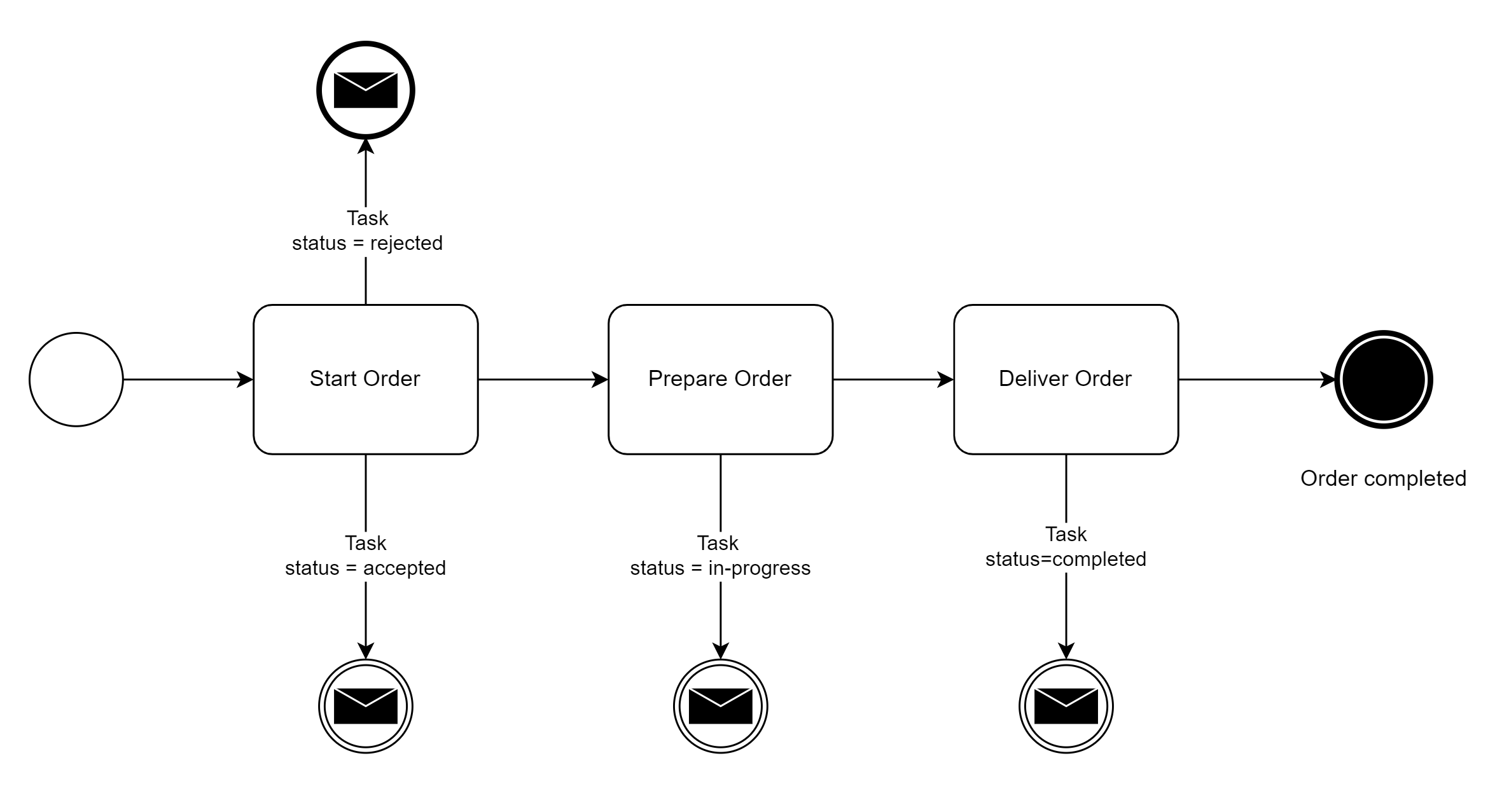
Examples:
| Task.code | Task.status | Task.focus | Task.requester | Meaning |
|---|---|---|---|---|
| fulfill | rejected | MedicationRequest | dispenser | The dispenser is rejecting the fulfilment/deliver of a referenced MedicationRequest. The MedicationRequest is not cancelled |
| fullfill | cancelled | MedicationRequest | any | The requested fulfilment of the MedicationRequest is cancelled. The referenced MedicationRequest is not cancelled |
| fullfill | accepted | MedicationRequest | dispenser | The dispenser is taking responsibility of fulfilling the referenced MedicationRequest. |
| fullfill | completed | MedicationRequest | dispenser | The requested fulfilment of the MedicationRequest is completed. The referenced MedicationRequest can now be changed to completed. |
See the section on status for more details.
Minor Workflow Requests
This is used to implement additional around an order or to record specific workflow requests. These may not have a focused resource reference. It is anticipated they are coded using SNOMED CT.
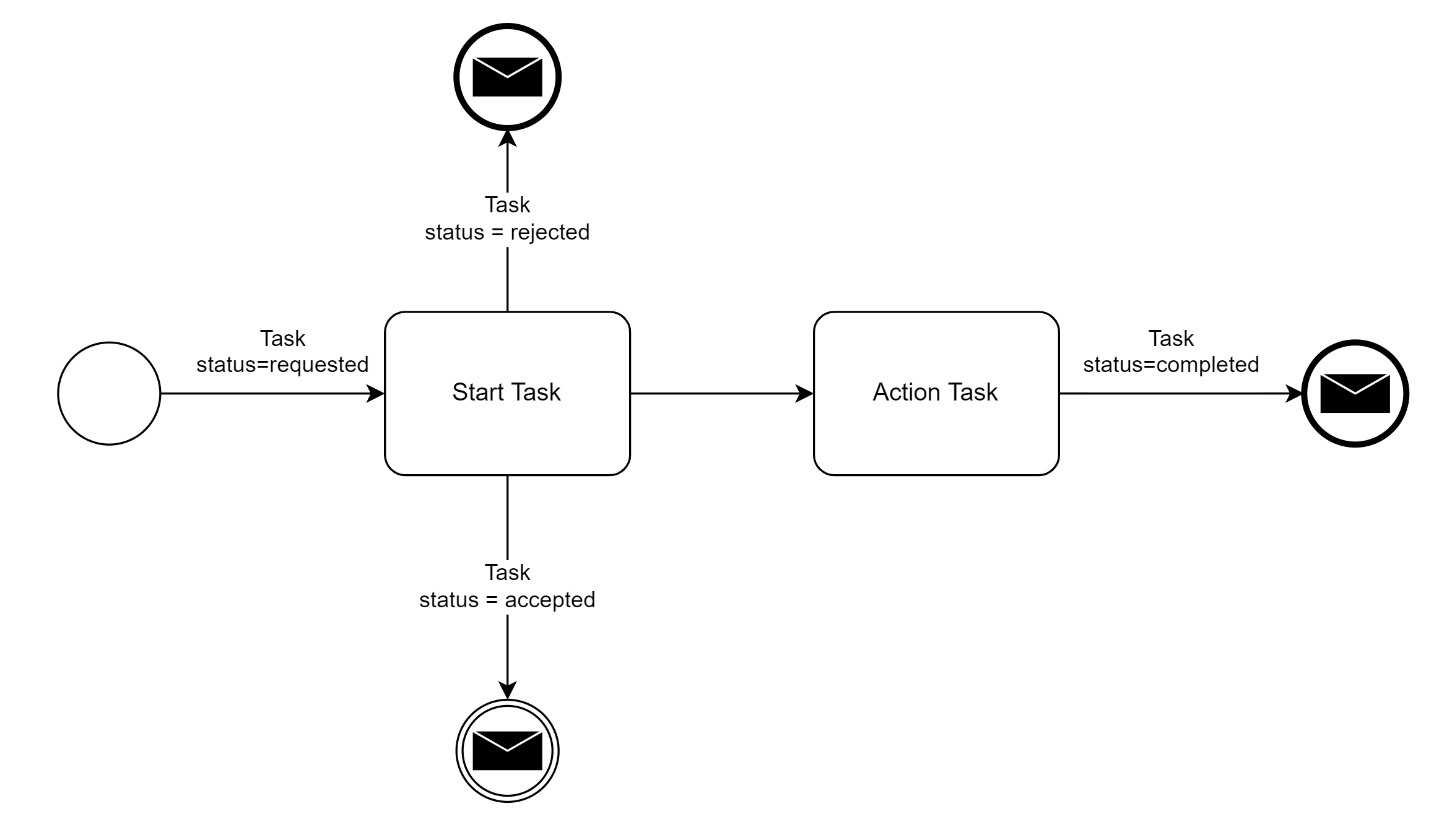 Examples:
| Task.code | Task.focus | Task.requester | Task.owner | Task.reasonCode | Meaning |
|---|---|---|---|---|---|
| 413292001 Assessment for referral | ServiceRequest | referrer | clinician | 3457005 Patient Referral | Check the referenced referral is valid. |
| 182836005 Review of medication | clinician | GP | 151715009 Emergency admission, asthma | Request to review medication following an emergency admission. | |
| 103742009 Renewal of prescription | MedicationRequest | patient | GP | Request for a reissue/refill of a medication | |
| 324861000000109 Review of patient laboratory test report | DiagnosticReport | consultant | Request for a lab report to be reviewed. See also UHS Lab Reports |
The Task.status can be used to indicate fulfilment/delivery status.
Workflow Support
More advanced workflow is supported, this adds in the use of Task.input and Task.output. This allows the passage of inputs and outputs which may be found in automated workflow activities.
The diagram below is from an acute trusts handling of a received eRS referral request. Each process communicates via the FHIR Task, the first process takes the eRS referral and gets the referral letter from eRS, these are then passed to the clinician for triage. Once triaged, the clinician creates a book appointment Task which the admin's action.
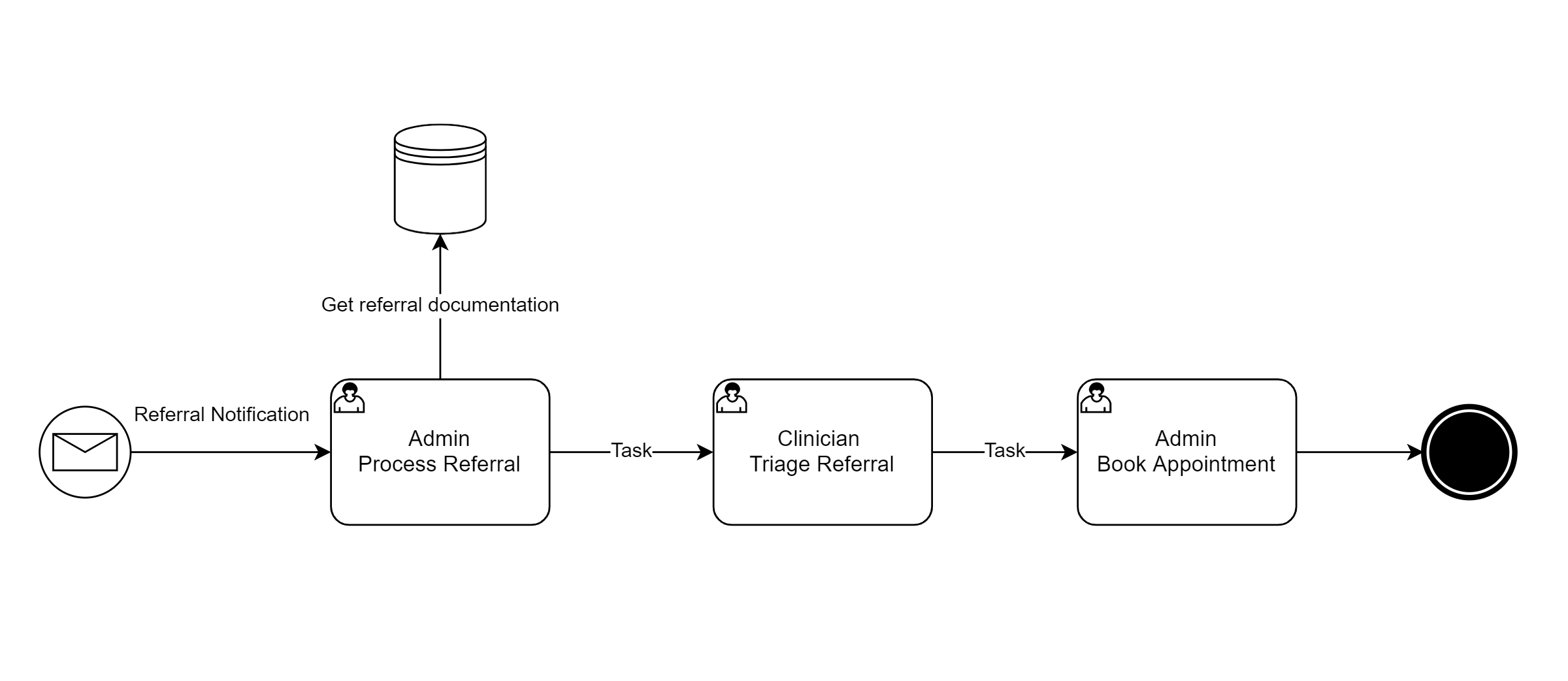
Constraints
inv-1 (ERROR) Last modified date must be greater than or equal to authored-on date.
extension:agent
| Element Id | Task.extension:agent |
| Cardinality | 0..1 |
| Slice Name | agent |
| type | Extension(ExtensionProvenanceAgent) |
Definition
Is used as the author on request resources.
extension:prescription
| Element Id | Task.extension:prescription |
| Cardinality | 0..1 |
| Slice Name | prescription |
| type | Extension(ExtensionEPSPrescription) |
Definition
"extension":  [
        {
            "url": "https://fhir.nhs.uk/StructureDefinition/Extension-EPS-Prescription",
            "extension":  [
                {
                    "url": "courseOfTherapyType",
                    "valueCoding": {
                        "system": "http://terminology.hl7.org/CodeSystem/medicationrequest-course-of-therapy",
                        "code": "acute",
                        "display": "Acute"
                    }
                }
            ]
        }
    ],
extension:repeatInformation
| Element Id | Task.extension:repeatInformation |
| Cardinality | 0..1 |
| Slice Name | repeatInformation |
| type | Extension(ExtensionEPSRepeatInformation) |
Definition
"extension": [
        {
            "url": "https://fhir.nhs.uk/StructureDefinition/Extension-EPS-RepeatInformation",
            "extension": [
                {
                    "url": "numberOfRepeatsAllowed",
                    "valueUnsignedInt": 6
                },
                {
                    "url": "numberOfRepeatsIssued",
                    "valueUnsignedInt": 2
                }
            ]
        },
identifier
| Element Id | Task.identifier |
| Cardinality | 0..* |
| type | Identifier |
Definition
For EPS
A single identifier MUST be present and the value must be a UUID.
"identifier":  [
        {
            "system": "https://tools.ietf.org/html/rfc4122",
            "value": "5AC84C11-DB8B-44DA-8FCF-8980B3D13596"
        }
    ],
groupIdentifier
| Element Id | Task.groupIdentifier |
| Cardinality | 0..1 |
| type | Identifier |
Definition
EPS Only
An identifier to the original prescription-order MUST be present. Only the short form identifier needs to be supplied.
"groupIdentifier": {
        "system": "https://fhir.nhs.uk/Id/prescription-order-number",
        "value": "88AF6C-C81007-00001C"
    },
Requirements
Billing and/or reporting can be linked to whether multiple requests were created as a single unit.
status
| Element Id | Task.status |
| Cardinality | 1..1 |
| Terminology Binding | TaskStatus (Required) The current status of the task. |
| type | code |
Definition
These workflow tasks have status which indicates the Task status.
The following diagram reflects the "typical" state machine for Task. Note that not all states will be supported by all workflows and that some workflows may support additional transitions, including transitions from terminal states (e.g. back to "in-progress" from "failed" or "completed").

For example:
A patient requesting a repeat prescription would ask for task with code fulfil used with 103742009 | Renewal of prescription and a status of requested.
Once reviewed (by a clinician), the task status would be changed to accepted. When the task is then picked up (in-progress) and the related MedicationRequest is sent, the status would change to completed.
Requirements
These states enable coordination of task status with off-the-shelf workflow solutions that support automation of tasks.
Comment
For EPS
Only in-progress is currently supported for reasonCode = 373784005 (Dispensing medication) and focus is a dispense-notification.
rejected / cancelled / failed are supported for reasonCode = 33633005 (Prescription of drug) and focus is a prescription-order.
intent
| Element Id | Task.intent |
| Cardinality | 1..1 |
| Terminology Binding | TaskIntent (Required) Distinguishes whether the task is a proposal, plan or full order. |
| type | code |
Definition
Indicates the "level" of actionability associated with the Task, i.e. i+R[9]Cs this a proposed task, a planned task, an actionable task, etc.
Comment
Is not processed by EPS and is included for FHIR compliance reasons. The value should always be order.
code
| Element Id | Task.code |
| Cardinality | 1..1 |
| Terminology Binding | NHSDigitalTaskCode (Extensible) |
| type | CodeableConcept |
Definition
e-RS
A SNOMED CT procedure code to indicate the action
  "code": {
        "coding": [
            {
                "system": "http://snomed.info/sct",
                "code": "386053000",
                "display": "Evaluation procedure"
            }
        ]
    },
EPS
The SNOMED action codes are complemented with order delivery task-code which indicates the type of action to be performed against the focal resource.
For example:
The code fulfil used with 182836005 | Review of medication means a task to review medication.
The code approve used with 103742009 | Renewal of prescription is a task for a clinician to approve the issue of a repeat medication.
 "code": {
        "coding":  [
            {
                "system": "http://hl7.org/fhir/CodeSystem/task-code",
                "code": "fulfill",
                "display": "Fulfill the focal request"
            }
        ]
Comment
The title (eg "My Tasks", "Outstanding Tasks for Patient X") should go into the code.
focus
| Element Id | Task.focus |
| Cardinality | 0..1 |
| type | Reference(NHSDigitalAppointment NHSDigitalServiceRequest NHSDigitalBundleFHIRMessage NHSDigitalMedicationRequest UKCorePatient) |
Definition
e-RS
Reference to the resource which is the focus of the action
 "focus": {
        "reference": "https://server.fire.ly/ServiceRequest/eb13327f-e990-4667-b37a-89eb93a94c47"
    },
** EPS Only**
This will be the Bundle.identifier of the message this Task is acting on.
For Tasks with a reasonCode of 373784005 - Dispensing medication this will be a dispense-notification message.
For Tasks with a reasonCode of 33633005 - Prescription of drug this will be the prescription-order message from the Task/$release operation.
"focus": {
        "type": "Bundle",
        "identifier": {
            "system": "https://tools.ietf.org/html/rfc4122",
            "value": "334a3195-1f6c-497a-8efe-d272ca9c4e38"
        }
    },
Requirements
Used to identify the thing to be done.
Comment
Tasks are often generated as a consequence of other workflows or relate to FHIR Workflow resources. For example a repeat medication request will be related to a previous MedicationRequest or a medication reconciliation may relate to a hospital admissions Encounter/EpisodeOfCare. This is carried in the focus element.
focus can be omitted. For example if an ED generated a Medication Review as a result of COPD Emergency encounter they may chose to include a reference to the Encounter but they may decide instead to use a more specific reasonCode such as 394720003 | Asthma medication review.
Constraints
- nhsd-taskfocus (ERROR) focus - An identifier reference or resource reference must be provided
for
| Element Id | Task.for |
| Cardinality | 1..1 |
| type | Reference(Resource) |
Definition
A reference to the patient the Task is for. This will always be an identifier reference using the Patients NHSNumber.
"for": {
        "identifier": {
            "system": "https://fhir.nhs.uk/Id/nhs-number",
            "value": "9446368138"
        }
    },
Requirements
Used to track tasks outstanding for a beneficiary. Do not use to track the task owner or creator (see owner and creator respectively). This can also affect access control.
Constraints
- patient-reference (ERROR) An identifier reference or resource reference must be provided
- patient-nhs (ERROR) NHS Number must be in the English and Welsh NHS Number range or length of the number is wrong.
for.identifier.system
| Element Id | Task.for.identifier.system |
| Cardinality | 1..1 |
| Fixed Value | https://fhir.nhs.uk/Id/nhs-number |
| type | uri |
Definition
Establishes the namespace for the value - that is, a URL that describes a set values that are unique.
Requirements
There are many sets of identifiers. To perform matching of two identifiers, we need to know what set we're dealing with. The system identifies a particular set of unique identifiers.
Comment
Identifier.system is always case sensitive.
authoredOn
| Element Id | Task.authoredOn |
| Cardinality | 0..1 |
| type | dateTime |
Definition
Date and time the task was created.
"authoredOn": "2020-12-21T17:03:20-00:00",
Requirements
Most often used along with lastUpdated to track duration of task to supporting monitoring and management.
requester
| Element Id | Task.requester |
| Cardinality | 0..1 |
| type | Reference(NHSDigitalPractitionerRole) Aggregation - contained |
Definition
Who is created the Request or the Event. In NHSDigital API's this SHOULD always be a PractitionerRole role reference.
 "requester": {
        "reference": "#requester"
    },
This will reference a contained PractitionerRole (note: this resource only contains limited user metadata such as ODS Code, professional code and SDS User Profile Id). This resource should not hold data which is held in SDS, only enough information to identify the SDS Entry,
{
    "resourceType": "Task",
    "id": "bd1ca5c4-ff49-4f2a-9db4-f5dda0112084",
    "meta": {
        "lastUpdated": "2016-07-11T11:07:22+00:00"
    },
    "contained": [
        {
            "resourceType": "PractitionerRole",
            "id": "requester",
            "practitioner": {
                "identifier": {
                    "system": "https://fhir.hl7.org.uk/Id/gmp-number",
                    "value": "G8123456"
                },
                "display": "DR AA BHATIA"
            },
            "organization": {
                "identifier": {
                    "system": "https://fhir.nhs.uk/Id/ods-organization-code",
                    "value": "C81007"
                },
                "display": "VERNON STREET MEDICAL CTR"
            },
            "telecom": [
                {
                    "system": "phone",
                    "use": "work",
                    "value": "01234567890"
                }
            ]
        }
    ],
Requirements
Identifies who created this task. May be used by access control mechanisms (e.g., to ensure that only the creator can cancel a task).
owner
| Element Id | Task.owner |
| Cardinality | 0..1 |
| type | Reference(NHSDigitalPractitionerRole NHSDigitalOrganization) |
Definition
EPS
Who is responsible for actioning the request Task (e.g. for a prescription-order this will be the pharmacy).
"owner": {
        "identifier": {
            "system": "https://fhir.nhs.uk/Id/ods-organization-code",
            "value": "FB444"
        },
        "display": "Freds Pharmacy"
    },
e-RS
"owner": {
        "identifier": {
            "system": "https://fhir.nhs.uk/Id/ers-service",
            "value": "12444"
        }
    },
Requirements
Identifies who is expected to perform this task.
Comment
Tasks may be created with an owner not yet identified.
reasonCode
| Element Id | Task.reasonCode |
| Cardinality | 0..1 |
| type | CodeableConcept |
Definition
In FHIR Task these types of workflow would be represented via reasonCode and/or reasonReference
For medication this is probably SNOMED CT based using codes under the SNOMED CT 182832007 Medication management and includes codes such as:
| SNOMED CT | Display |
|---|---|
| 33633005 | Prescription of drug |
| 373784005 | Dispensing medication |
For referral management
| SNOMED CT | Display |
|---|---|
| 3457005 | Patient Referral |
| 185499000 | Expedite appointment |
Comment
This should only be included if there is no focus or if it differs from the reason indicated on the focus.
reasonCode.coding:SNOMED
| Element Id | Task.reasonCode.coding:SNOMED |
| Cardinality | 0..* |
| Slice Name | SNOMED |
| type | Coding |
Definition
A reference to a code defined by a terminology system.
Requirements
Allows for alternative encodings within a code system, and translations to other code systems.
Comment
Codes may be defined very casually in enumerations, or code lists, up to very formal definitions such as SNOMED CT - see the HL7 v3 Core Principles for more information. Ordering of codings is undefined and SHALL NOT be used to infer meaning. Generally, at most only one of the coding values will be labeled as UserSelected = true.
reasonCode.coding:SNOMED.system
| Element Id | Task.reasonCode.coding:SNOMED.system |
| Cardinality | 0..1 |
| Fixed Value | http://snomed.info/sct |
| type | uri |
Definition
The identification of the code system that defines the meaning of the symbol in the code.
Requirements
Need to be unambiguous about the source of the definition of the symbol.
Comment
The URI may be an OID (urn:oid:...) or a UUID (urn:uuid:...). OIDs and UUIDs SHALL be references to the HL7 OID registry. Otherwise, the URI should come from HL7's list of FHIR defined special URIs or it should reference to some definition that establishes the system clearly and unambiguously.
note
| Element Id | Task.note |
| Cardinality | 0..* |
| type | Annotation |
Definition
EPS Only
This may contain cancellation reason.
e-RS
Used to add notes to the worklist items
"note": [
    {
      "text": "Optional comments"
    }
  ]
restriction
| Element Id | Task.restriction |
| Cardinality | 0..1 |
| type | BackboneElement |
Definition
If the Task.focus is a request resource and the task is seeking fulfillment (i.e. is asking for the request to be actioned), this element identifies any limitations on what parts of the referenced request should be actioned.
Requirements
Sometimes when fulfillment is sought, you don't want full fulfillment.
restriction.period.end
| Element Id | Task.restriction.period.end |
| Cardinality | 0..1 |
| type | dateTime |
Definition
In e-RS this is also known as the review date due.
Comment
e-RS
- If deferred to provider (because there were no appointments available for a directly bookable service) then this is the date by which the provide should resolve the appointment slot issue; or
- If the referral was sent to a triage service then this is the date by which the provider should have reviewed the referral
input
| Element Id | Task.input |
| Cardinality | 0..* |
| type | BackboneElement |
Definition
Additional information that may be needed in the execution of the task.
Requirements
Resources and data used to perform the task. This data is used in the business logic of task execution, and is stored separately because it varies between workflows.